
Rent-to-own homes give buyers a flexible path to homeownership when they need more time to build credit or save for a down payment. This approach lets you live in the home while you prepare for a future purchase. When you understand how rent-to-own contracts work, you can protect your budget, avoid surprises, and choose the agreement that supports your long-term goals.
What a Rent-to-Own Home Means
A rent-to-own home allows you to rent a property now and buy it later under a signed agreement. This structure gives you time to improve your finances while locking in your future buying terms. When you understand the contract and payment rules, you can decide whether this option supports your path to homeownership.
How Rent-to-Own Contracts Work
A rent-to-own contract includes two parts: a lease period and a future purchase option. You pay monthly rent and build credits that reduce your future cost. You also decide when you want to buy the home within the agreed timeline. This setup helps buyers move toward ownership at a manageable pace.
The Difference Between Lease-Option and Lease-Purchase
A lease-option gives you the choice to buy the home later, but you don’t need to commit. A lease-purchase requires you to buy the home at the end of the lease. You must understand these differences because each option affects your financial plans. Clear terms help you avoid unexpected obligations.
Who Benefits Most from Rent-to-Own Agreements
Rent-to-own agreements work well for buyers who want time to improve their credit or save for a larger down payment. First-time buyers, self-employed workers, and families recovering from financial challenges often choose this path. This option supports buyers who want to move into a home now and plan for ownership later.
How Rent-to-Own Payments and Pricing Work
Rent-to-own agreements use a unique payment structure that supports your progress toward future ownership. Each part affects your total cost, so understanding these details helps you create a clear plan and avoid financial surprises.
Monthly Rent Credits and How They Build Equity
Some rent-to-own contracts include rent credits that reduce your future purchase price. These credits help you build equity while you live in the home. You get the most value when you track each credit and confirm how the agreement applies to them.
Common rent-credit structures include:
- A set dollar amount is applied each month
- A percentage of your monthly rent
- Credits are applied only if you buy the home before the contract expires
Option Fees and Upfront Costs Buyers Should Expect
Many agreements require an upfront option fee to secure your future right to buy. This cost usually ranges between two and five percent of the purchase price. Some sellers apply part of the fee toward your down payment, which helps you reach ownership faster.
Typical upfront costs:
- Option fee
- First month’s rent
- Security deposit
- Any agreed maintenance or repair funds
How the Purchase Price Is Set in Rent-to-Own Deals
Most rent-to-own contracts lock in a future purchase price at the beginning of the lease. Sellers often use the current market value and add expected appreciation. A clear purchase price helps you plan your financing strategy and determine whether the agreement fits your goals.
Pros and Cons of Buying a Rent-to-Own Home
Rent-to-own homes offer unique advantages for buyers who need flexibility, yet they also include risks that require careful review. Understanding both sides helps you choose the agreement that matches your financial plan.
Advantages for Credit-Challenged or First-Time Buyers
Rent-to-own agreements support buyers who want more time to build credit or save money. You can move into the home now and work toward ownership on a timeline that feels realistic.
Key advantages include:
- Time to improve your credit score
- Ability to save for a down payment while living in the home
- Predictable future purchase price
- Early occupancy before you qualify for a mortgage
Risks and Common Pitfalls to Watch Out For
Rent-to-own agreements may include strict terms that limit your flexibility. You must review each detail to protect your money and avoid long-term issues.
Common risks to consider:
- Losing your option fee if you don’t buy
- Paying for repairs during the lease period
- Agreeing to an inflated future purchase price
- Entering into contracts with unverified or inexperienced sellers
When Rent-to-Own Makes Sense and When It Doesn’t
Rent-to-own works well when you feel confident about improving your finances and securing a mortgage soon. It also helps when you expect property values to rise and want to lock in today’s price. However, it doesn’t work for buyers who want long-term flexibility or face uncertain income.
Best situations for rent-to-own:
- You need 6–24 months to raise your credit
- You want to secure a home in a competitive market
- You feel confident about a stable income and plans
Step-by-Step: How to Buy a Rent-to-Own Home
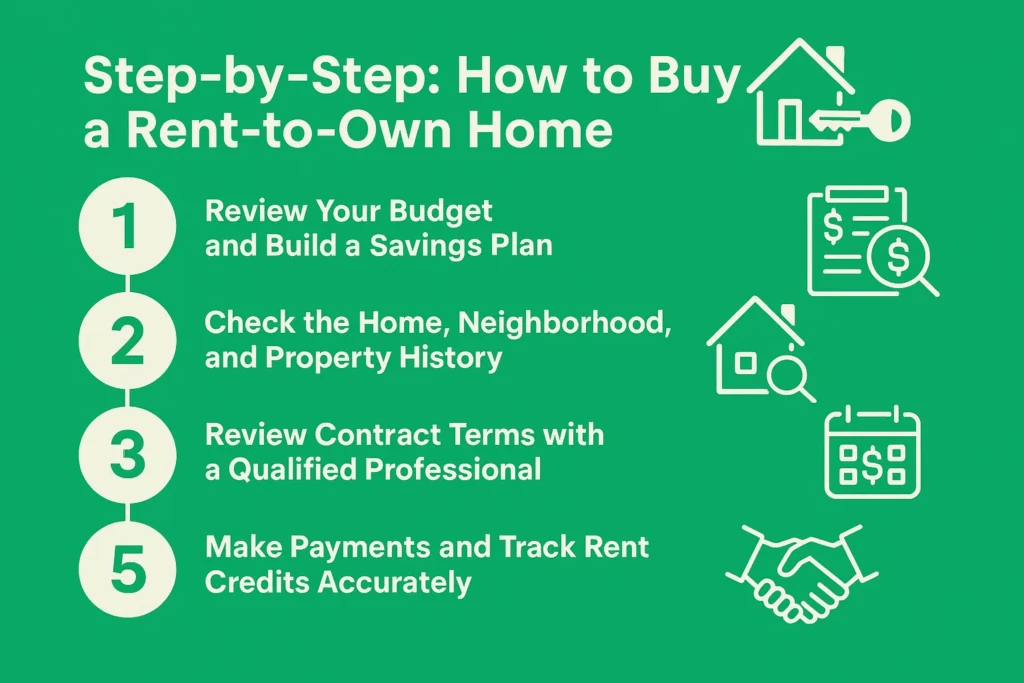
You can purchase a rent-to-own home more easily when you follow a clear plan. Each step helps you prepare financially, understand the agreement, and protect your long-term goals. A structured approach keeps the process simple and reduces costly mistakes.
Step 1: Review Your Budget and Build a Savings Plan
Start by reviewing your income, monthly bills, and long-term goals. You need a realistic budget because rent-to-own agreements often include higher payments and upfront costs. A strong savings plan helps you cover option fees, rent credits, and future mortgage expenses.
Your budget should include:
- Monthly rent and rent credits
- Option fee or deposit
- Expected mortgage payment later
- Repair and maintenance responsibilities
Step 2: Check the Home, Neighborhood, and Property History
Review the home’s condition and research the neighborhood before you sign the agreement. Check school ratings, local crime data, and nearby development plans. You also want to review past ownership records and understand why the home entered the rent-to-own market.
Step 3: Review Contract Terms with a Qualified Professional
Rent-to-own contracts vary widely, so you need clear guidance. Work with a real estate attorney or experienced agent to review pricing, timelines, repair rules, and purchase rights. This step protects your money and helps you understand every obligation before signing.
Step 4: Make Payments and Track Rent Credits Accurately
Rent credits help you lower your future purchase price, so you must track each credit carefully. Keep receipts, monthly statements, and written confirmation from the seller. Clear records help you avoid disputes when you convert the agreement into a mortgage.
Step 5: Secure Financing When You’re Ready to Buy
As your lease period ends, work with a lender to finalize your mortgage. Share your agreement, rent credit history, and updated financial documents. When you prepare early, you can move into the mortgage process smoothly and complete the purchase without delays.
Financial Requirements and Mortgage Readiness
You need strong financial preparation when you convert a rent-to-own agreement into a mortgage. Lenders review your credit, income, and down payment sources. When you understand these requirements, you can use your lease period effectively and improve your approval odds.
Credit Score Goals for Converting to a Mortgage
Lenders want to see steady credit improvement during your lease. Most mortgage programs work well when your score reaches a qualifying range.
Common score goals:
- FHA loans: 580 or higher
- Conventional loans: 620 or higher
- Better rates: 680+
A higher score gives you stronger options and lower long-term costs.
Income, DTI, and Employment Requirements
Lenders review your income history and debt-to-income ratio before they approve the mortgage. You increase your approval chances when you maintain steady employment and reduce unnecessary debt. A balanced DTI shows that you can manage payments after you purchase the home.
Down Payment Sources and How Rent Credits Help
Rent credits help reduce your final purchase cost and support your down payment. You can combine rent credits with savings, gifts from family, or approved assistance programs. A strong down payment lowers your mortgage amount and improves your financial position.
Important Legal and Contract Details to Understand
Rent-to-own agreements include legal details that affect your rights, responsibilities, and future purchase options. When you understand these terms early, you can protect your money and avoid issues during your lease. A clear contract gives you confidence and helps you plan for successful homeownership.
Inspection and Repair Responsibilities During Your Lease
Many rent-to-own contracts require you to handle repairs during the lease period. You must review this section carefully because repair costs can increase your budget. A full inspection helps you catch issues early and understand the home’s true condition. Clear terms prevent misunderstandings later.
What Happens If You Decide Not to Buy
Some agreements let you walk away at the end of the lease, while others lock you into the purchase. You must understand how your contract treats option fees and rent credits. You may lose certain payments when you decide not to buy. Clear expectations help you make informed choices.
How to Protect Yourself from Scams or Unfair Terms
Rent-to-own scams target buyers who want flexible paths to homeownership. You protect yourself when you verify the seller, inspect the home, and review the contract with a professional.
Protection tips include:
- Avoid sellers who refuse inspections
- Review all fees and credit rules before signing
- Confirm the seller owns the property
- Use a licensed attorney for contract review
Best Tips for Success When Buying a Rent-to-Own Home
You can improve your results during a rent-to-own agreement when you focus on credit growth, clear communication, and strong financial habits. These tips help you reach mortgage readiness faster and secure the home with confidence.
Work Only with Reputable Rent-to-Own Companies
Choose companies that offer transparent contracts and clear payment rules. Reputable providers help you avoid confusing terms and hidden risks. You gain more confidence when you work with professionals who follow legal guidelines. Researching companies early supports a safer experience.
Keep Improving Your Credit During the Lease Period
Use your lease period to build stronger credit and reduce debt. Pay bills on time, monitor your score, and avoid new credit lines. Higher credit gives you better mortgage options when you convert the agreement. These habits support long-term financial stability.
Stay in Touch with a Mortgage Lender Early
A lender helps you track your progress and understand mortgage requirements. Stay in contact during your lease so you know what credit, income, and documentation you need. Early guidance helps you avoid delays when you decide to buy. Good communication prepares you for a smooth transition to ownership.
Conclusion
Rent-to-own homes give buyers a flexible path to homeownership when they need more time to prepare financially. You gain the chance to live in the home now while you build credit, save money, and plan for future financing. When you understand the contract, track payments carefully, and work with trusted professionals, you protect your investment and move toward ownership with confidence. A clear plan helps you use the rent-to-own process effectively and reach your long-term goals.
Frequently Asked Questions
Most agreements last one to three years, giving you time to improve your credit and prepare for a mortgage. You gain a clear timeline that supports your long-term buying goals.
Rent credits apply only when the contract includes clear terms, and you must track each credit carefully. You protect your investment when you confirm how the seller plans to apply them.
Some contracts allow early purchase, and others set strict timelines based on your agreement details. You need to review these terms closely so you understand your rights before making plans.
You may lose your option fee and rent credits, depending on your contract. You can avoid this result when you work with a lender early and follow a clear plan during your lease.