
A bridge loan gives you temporary financing when you need funds before selling your current property. This short-term solution helps you move forward quickly when timing feels tight. Buyers often use bridge loans to secure a new home, cover down payments, or manage cash flow gaps during transitions. When you understand how these loans work, you can decide whether this option supports your goals.
What Is a Bridge Loan?
A bridge loan provides short-term funding that helps you purchase a new home before selling your existing one. This loan fills financial gaps and supports fast decisions in competitive markets. When you understand its structure and purpose, you can use it strategically and avoid unnecessary risks.
Basic Definition and Key Features
A bridge loan gives you quick access to funds by using your current home’s equity. These loans include higher rates because they offer short-term flexibility. You can use the money for down payments, urgent purchases, or temporary expenses. Bridge loans work best when you expect to sell your current home soon.
How Bridge Loans Work
Bridge loans offer short terms that usually last six to twelve months. You borrow against your existing home while you prepare to sell it. Once your home sells, you use the proceeds to repay the bridge loan. This setup helps you act quickly without waiting for your sale to close.
Common Situations Where Bridge Loans Are Used
Many buyers choose bridge loans when they find a new home before selling their current one. Investors use them when they spot opportunities that require fast financing. Homeowners also use bridge loans to cover repairs or make strong offers in competitive markets. These situations highlight the loan’s flexibility and speed.
Bridge Loan vs Other Financing Options
Several financing options support buyers who need funds during a transition, but each solution works differently. When you compare these options side by side, you understand which choice fits your timeline, goals, and financial profile.
| Feature | Bridge Loan | Home Equity Loan | HELOC | Traditional Mortgage |
|---|---|---|---|---|
| Purpose | Covers short-term gaps before selling a home | Provides long-term fixed financing | Offers flexible borrowing through a credit line | Supports long-term home financing |
| Speed | Fast approval and quick funding | Moderate approval timeline | Moderate timeline with flexible access | Slowest approval process |
| Rate Type | Higher short-term rates | Lower fixed rates | Variable rates | Predictable long-term rates |
| Repayment | Paid off after selling your current home | Paid over many years | Payments vary based on usage | Paid over 15–30 years |
| Best For | Buying before selling | Stable budgets with long-term plans | Flexible borrowing needs | Standard purchases and refinancing |
Bridge Loan vs Home Equity Loan
A home equity loan offers lower rates and long-term repayment, while a bridge loan supports quick decisions with short-term financing. You choose a home equity loan when you want predictable payments and a slower timeline. A bridge loan works better when you need fast access to funds for a new purchase.
Bridge Loan vs HELOC
A HELOC gives you a credit line that you can access as needed. A bridge loan gives you a single lump sum for immediate use. Many buyers choose HELOCs when they want flexibility, while bridge loans support strong offers and quicker transactions. You decide based on your timing and financial needs.
Bridge Loan vs Traditional Mortgage
A traditional mortgage supports long-term financing with stable monthly payments. A bridge loan fills the gap when you need money before selling your home. You cannot rely on a traditional mortgage for short-term needs because the approval process takes longer. Bridge loans offer speed, while traditional mortgages offer stability.
When a Bridge Loan Makes More Sense
A bridge loan helps you move quickly when you find your next home before selling your current one. You can make competitive offers and avoid contingent terms. This option also works when you want temporary funds for repairs or preparation. Bridge loans support fast timelines and smooth transitions.
How to Qualify for a Bridge Loan
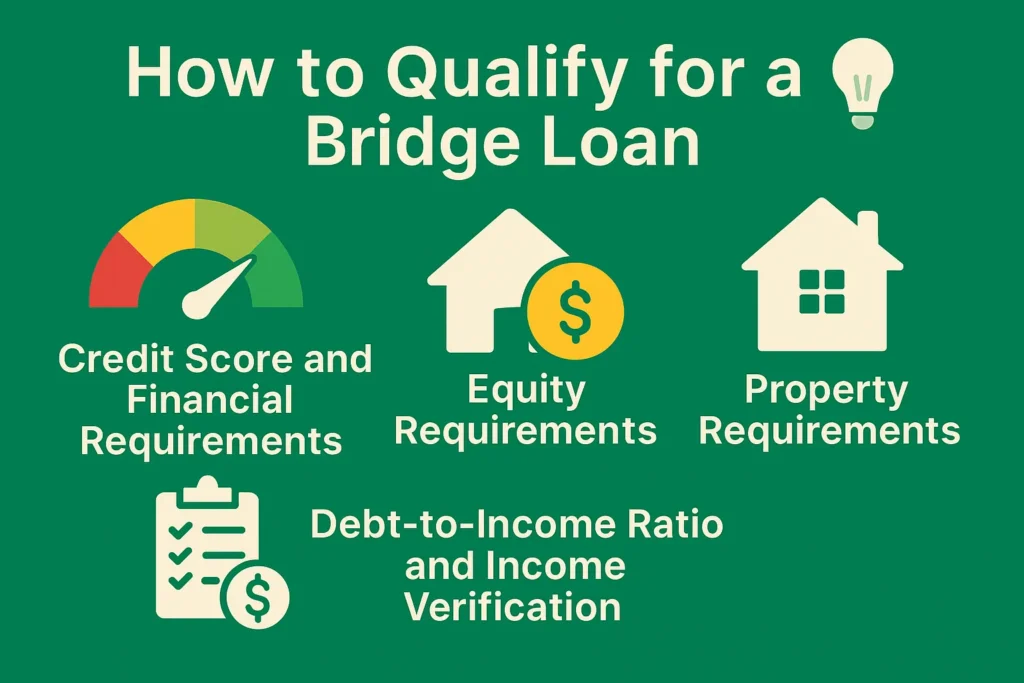
You can qualify for a bridge loan when you show strong financial stability and enough equity in your home. Lenders want to see a clear repayment path because these loans include higher risk. When you prepare early, you improve your approval odds and secure better terms.
Credit Score and Financial Requirements
Lenders review your credit score to understand your financial habits and repayment reliability. Many lenders prefer scores above 660 for bridge loans. You also need strong income history and responsible financial behavior. A higher credit score gives you access to better rates and more flexible terms.
Equity Requirements
Bridge loans require enough equity to secure the borrowed amount. Many lenders want your combined loan-to-value to stay below eighty percent. You qualify more easily when your home has appreciated or when you have paid down your mortgage. Strong equity creates a safer path for short-term lending.
Debt-to-Income Ratio and Income Verification
Your debt-to-income ratio helps lenders understand whether you can handle the temporary payment. Lower ratios increase your approval odds and support smoother approval. Lenders review pay stubs, tax returns, and savings accounts. You strengthen your application by showing consistent income.
Property Requirements
Lenders check the condition and market value of your current home before approving a bridge loan. Homes in good condition and strong markets make it easier to qualify. Your new property must also meet basic lending guidelines. These factors help lenders confirm your repayment plan.
Bridge Loan Costs and Fees
Bridge loans include higher costs because they offer fast access and short terms. You need to understand these expenses before applying because they affect your budget and long-term financial plan. When you review all fees early, you avoid surprises and choose the right financing option.
Interest Rates and Typical Fee Structure
Bridge loans include higher rates than traditional mortgages because lenders manage more risk. These loans often come with interest-only payments during the short-term period. You may also see adjustable rates depending on lender policies. Clear rate terms help you plan your repayment strategy effectively.
Origination Fees and Closing Costs
Many lenders charge origination fees to set up the bridge loan. You also pay closing costs that include appraisal fees, title fees, and administrative charges. These costs vary based on loan size and property location. You benefit when you ask lenders for itemized estimates before deciding.
How Cost Affects Your Total Borrowing
Higher rates and fees increase your total borrowing cost, especially when the home takes longer to sell. You can reduce your cost when you prepare for a fast sale and choose competitive lenders. A clear sales strategy helps you repay the loan quickly and protect your equity.
Pros and Cons of Bridge Loans
A bridge loan helps you move quickly, but it also includes higher costs and stricter requirements. Reviewing both sides helps you decide whether this option supports your buying and selling timeline.
Benefits of Using a Bridge Loan
A bridge loan helps you buy a home without waiting for your current sale. You can make stronger offers and avoid contingent contracts. This loan also gives you flexibility to cover repairs or upgrades that help your home sell faster. Buyers appreciate the speed and convenience that bridge loans provide.
Risks and Drawbacks to Consider
Bridge loans include higher rates and fees, which increase your total expense. Your approval depends on equity and a strong financial history. If your home takes longer to sell, you manage two payments at once. You need a clear plan to handle these risks effectively.
Who Should Avoid Bridge Loans
A bridge loan does not help buyers who want low monthly payments or long-term stability. You should avoid this option when you face uncertain income or limited savings. Buyers in slow markets may also struggle with longer selling timelines. Understanding your financial comfort helps you choose wisely.
How to Apply for a Bridge Loan
Applying for a bridge loan requires preparation, strong documents, and clear communication with lenders. When you follow each step carefully, you increase your approval chances and secure better terms.
Step 1: Check Your Financial Profile
Start by reviewing your credit score, debt-to-income ratio, and available equity. You need a strong financial foundation because lenders evaluate your entire profile. This step helps you understand your position and address concerns early.
Step 2: Get Loan Estimates from Multiple Lenders
Request estimates from lenders who offer bridge loans so you can compare rates, fees, and terms. You gain valuable insight when you review cost differences and repayment structures. Multiple quotes help you choose the most competitive option.
Step 3: Submit Application and Required Documents
Gather income documents, mortgage statements, property details, and identification. Submit your application and stay prepared to answer lender questions. Organized documents help you move through the approval process efficiently and avoid delays.
Step 4: Close and Use the Funds Strategically
After approval, sign your loan documents and access your funds. Use the money for your down payment, repairs, or immediate expenses. A strong strategy helps you manage the loan and prepare for repayment after your home sells.
Conclusion
A bridge loan gives you fast, flexible financing when you want to buy a new home before selling your current property. You can act quickly in a competitive market, cover important expenses, and move forward without delaying your plans. When you review the costs, compare lenders, and prepare your documents early, you gain a smoother experience and protect your long-term goals. With the right strategy, a bridge loan can support your transition and help you secure your next home confidently.
FAQs
Most bridge loans last six to twelve months, giving you time to sell your current property. You can repay sooner when your home sells quickly and your closing timeline stays smooth.
Yes, many buyers use bridge loan funds to cover the down payment on their next home. This strategy helps you avoid contingent offers and move faster in competitive markets.
Lenders prefer higher credit scores because bridge loans include more risk. You can improve approval odds when you show strong income, stable finances, and enough equity.
You may carry the bridge loan longer, which increases your total cost. A strong selling plan helps you manage the timeline and avoid financial pressure.