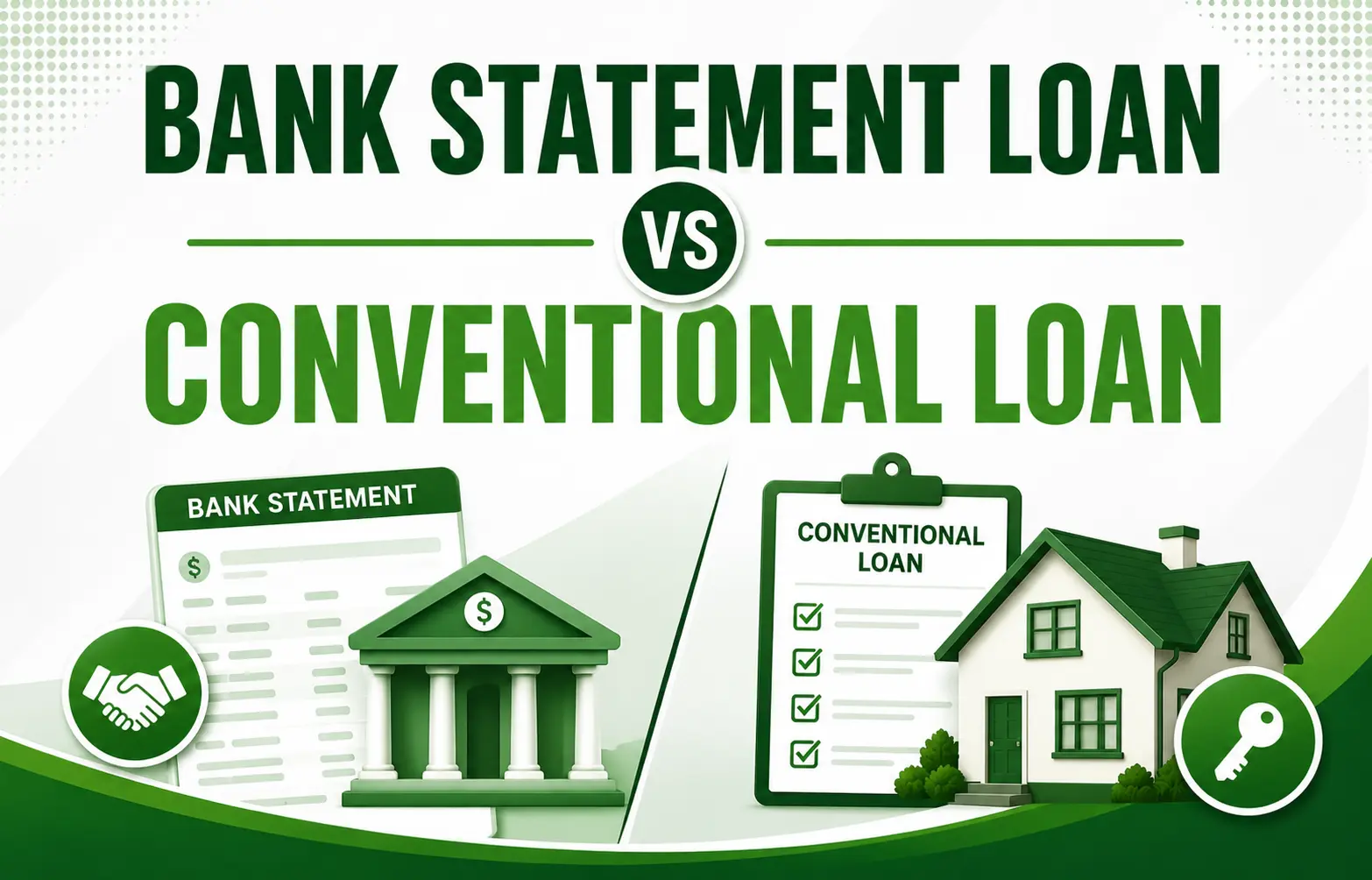
A bank statement loan uses bank deposits to verify income, while a conventional loan requires traditional documents like W-2s and tax returns.
Bank statement loans are ideal for self-employed borrowers, while conventional loans work best for salaried employees with stable documented income.
What Is a Bank Statement Loan?
A bank statement loan is a non-QM mortgage designed for:
- Self-employed borrowers
- Business owners
- Freelancers
- Independent contractors
Instead of tax returns, lenders review:
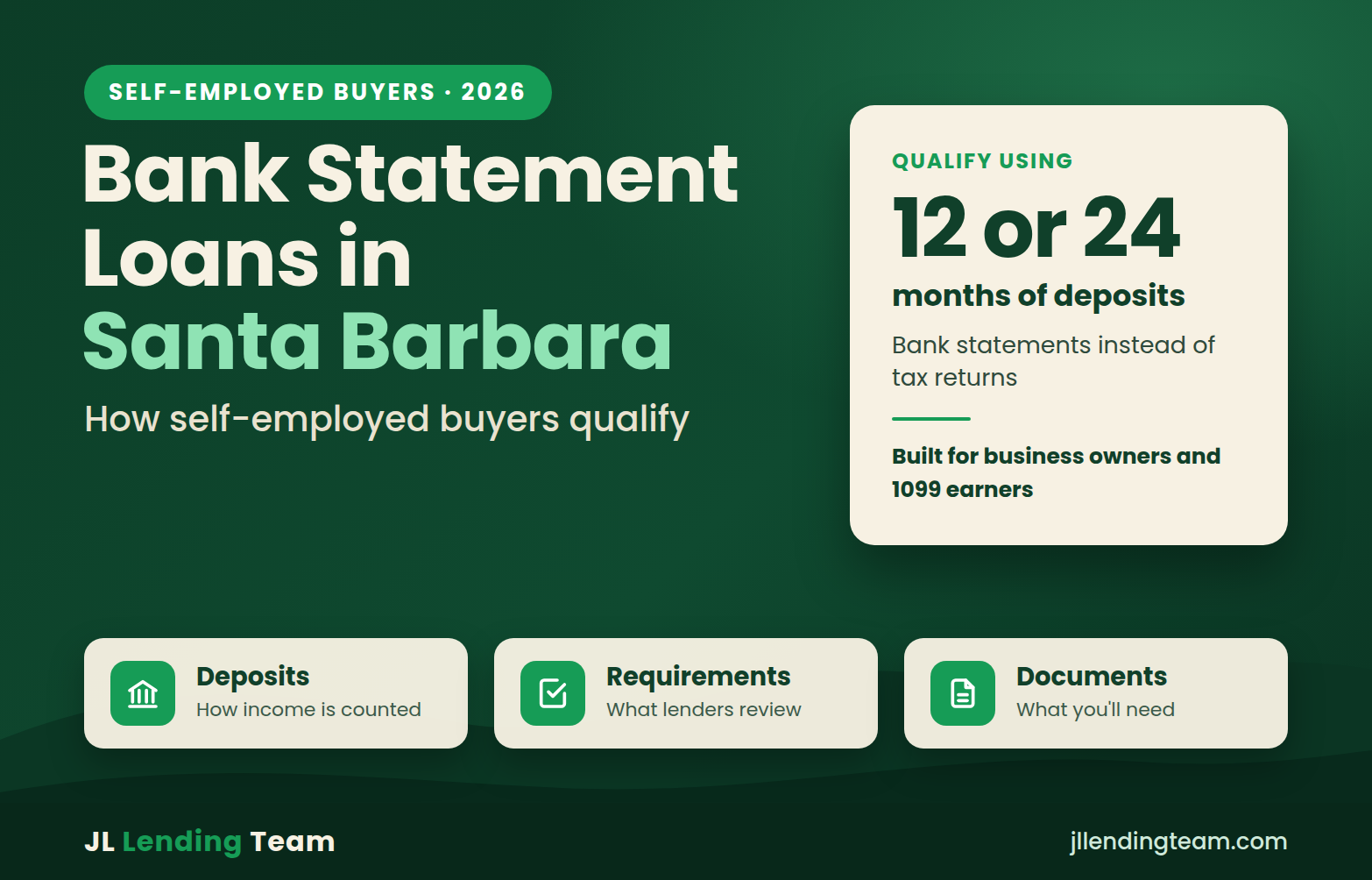
- 12–24 months of bank statements
- Cash flow patterns
- Monthly deposits
What Is a Conventional Loan?
A conventional loan is a traditional mortgage that follows standard lending guidelines.
Lenders typically require:
- W-2s
- Tax returns
- Pay stubs
- Stable employment history
These loans are commonly used by salaried employees.
Bank Statement Loan vs Conventional Loan
| Feature | Bank Statement Loan | Conventional Loan |
|---|---|---|
| Income Verification | Bank statements | Tax returns & W-2s |
| Best For | Self-employed borrowers | Salaried employees |
| Credit Requirements | Flexible | Stricter |
| Interest Rates | Usually higher | Usually lower |
| Down Payment | Often 10%–20% | Can be lower |
| Loan Type | Non-QM | Traditional mortgage |
Main Differences Explained
1. Income Verification
Bank Statement Loan
Uses monthly deposits and cash flow.
Conventional Loan
Uses taxable income shown on official documents.
This is the biggest difference.
2. Approval Flexibility
Bank statement loans are often more flexible for borrowers with:
- Large tax write-offs
- Variable income
- Business ownership
Conventional loans usually follow stricter underwriting rules.
3. Interest Rates
Conventional loans generally offer:
- Lower interest rates
- Lower monthly payments
Bank statement loans may have slightly higher rates because of increased lender risk.
4. Down Payment Requirements
Conventional Loans
May allow lower down payments.
Bank Statement Loans
Typically require:
- 10%–20% down
5. Best Borrower Type
Choose a Bank Statement Loan If:
- You’re self-employed
- Your tax returns show lower income
- You have strong cash flow
Choose a Conventional Loan If:
- You have stable W-2 income
- Strong documented earnings
- Lower debt levels
Self-employed borrowers often qualify differently than traditional W-2 employees.
✔ Explore Flexible Mortgage Options
✔ Talk With a Loan Specialist
Pros of Bank Statement Loans
- Flexible income verification
- Great for self-employed borrowers
- Easier qualification for business owners
Pros of Conventional Loans
- Lower interest rates
- Lower borrowing costs
- More standard mortgage options
Which Loan Is Better in 2026?
It depends on your financial situation.
Bank Statement Loans Are Better For:
- Entrepreneurs
- Freelancers
- Self-employed buyers
Conventional Loans Are Better For:
- Salaried employees
- Borrowers with strong documented income
Example Scenario
Borrower A
- Self-employed business owner
- Large tax write-offs
Better fit for a bank statement loan
Borrower B
- Full-time salaried employee
- Stable W-2 income
Better fit for a conventional loan
Not Sure Which Loan Fits Your Situation?
✔ Compare Your Mortgage Options
✔ Get Pre-Qualified Today
✔ Speak With a Loan Specialist
Read More Bank Statement Loan Interest Rates in 2026
FAQs
What is the difference between a bank statement loan and a conventional loan?
A bank statement loan uses deposits to verify income, while a conventional loan requires traditional documents like W-2s and tax returns.
Are bank statement loans easier to qualify for?
For self-employed borrowers, yes. They provide more flexible income verification.
Which loan has lower interest rates?
Conventional loans usually have lower rates.
Can self-employed borrowers get conventional loans?
Yes, but qualifying can be harder if tax returns show reduced income.
Are bank statement loans worth it in 2026?
They can be an excellent solution for borrowers with strong cash flow but non-traditional income documentation.