
This guide reviews the top benefits and risks of government-insured home loans to help you determine if they are the best fit for your budget in 2025.
By following these updated rules, you can save thousands of dollars on your down payment and avoid common credit score pitfalls.
We have analyzed the latest 2025 FHA lending standards and Department of Housing and Urban Development (HUD) guidelines to provide a clear path for your home buying journey.
Let’s explore the details of these loans so you can decide if they are the right financial choice for your family.
What is an FHA Loan?
An FHA loan is not a loan directly from the government. Instead, an FHA-approved lender gives you the money, and the FHA protects that lender if you cannot pay it back. This program has helped millions of people become homeowners since 1934.
Pros and Cons of FHA Loans
Buying a home is one of the biggest choices you will ever make. For many people, saving a huge amount of money or having a perfect credit score is very hard. This is where the Federal Housing Administration (FHA) helps.
An FHA loan is a mortgage that the government insures, making it less risky for banks to lend money to people with smaller savings or lower credit scores.
The Major Pros of FHA Loans
There are several reasons why these loans are a top choice for first-time buyers in 2025.
1. Low Down Payment Requirements
One of the best features is the low down payment. You only need 3.5% of the home’s price if your credit score is at least 580.
- Example: For a $300,000 home, you only need $10,500 down. A traditional loan might require up to $60,000.
“Ready to take advantage of the 3.5% down payment? We help families qualify for FHA loans every day. Contact us today to get your personalized pre-approval letter.”
2. Flexible Credit Score Standards
You do not need perfect credit to get a home.
- Scores of 580+: Qualify for the 3.5% down payment.
- Scores of 500-579: You can still get a loan, but you must put 10% down.
Read More What Credit Score Do You Need to Buy a House?
3. Use of Gift Funds
The FHA is very friendly toward gifts. You can use money given to you by family, friends, or employers to cover your entire down payment and closing costs, as long as it is documented as a gift.
4. Competitive Interest Rates
Because the government backs these loans, lenders can often offer lower interest rates than they would for a regular loan for someone with the same credit score.
5. Assumable Mortgages
Most FHA loans are “assumable.” This means if you sell your house, the buyer can take over your current mortgage and your interest rate. If rates are high when you sell, having a low-rate loan to give to the buyer makes your home very attractive.
“As an experienced FHA lender, we make the mortgage process simple and fast. Contact us and speak with a loan specialist today to find a payment plan that fits your budget.“
The Major Cons of FHA Loans
While the entry is easy, there are long-term costs you should consider.
1. Mortgage Insurance Premiums (MIP)
Since the government is taking a risk, you must pay for insurance.
- Upfront MIP: A fee of 1.75% of the loan amount paid at the start (usually rolled into the loan).
- Annual MIP: A monthly fee added to your payment, typically around 0.55% of the loan balance.
2. Insurance Lasts for Life
On a normal loan, you can stop paying insurance once you own 20% of the home. On an FHA loan with 3.5% down, you must pay the monthly insurance for the entire life of the loan. To stop paying it, you would have to refinance into a different type of loan later.
3. Strict Property Safety Standards
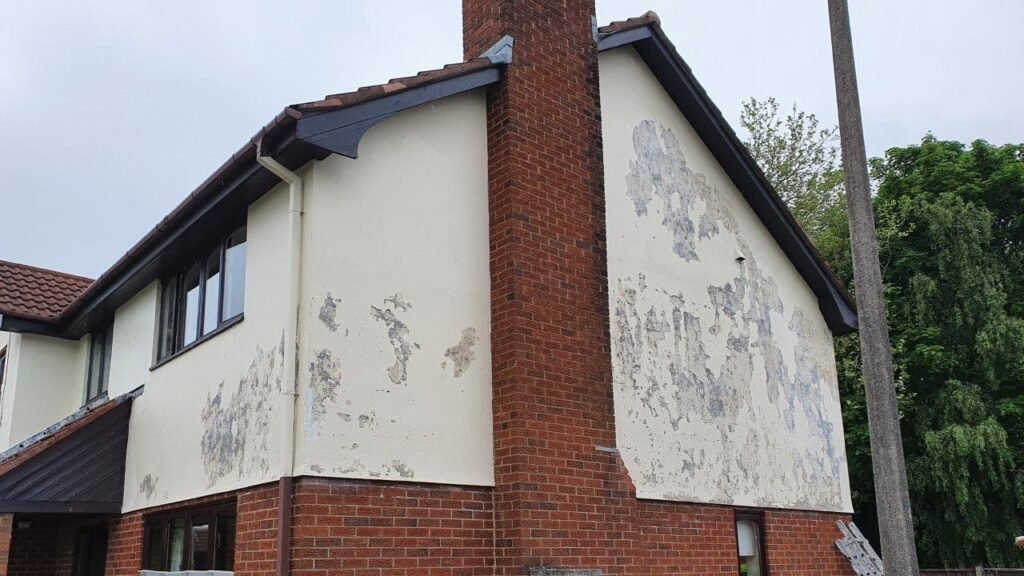
The home must pass a special FHA appraisal. The appraiser looks for safety issues like peeling paint, broken stairs, or a bad roof. The seller must fix these before you can buy the house, which can make some sellers avoid FHA buyers.
4. Primary Residence Only
You cannot use an FHA loan for a beach house or a rental property you won’t live in. You must move into the home within 60 days of closing and use it as your main home.
5. Loan Limits
The government limits how much you can borrow. In 2025, the “floor” limit for most areas is $524,225, though it is higher in expensive cities. You can check your specific area using the Official HUD Mortgage Limits Tool.
FHA vs. Conventional Loans
| Feature | FHA Loan | Conventional Loan |
|---|---|---|
| Min. Credit Score | 500 | Usually 620 |
| Down Payment | 3.5% | 3% to 20% |
| Monthly Insurance | Often for life | Removable at 20% equity |
| Property Condition | High safety standards | Flexible |
Conclusion
In summary, looking at the Pros and Cons of FHA Loans helps you make a smart choice for your family in 2025. These loans are a great way to buy a house if you have a small amount of savings or a low credit score.
While you do have to pay for extra insurance and meet strict safety rules, the low 3.5% down payment makes it much easier to move into a home sooner.
By checking the latest rules on the official HUD website, you can decide if this path is the best way for you to start owning your own home today.
Frequently Asked Questions
Can I buy a multi-unit home with an FHA loan?
Yes! You can buy a 1-4 unit property (like a duplex) as long as you live in one of the units yourself.
Can I get an FHA loan after a bankruptcy?
Yes. Generally, you can apply two years after a Chapter 7 bankruptcy or one year after starting a Chapter 13 plan, provided you have re-established good credit.
How do I find an FHA-approved lender?
You can use the HUD Lender List Search to find a bank or mortgage company in your state that is allowed to give these loans.
Is there an income limit for FHA loans?
No. Unlike some other programs, there is no maximum amount of money you can earn to qualify for an FHA loan.
Can the seller help with closing costs?
Yes. The FHA allows the seller to pay up to 6% of the home’s price toward your closing costs. This can greatly reduce the amount of cash you need at the end.