
Your credit score plays a major role in your path to homeownership because lenders use it to measure your financial reliability. A stronger score helps you unlock better loan options, lower interest rates, and more affordable monthly payments. When you understand how your credit score influences the homebuying process, you can prepare wisely and position yourself for the best financing available.
Why Your Credit Score Matters in Homebuying
Your credit score guides lenders as they evaluate your overall risk and long-term repayment ability. A stronger score helps you qualify for competitive rates and more flexible loan programs. When you understand how this number shapes your mortgage options, you can take steps that support a smoother approval process.
“Your credit score tells a story, and lenders read it before offering any mortgage.”
How Credit Scores Affect Mortgage Rates and Approval
Your credit score directly influences the interest rate you receive. Higher scores help you qualify for lower rates, which saves money over the life of your loan. Lenders use your score to determine how likely you are to repay the mortgage. Strong credit opens the door to faster approvals and better pricing.
A higher score helps you qualify for:
- Lower interest rates
- Reduced mortgage insurance requirements
- More competitive loan terms
- Larger loan amounts
What Lenders Evaluate Beyond Your Score
Credit scores matter, but lenders also review several other financial factors. These details help them decide whether you can manage mortgage payments comfortably. A complete financial picture helps lenders understand how well you handle debt and regular expenses.
Lenders also review:
- Payment history over the past several years
- Current debt levels and spending habits
- Income stability and employment history
- Savings, reserves, and financial buffers
How Your Score Impacts Monthly Payments and Loan Costs
Your credit score affects your interest rate, which changes your monthly payment and overall loan cost. A higher score lowers your rate and reduces the amount you pay over time. Even a small improvement may create meaningful savings during your mortgage term.
Better scores help you:
- Lower your monthly payment
- Reduce lifetime interest costs
- Increase your buying power
- Qualify for premium loan programs
Minimum Credit Scores for Different Mortgage Programs
Each mortgage program sets different expectations for credit scores. These requirements help lenders understand how you manage debt and financial obligations. When you review these minimums, you gain a clearer path toward choosing the best loan option for your credit profile.
Credit Score Requirements by Loan Type
| Loan Program | Minimum Credit Score | Why It Matters |
|---|---|---|
| FHA Loan | 580 for 3.5 percent down, 500 with 10 percent down | Helps buyers with lower scores qualify for affordable financing |
| VA Loan | No official minimum, many lenders require 580–620 | Offers strong benefits for qualified veterans and service members |
| USDA Loan | 620 recommended by most lenders | Supports rural buyers seeking no-down-payment options |
| Conventional Loan | 620 minimum with better pricing at 740+ | Helps buyers secure competitive rates with stronger scores |
| Jumbo Loan | Often 680–700 minimum | 620 is recommended by most lenders |
FHA Loans: Low Minimums for Flexible Qualification
FHA loans help buyers with lower scores start their homeownership journey. You can qualify with a score as low as 580 when you want a low-down-payment option. This program supports buyers who need flexible credit standards and steady long-term growth.
Best for buyers who:
- Want a smaller down payment
- Have past credit challenges
- Need flexible underwriting
VA Loans: No Set Minimum but Lender Standards Apply
VA loans support qualified veterans and active-duty service members. The VA does not set a minimum score, but many lenders ask for 580–620. This flexibility helps military borrowers secure strong terms with no mortgage insurance.
Key advantages:
- No down payment
- No mortgage insurance
- Competitive interest rates
USDA Loans: Requirements for Rural Homebuyers
USDA loans support buyers who want to purchase in eligible rural areas. Many lenders prefer scores of 620 or higher. This program helps you finance a home with no down payment when you meet area and income rules.
Ideal for:
- Rural homeowners
- Buyers wanting zero-down financing
- Households meeting USDA income limits
Conventional Loans: Higher Standards for Better Rates
Conventional loans offer strong pricing when you maintain a higher credit score. The minimum required score is 620, but borrowers with 740 or higher receive the best rates. This program rewards responsible credit behavior and consistent financial management.
Higher scores help you:
- Lower your interest rate
- Reduce mortgage insurance
- Increase borrowing power
Jumbo Loans: Strong Credit Requirements for High-Value Homes
Jumbo loans help you finance homes that exceed conforming loan limits. These loans require stronger credit because they involve higher risk. Most lenders look for scores between 680 and 700 to offer competitive terms.
Best for borrowers who:
- Want a high-priced home
- Maintain strong financial profiles
- Carry low personal debt
How Your Score Impacts Affordability and Loan Options
Your credit score shapes the interest rate you receive and the programs available to you. Strong scores help you lower borrowing costs and expand your choices. When you understand how scores influence pricing, you can take steps that improve affordability.
Rate Differences Between Excellent, Good, Fair, and Poor Credit
Lenders adjust interest rates based on your credit tier. Better scores create lower rates, which reduce your monthly payment and total interest. Even small improvements help you qualify for cheaper financing.
Typical credit tiers include:
- Excellent: 740+
- Good: 680–739
- Fair: 620–679
- Poor: Below 620
How Much a Better Score Can Save You Long-Term
A higher credit score helps you save thousands over the life of your mortgage. Lower rates reduce your monthly payment and your total interest cost. Many buyers gain meaningful savings when they improve their score before applying.
Better scores help you save on:
- Monthly mortgage payments
- Mortgage insurance premiums
- Total lifetime borrowing costs
Why Some Buyers Get Better Pricing Than Others
Buyers receive better pricing when they show strong financial patterns. Lenders offer lower rates when you maintain low balances, steady income, and consistent payment habits. These factors build trust and demonstrate long-term reliability.
Lenders reward borrowers who show:
- Low debt-to-income ratios
- Long, stable payment histories
- Strong savings and financial reserves
- Responsible use of credit lines
What Lenders Look at Besides Your Credit Score
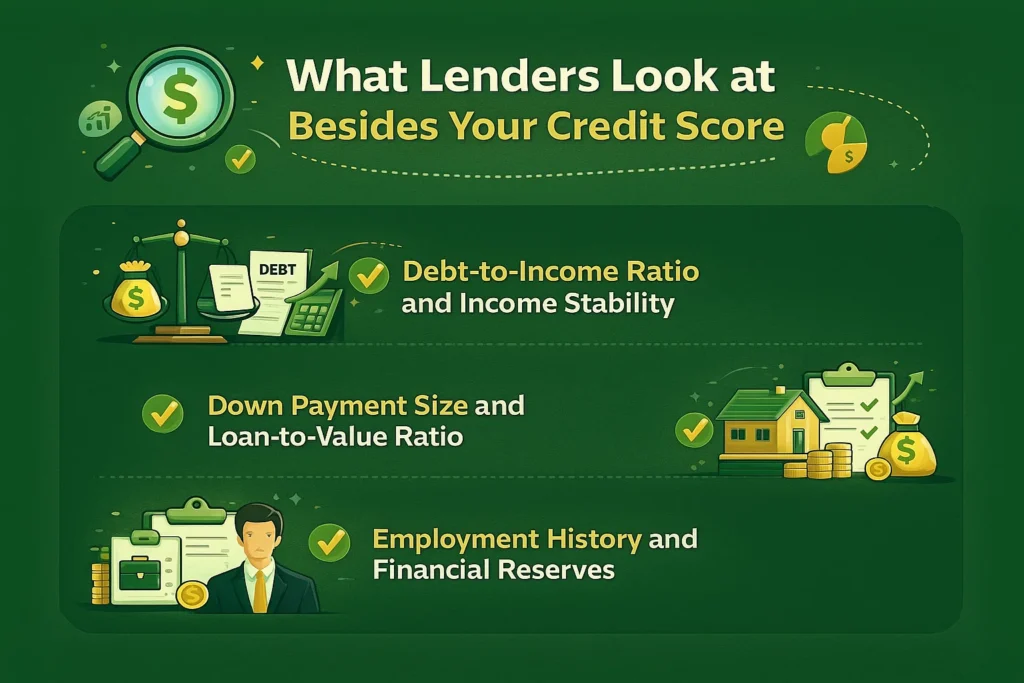
Your credit score plays an important role, but lenders also review several other financial details that shape your approval strength. These factors help lenders understand your repayment ability, long-term stability, and overall financial health. When you prepare each area early, you create a stronger mortgage profile.
Debt-to-Income Ratio and Income Stability
Lenders review your debt-to-income ratio to confirm that your monthly payments fit comfortably within your budget. A lower ratio shows responsible debt habits and strong repayment ability. Lenders also look at your income history to confirm steady earnings and long-term financial strength.
To strengthen this area:
- Keep monthly debts low
- Track income consistently
- Avoid large new obligations
Down Payment Size and Loan-to-Value Ratio
Your down payment affects both your approval odds and your interest rate. A larger down payment reduces your loan-to-value ratio, which shows lenders that you carry less risk. A lower ratio helps you qualify for better pricing and more flexible loan terms.
A stronger down payment helps you:
- Lower monthly mortgage costs
- Reduce mortgage insurance
- Increase your loan approval strength
Employment History and Financial Reserves
Lenders want to see a stable employment record because it demonstrates predictable income. Your savings and reserves also matter because they show you can handle emergencies and unexpected expenses. These details help lenders trust your long-term repayment ability.
Most lenders prefer:
- At least two years of steady employment
- Savings for at least two months of mortgage payments
- Stable earnings without major gaps
How to Improve Your Credit Before Buying a House
You can improve your credit score when you follow a focused plan and update your financial habits. Many buyers gain meaningful score increases within a few months. These improvements help you qualify for better rates and stronger mortgage options.
Paying Down Revolving Balances for Fast Score Gains
Lowering your credit card balances often delivers quick score improvement. Revolving debt affects your utilization rate, which plays a major role in your score. When you reduce balances below thirty percent, you create clear progress and strengthen your approval odds.
Quick wins include:
- Paying balances before the statement date
- Reducing high-interest card usage
- Avoiding maxed-out accounts
Removing Errors and Updating Old Information
Many credit reports contain inaccurate or outdated information. You can dispute errors to remove incorrect balances or late payments. Updated records help you build a clean profile and improve your score in a short period.
Check your reports for:
- Incorrect late payments
- Duplicate accounts
- Old or inaccurate balances
Strengthening Your Payment History
Payment history plays a major role in your credit score. You can strengthen this area when you make every payment on time and use automatic reminders. Consistent payments show lenders that you manage your obligations responsibly.
Helpful habits include:
- Setting automatic payments
- Using alerts for due dates
- Tracking recurring bills carefully
Avoiding New Debt Before Applying
New accounts create credit inquiries that may lower your score temporarily. You also increase your debt load when you take on new payments. Avoiding new credit helps you keep a stable profile and reduces unnecessary risk before applying.
Avoid:
- New credit cards
- Large financed purchases
- Unnecessary short-term loans
Steps to Buy a House With Bad or Fair Credit
You can buy a home with lower credit when you follow a focused plan and understand each available option. These steps help you strengthen your approval profile, reduce lender risk, and move forward confidently.
Compare Loan Programs That Accept Lower Scores
Several loan programs support buyers with fair or limited credit. FHA, VA, and some USDA options give you flexible requirements and competitive terms. You can move forward with more confidence when you carefully compare each program and match it to your specific situation.
Increase Your Down Payment to Offset Risk
A larger down payment shows a strong commitment and reduces your lender’s risk. This improvement helps you qualify for better rates and more affordable monthly payments. A stronger down payment also reduces your loan-to-value ratio and improves your approval strength.
Consider a Co-Borrower or Co-Signer
A trusted co-borrower or co-signer can help you qualify when your score needs improvement. Their income and credit history strengthen your overall application. You gain better terms when you combine both profiles and present a strong financial picture.
Find a Lender Who Works With Lower Credit Profiles
Some lenders specialize in helping buyers with limited credit. These lenders offer flexible guidelines and a more personalized approval process. You receive better support when you work with a team that understands your financial situation.
When You Should Wait and Improve Your Score First
You may benefit from waiting when your score needs improvement, and your interest rate would be much higher today. Even small score increases help you qualify for better terms and create meaningful savings over your mortgage lifetime. A brief delay often yields stronger financial outcomes.
Situations Where a Higher Score Can Save You Thousands
You gain major savings when your credit score moves into a higher pricing tier. Lenders reward responsible credit habits with lower rates and reduced loan costs. A stronger score improves your buying power and lowers your required monthly payment.
Waiting may help when:
- Your score is close to the next tier
- You plan to borrow a larger loan amount
- You want long-term financial stability
How Long Does It Take to Improve Your Credit Score
Many buyers see improvements within sixty to ninety days when they follow a focused plan. Paying down balances, correcting errors, and improving payment habits all help your score rise. Consistent effort produces steady progress and prepares you for a stronger mortgage application.
Conclusion
You can buy a home with confidence when you understand how your credit score affects approval, loan options, and long-term affordability. Even small improvements help you secure better terms and reduce your monthly costs. When you compare programs, strengthen your finances, and work with a lender who supports your goals, you gain a clear path to homeownership.
Frequently Asked Questions
Yes, you can buy a home with a lower score through programs like FHA or VA loans. You improve your approval odds when you strengthen your down payment and show a steady income history.
Your credit score guides lenders when they determine your interest rate. Higher scores help you secure lower rates, which reduces your monthly payment and long-term borrowing costs.
Checking your own credit score does not hurt your credit. This step helps you find errors, track progress, and prepare your profile before applying for a mortgage.
Many buyers see improvement within sixty to ninety days when they reduce balances and correct errors. Even small increases help you qualify for better pricing and stronger loan options.