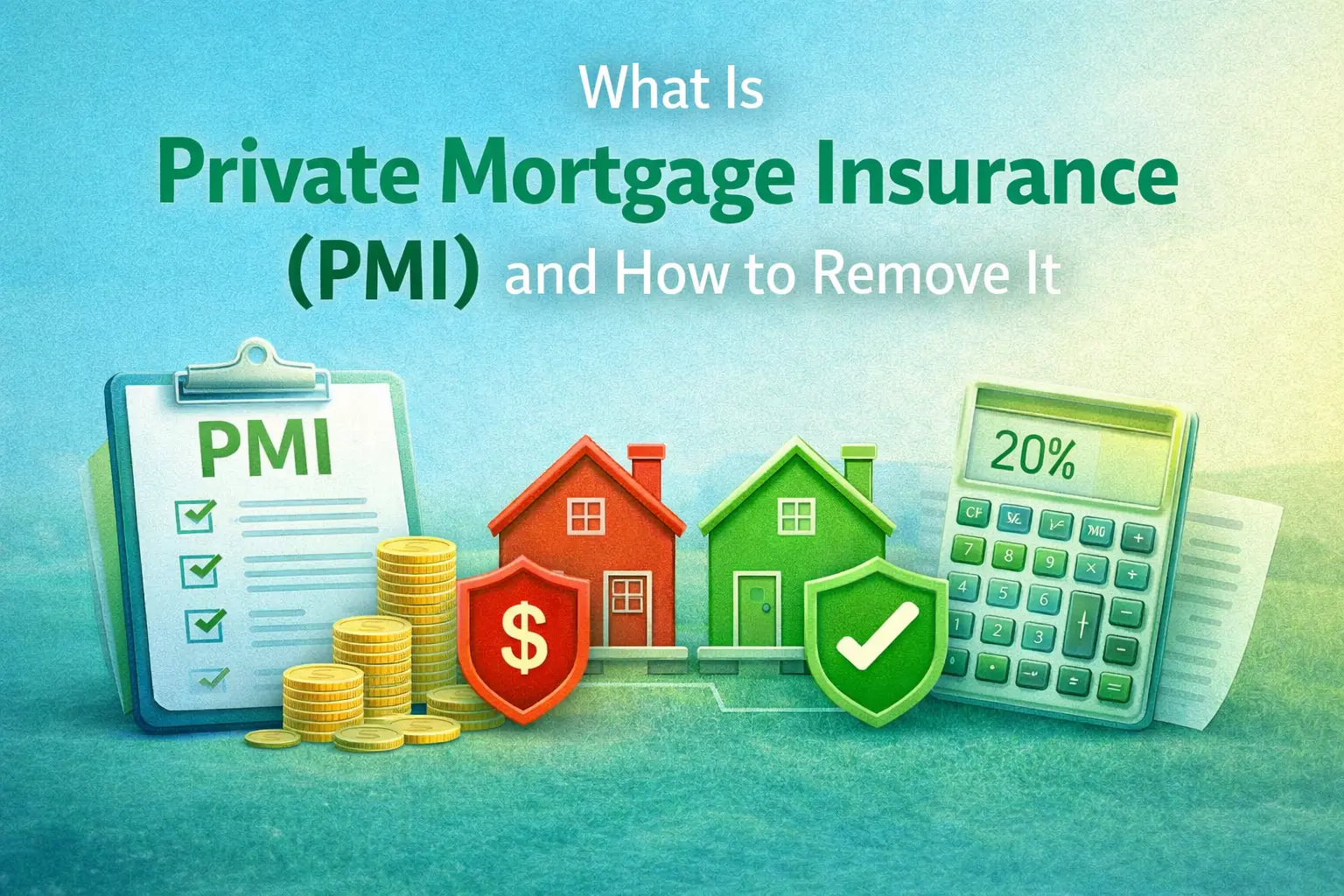
Buying a home with a low down payment often means paying Private Mortgage Insurance (PMI).
Many homebuyers in the U.S. see PMI on their mortgage but do not fully understand what it is or how to remove it.
This guide explains Private Mortgage Insurance (PMI) in simple terms, how much it costs, and how you can remove it from your mortgage.
What Is Private Mortgage Insurance (PMI)?
Private Mortgage Insurance (PMI) is insurance that protects the lender, not the borrower.
Lenders usually require PMI when the down payment is less than 20% on a conventional mortgage.
PMI reduces the lender’s risk if the borrower stops making payments.
Key facts about PMI
- Required for conventional loans with less than 20% down
- Paid monthly as part of your mortgage payment
- Protects the lender, not the homeowner
- Can be removed later once equity increases
PMI helps many buyers purchase a home sooner, even if they do not have a large down payment.
When Do Lenders Require PMI?
Most lenders require Private Mortgage Insurance (PMI) when:
- Your down payment is below 20%
- Your loan-to-value ratio (LTV) is above 80%
- You are using a conventional loan
Example:
- Home price: $400,000
- Down payment: $20,000 (5%)
Your loan covers 95% of the home value, so PMI will likely apply.
How Much Does PMI Cost?
PMI cost depends on several factors.
Lenders consider:
- Credit score
- Down payment size
- Loan amount
- Loan term
Most borrowers pay:
- 0.3% to 1.5% of the loan amount per year
Example:
- Loan amount: $350,000
- PMI rate: 0.8%
Estimated PMI cost:
- About $230 per month
Types of PMI
There are several types of Private Mortgage Insurance (PMI).
1. Borrower-Paid PMI (Most Common)
You pay PMI monthly with your mortgage payment.
2. Single-Premium PMI
You pay PMI once upfront at closing.
3. Lender-Paid PMI
The lender pays PMI but charges a slightly higher interest rate.
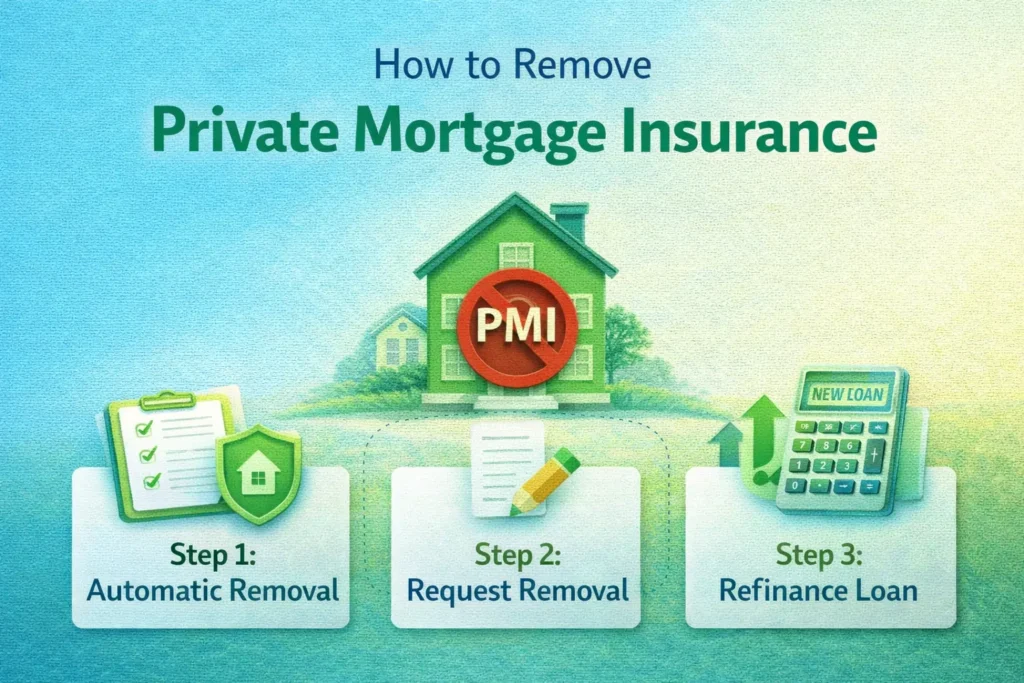
How to Remove Private Mortgage Insurance (PMI)
The good news is that PMI is not permanent.
You can remove it once you build enough equity in your home.
1. Automatic PMI Removal
Under the Homeowners Protection Act, lenders must remove PMI when:
- Your loan reaches 78% loan-to-value ratio
2. Request PMI Cancellation
You can request removal when your loan balance reaches 80% of the home’s original value.
You must:
- Be current on payments
- Have a good payment history
- Request cancellation from the lender
3. Refinance Your Mortgage
Refinancing may remove PMI if:
- Your home value increased
- Your new loan is below 80% LTV
How to Avoid PMI in the First Place
Some buyers try to avoid Private Mortgage Insurance (PMI) before getting a mortgage.
Common strategies include:
- Make a 20% down payment
- Use a piggyback loan (80-10-10 loan)
- Consider VA or USDA loans that do not require PMI
However, many buyers still choose PMI to buy a home sooner instead of waiting years to save 20%.
How Mortgage Experts Can Help
Understanding Private Mortgage Insurance (PMI) can be confusing for many homebuyers.
A mortgage broker can help you:
- Compare loan options
- Find low-PMI conventional loans
- Estimate monthly payments
- Plan how to remove PMI faster
Want to explore conventional loan options with low down payments? The JL Lending Team can help you compare mortgage programs and find the best loan for your situation.
Read More USDA Loan Timeline: How Long Does Approval Take?
FAQs
Is Private Mortgage Insurance (PMI) required for all loans?
No. PMI usually applies only to conventional loans with less than 20% down.
Government loans like VA or USDA loans do not require PMI.
How long do you have to pay PMI?
Most borrowers pay PMI until their loan balance reaches 80% of the home value.
Can PMI be removed early?
Yes. You can request removal once your equity reaches 20%.
Does refinancing remove PMI?
Yes. If your new loan-to-value ratio is below 80%, refinancing may eliminate PMI.
Is PMI tax deductible?
Sometimes. PMI tax deductibility depends on current IRS rules and income limits.