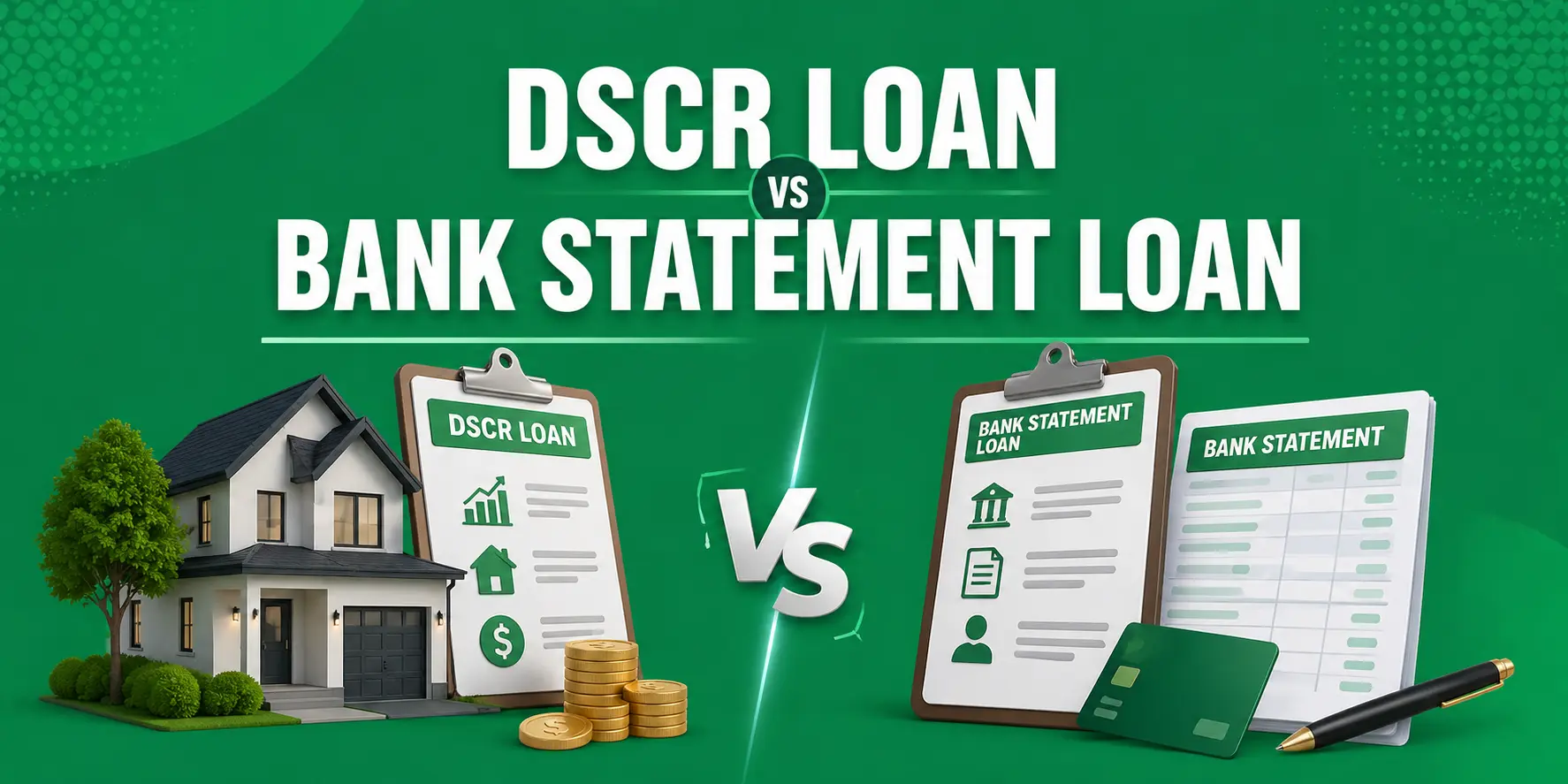
When applying for a mortgage without traditional income documentation, two popular options are DSCR loans and bank statement loans.
But which one is better?
A DSCR loan is better for real estate investors using rental income, while a bank statement loan is ideal for self-employed borrowers using personal income deposits.
What Is a DSCR Loan?
A DSCR loan qualifies you based on:
- Rental income
- Property cash flow
- Debt-service coverage ratio
No personal income verification required
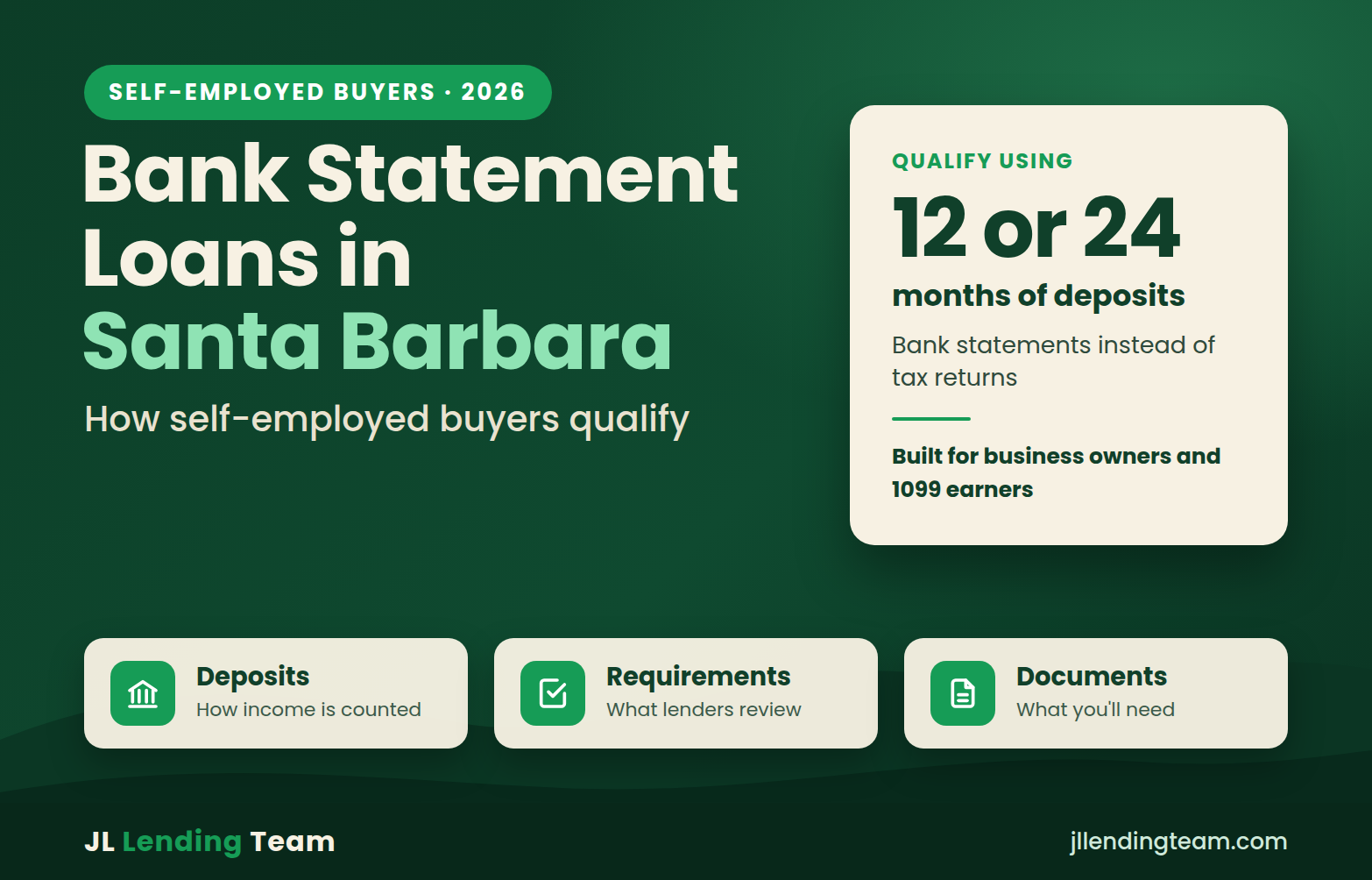
What Is a Bank Statement Loan?
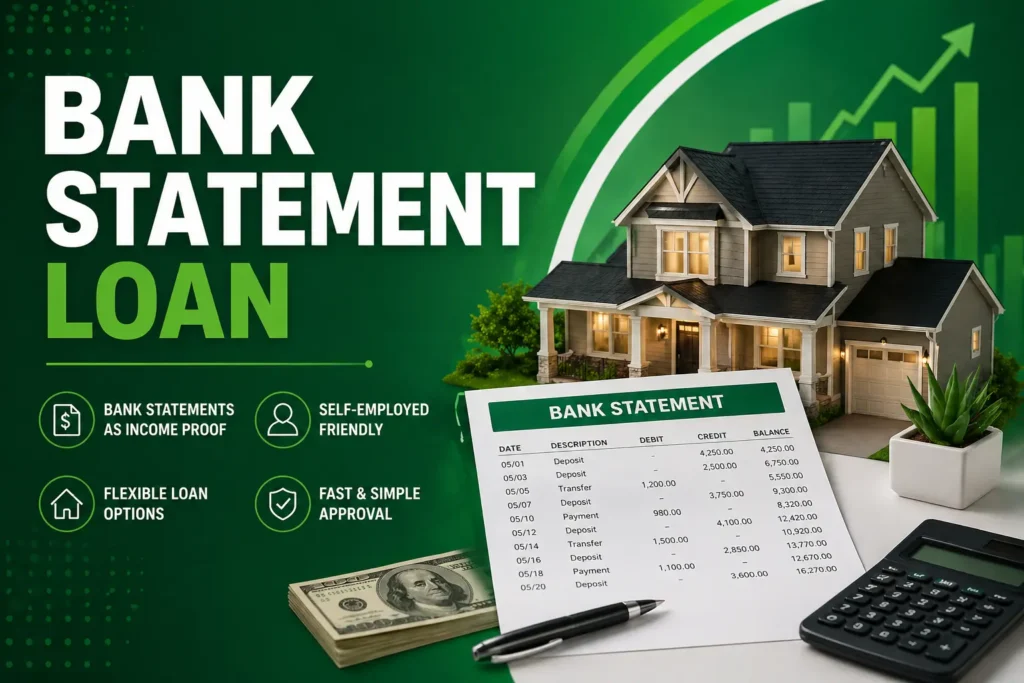
A bank statement loan qualifies you based on:
- 12–24 months of bank statements
- Deposits into your account
- Business or personal income
Designed for self-employed borrowers
DSCR vs Bank Statement Loan
| Feature | DSCR Loan | Bank Statement Loan |
|---|---|---|
| Income Type | Rental income | Personal/business income |
| Best For | Investors | Self-employed buyers |
| Documentation | Minimal | Bank statements required |
| Property Type | Investment only | Primary + investment |
| Approval Basis | Property cash flow | Income deposits |
Not sure which loan fits your situation?
✔ Compare Your Loan Options Today
✔ Get Expert Advice Before You Apply
When to Choose a DSCR Loan
A DSCR loan is best if:
- You’re buying investment properties
- You want to scale your portfolio
- You don’t want to show personal income
When to Choose a Bank Statement Loan
A bank statement loan is best if:
- You’re self-employed
- You have strong bank deposits
- You’re buying a primary home or second home
Pros and Cons Comparison
DSCR Loan Pros
- No income verification
- Easier for investors
- Scalable financing
DSCR Loan Cons
- Higher interest rates
- Requires rental income
- Investment properties only
Bank Statement Loan Pros
- Flexible income qualification
- Works for self-employed
- Can be used for primary homes
Bank Statement Loan Cons
- Requires documentation
- Income calculation can be complex
- May require strong cash flow
Which Loan Is Better for You?
Choose DSCR Loan if:
- You want to invest in rental properties
- You want fast, scalable financing
- Your property generates strong income
Choose Bank Statement Loan if:
- You’re self-employed
- You want to buy a home using personal income
- You have strong bank deposits
Real Example
- Investor buying rental property → DSCR loan
- Self-employed buyer purchasing home → Bank statement loan
Ready to Choose the Right Loan?
The right financing option can make or break your investment.
✔ Apply for a DSCR Loan
✔ Explore Bank Statement Loan Options
Read More DSCR Loan Requirements (Complete Checklist for Approval)
FAQs
What is the main difference between DSCR and bank statement loans?
DSCR uses rental income, while bank statement loans use personal income deposits.
Which loan is easier to qualify for?
It depends, DSCR is easier for investors, bank statement loans are easier for self-employed borrowers.
Can I use a DSCR loan for a primary home?
No, DSCR loans are for investment properties only.
Are bank statement loans more expensive?
They can have higher rates than traditional loans, similar to DSCR loans.
Which loan is better for investors?
DSCR loans are typically better for real estate investors.