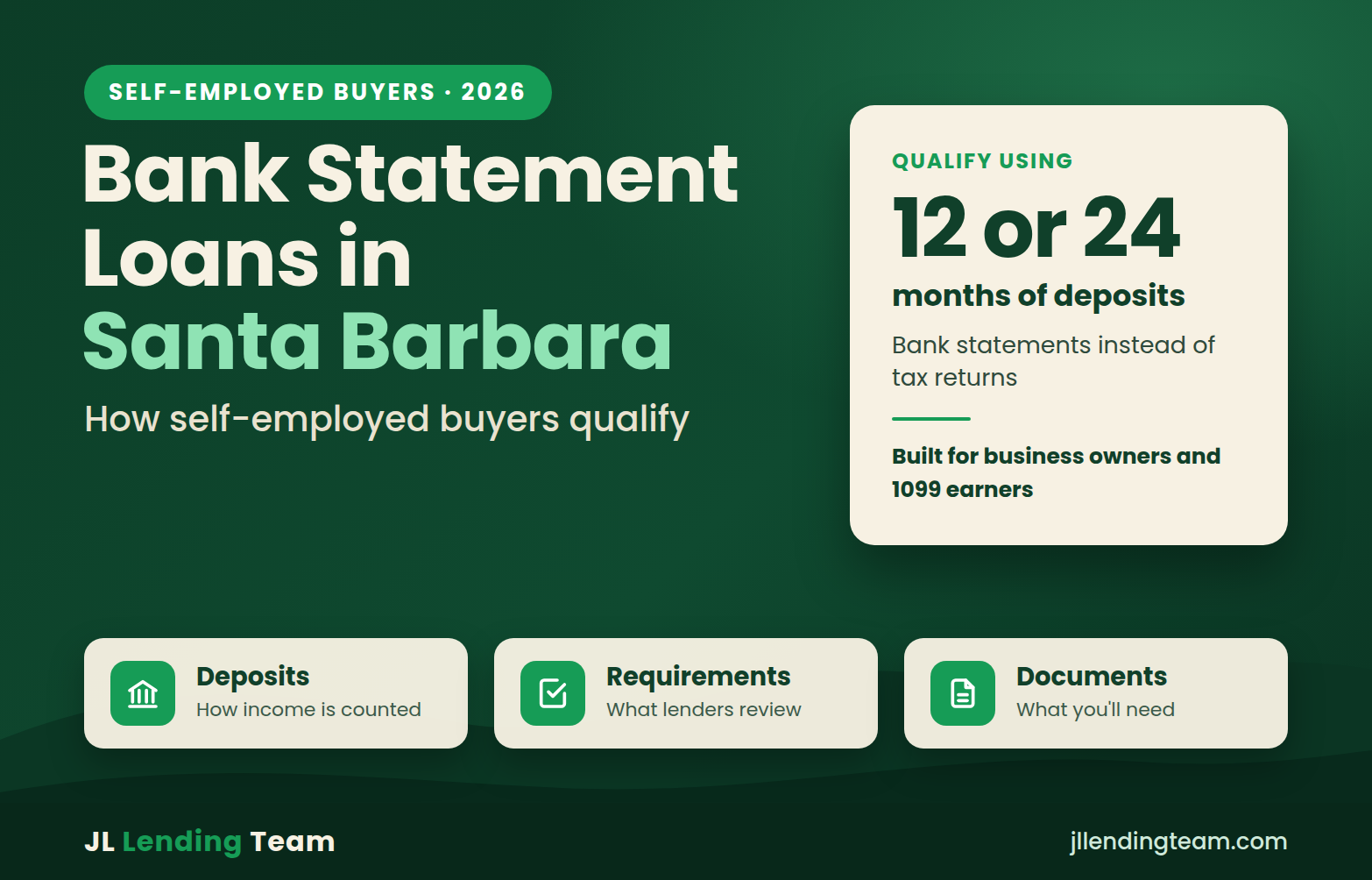
Bank statement loans allow self-employed borrowers to qualify using personal or business bank statements instead of traditional tax returns and W-2s.
What Is a Bank Statement Loan?
A bank statement loan is a non-QM mortgage designed for borrowers with non-traditional income documentation.
Instead of tax returns, lenders evaluate:
- Monthly bank deposits
- Cash flow consistency
- Business revenue patterns
These loans are commonly used by:
- Business owners
- Freelancers
- Contractors
- Entrepreneurs
- Real estate investors
Who Qualifies as Self-Employed?
Most lenders consider borrowers self-employed if they:
- Own 25% or more of a business
- Work as independent contractors
- Receive 1099 income
- Operate as freelancers or consultants
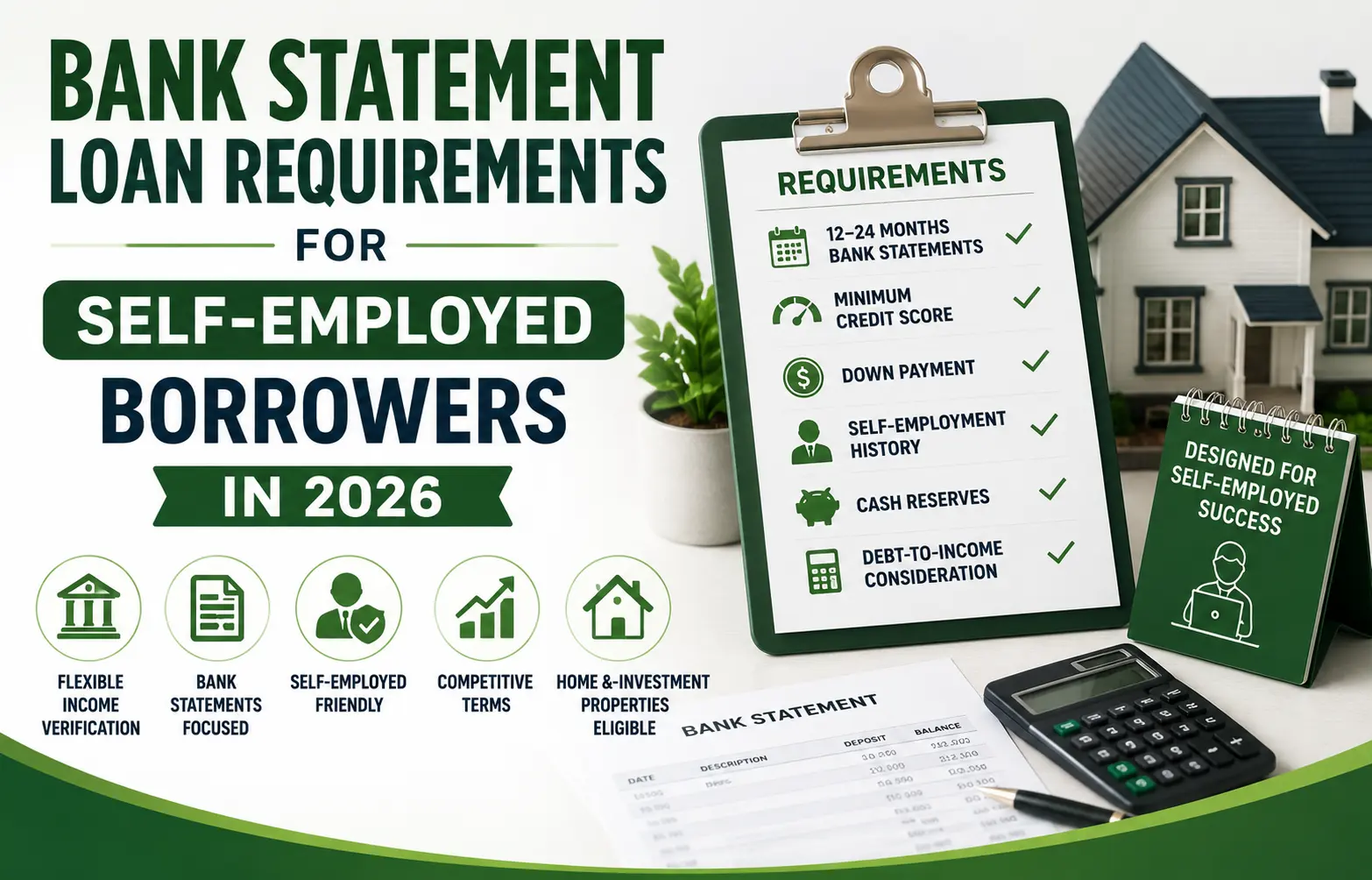
Main Bank Statement Loan Requirements in 2026
1. Bank Statements
Most lenders require:
- 12–24 months of personal or business bank statements
These statements help verify:
- Income consistency
- Cash flow stability
- Deposit history
2. Credit Score Requirements
Many lenders prefer:
- 620+ credit score
Higher scores may help borrowers receive:
- Better rates
- Lower down payments
- More flexible terms
3. Down Payment
Typical down payment requirements range from:
- 10%–20% or more
Investment properties may require larger down payments.
4. Self-Employment History
Lenders usually want:
- At least 1–2 years of self-employment history
This helps establish income stability.
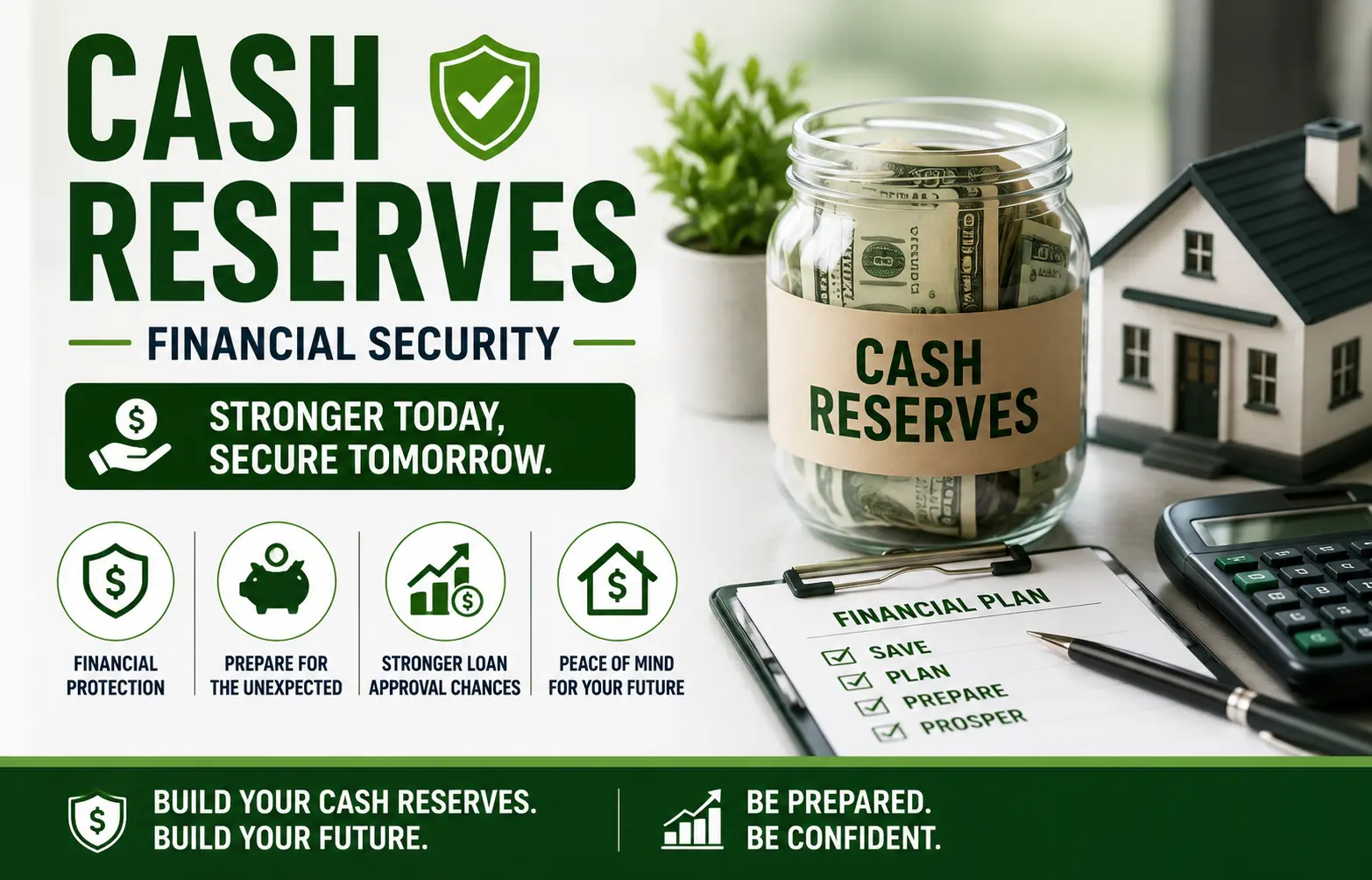
5. Cash Reserves
Many lenders require reserve funds to cover future mortgage payments.
Reserve requirements vary based on:
- Loan amount
- Property type
- Borrower profile
6. Debt-to-Income Considerations
Even though tax returns are not the primary income document, lenders still evaluate:
- Existing debt obligations
- Overall financial stability
Personal vs Business Bank Statements
Personal Statements
Often easier to analyze if business and personal finances are mixed.
Business Statements
May require expense factors to estimate usable income.
Requirements vary by lender.
Why Self-Employed Borrowers Use Bank Statement Loans
Traditional mortgages can be difficult because many business owners maximize tax deductions.
This can reduce taxable income on paper.
Bank statement loans focus more on:
- Actual cash flow
- Deposits
- Business performance
Common Reasons Borrowers Get Denied
Approval challenges may include:
- Inconsistent deposits
- Low credit score
- High debt levels
- Insufficient reserves
- Large unexplained bank deposits
How to Improve Approval Chances
Maintain Consistent Deposits
Stable monthly deposits help strengthen your file.
Reduce Existing Debt
Lower debt improves your financial profile.
Keep Documents Organized
Fast document submission can help streamline underwriting.
Avoid Major Financial Changes
Avoid:
- Large unexplained transactions
- Opening new credit accounts
- Significant cash withdrawals
Self-employed and preparing for a mortgage application?
✔ Review Flexible Loan Options
✔ Explore Bank Statement Loan Programs
Example Scenario
Borrower A
- Self-employed for 3 years
- Strong monthly deposits
- 700 credit score
Strong approval potential
Borrower B
- Inconsistent deposits
- Limited reserves
- High debt obligations
Additional underwriting review likely
Looking for Alternative Income Verification?
Bank statement loans can help self-employed borrowers qualify without relying heavily on traditional tax return income.
✔ Compare Your Mortgage Options
✔ Speak With a Loan Specialist
Read More Bank Statement Loan Approval Timeline in 2026
FAQs
What documents are required for a bank statement loan?
Most lenders require 12–24 months of bank statements, identification, and asset documentation.
How long do you need to be self-employed for a bank statement loan?
Many lenders prefer at least 1–2 years of self-employment history.
What credit score is needed for a bank statement loan?
Most lenders look for at least a 620 credit score, although stronger scores improve loan terms.
Can freelancers qualify for bank statement loans?
Yes. Freelancers, contractors, and business owners commonly use these loans.
Are tax returns required for bank statement loans?
In many cases, lenders focus primarily on bank statements instead of tax returns.