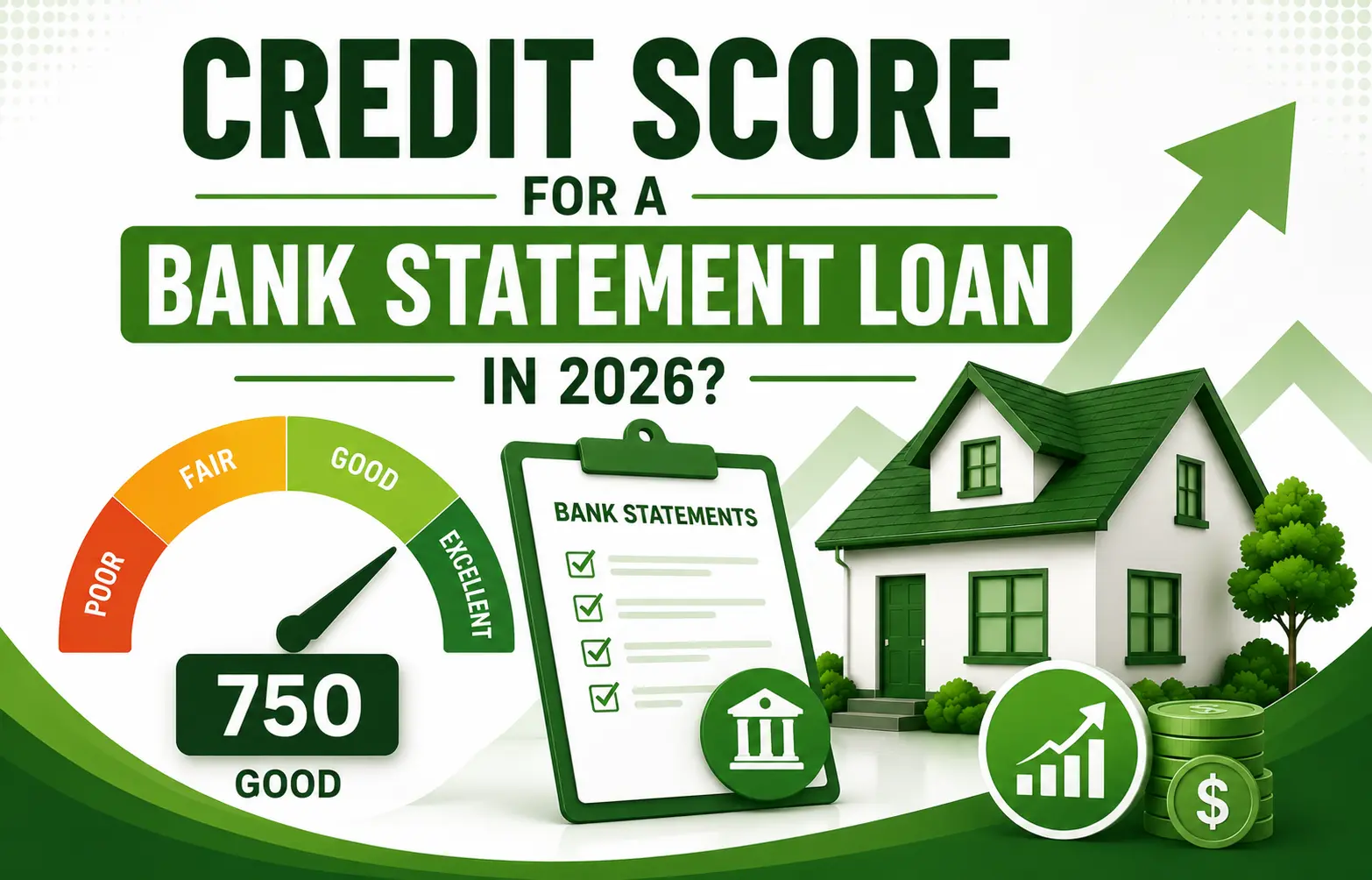
Most lenders prefer a credit score of at least 620 for a bank statement loan, but stronger scores can help you qualify for better rates, lower down payments, and more flexible loan terms.
What Is a Bank Statement Loan?
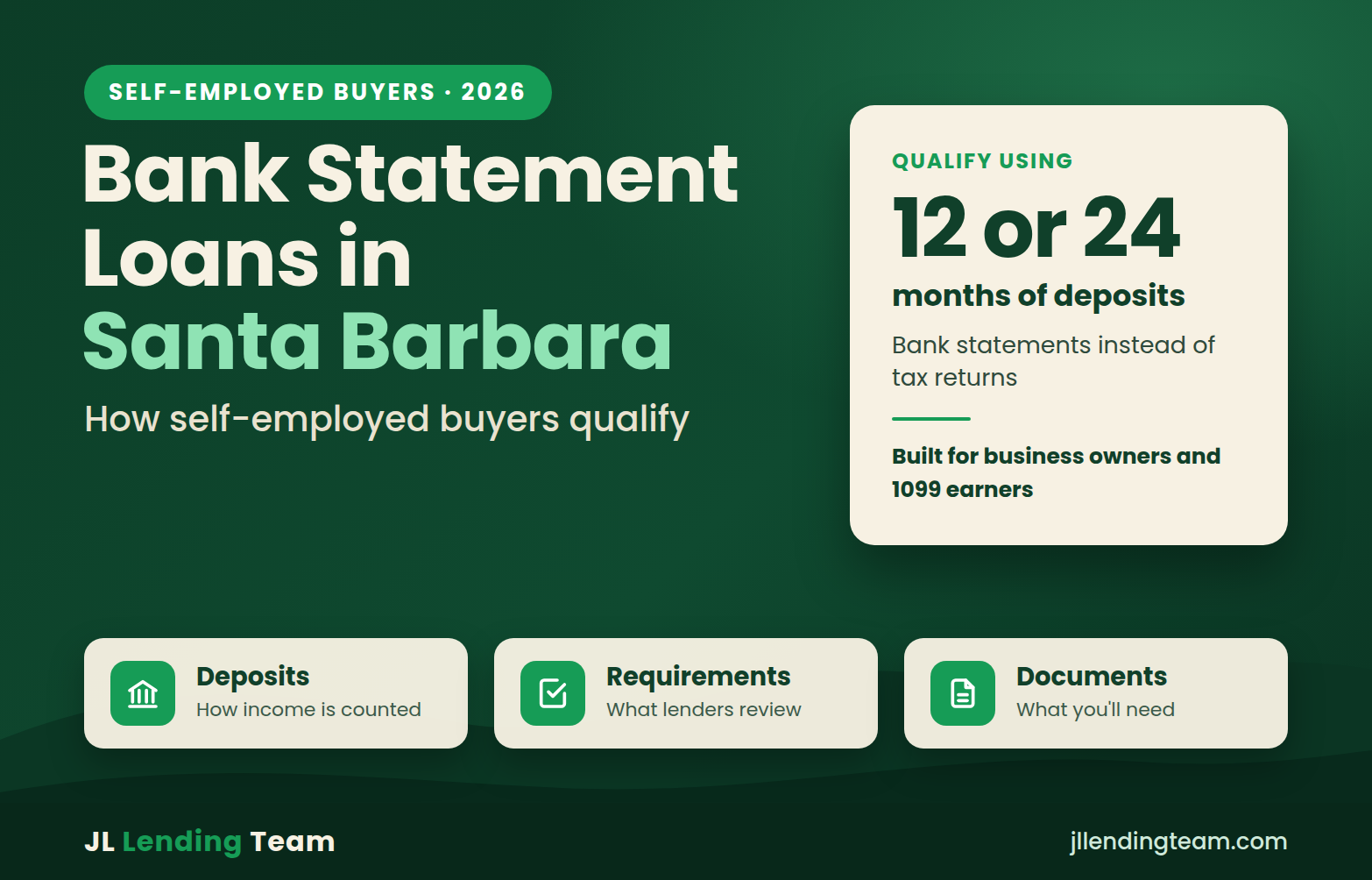
A bank statement loan is a non-QM mortgage designed for borrowers who may not qualify using traditional tax returns.
Instead of W-2s or tax documents, lenders review:
- Personal bank statements
- Business bank statements
- Deposit history
- Cash flow consistency
These loans are commonly used by:
- Self-employed borrowers
- Business owners
- Freelancers
- Independent contractors
Minimum Credit Score for a Bank Statement Loan
Most lenders typically require:
- 620+ minimum credit score
However, requirements vary depending on:
- Down payment
- Loan amount
- Cash reserves
- Property type
- Overall financial profile
How Credit Score Affects Your Loan
Your credit score can impact:
- Loan approval
- Interest rates
- Down payment requirements
- Loan terms
General Rule:
- Higher score → better loan terms
- Lower score → higher lender risk
Want to understand what loan options you may qualify for?
✔ Review Flexible Mortgage Programs
✔ Explore Bank Statement Loan Options
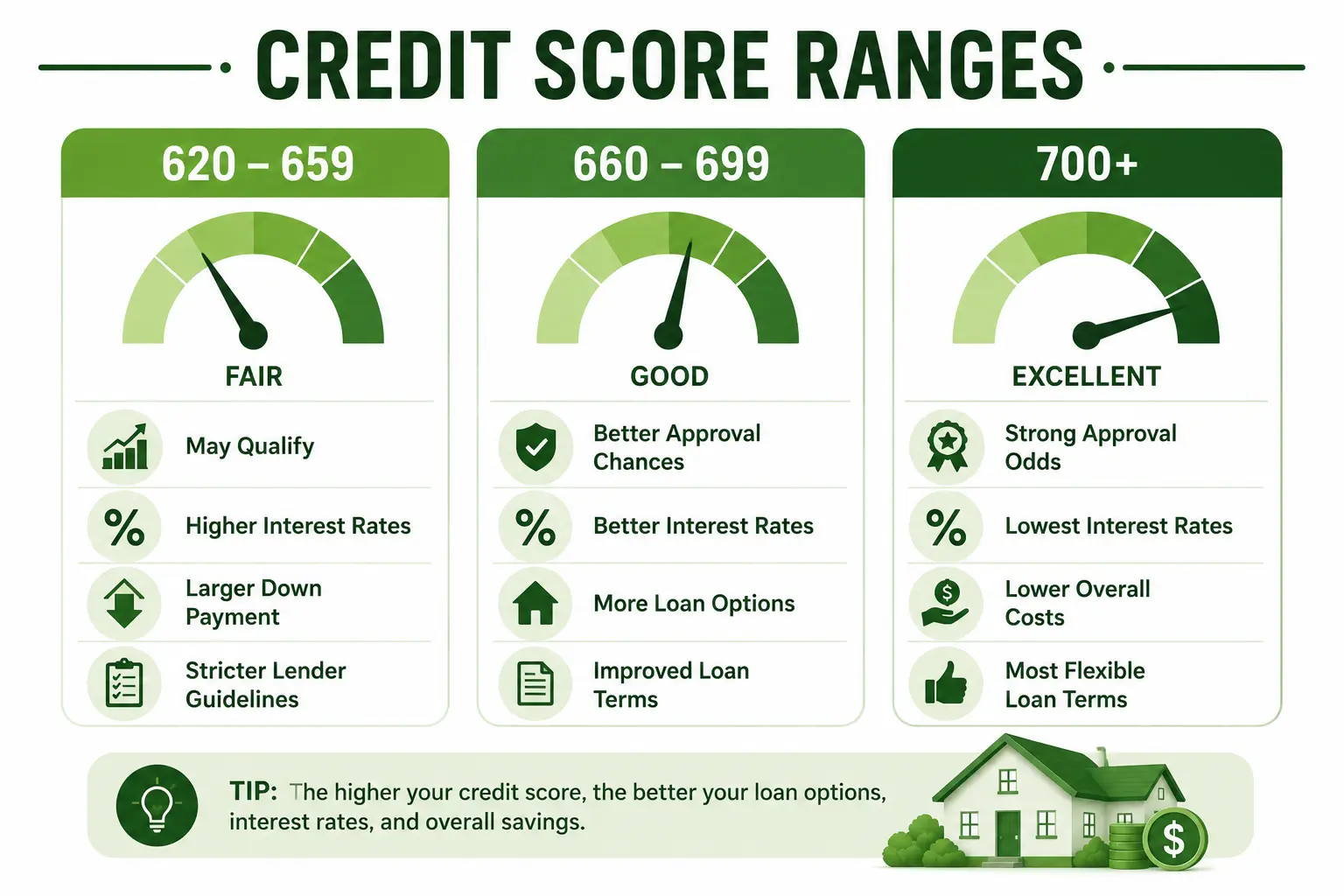
Credit Score Ranges Explained
620–659 Credit Score
Borrowers in this range may still qualify, but could see:
- Higher interest rates
- Larger down payment requirements
- Stricter lender guidelines
660–699 Credit Score
This range may provide:
- Better approval chances
- More lender options
- Improved mortgage terms
700+ Credit Score
Borrowers with strong credit often receive:
- Better interest rates
- Lower financing costs
- More flexible approval options
Can You Get a Bank Statement Loan With Bad Credit?
Yes, some lenders work with lower-credit borrowers.
However, you may need:
- Larger down payment
- Higher cash reserves
- Strong bank deposits
- Lower debt levels
What Else Do Lenders Look At?
Credit score is important, but lenders also review:
- Monthly bank deposits
- Income consistency
- Business cash flow
- Debt-to-income ratio
- Property type
Strong overall finances can help offset a lower credit score.
How to Improve Your Chances of Approval
1. Increase Your Credit Score
Pay down balances and avoid missed payments before applying.
2. Reduce Existing Debt
Lower debt obligations improve your borrower profile.
3. Maintain Strong Bank Deposits
Consistent deposits help verify income stability.
4. Save for a Larger Down Payment
More equity can reduce lender risk.
Example Scenario
Borrower A
- 720 credit score
- Strong deposits
- 20% down payment
Better rates and approval flexibility likely
Borrower B
- 620 credit score
- Higher debt
- Limited reserves
Approval may still be possible with stricter terms
Self-Employed and Exploring Mortgage Options?
Bank statement loans can help borrowers qualify using deposits instead of traditional tax return income.
✔ Compare Your Financing Options
✔ Speak With a Mortgage Specialist
Read More Can You Buy an Investment Property With a Bank Statement Loan in 2026?
FAQs
What credit score is needed for a bank statement loan?
Most lenders prefer at least a 620 credit score, although stronger scores improve loan terms.
Can I get a bank statement loan with bad credit?
Yes, some lenders allow lower scores depending on your overall financial profile.
Does a higher credit score lower interest rates?
Yes. Higher scores often qualify for better rates and lower borrowing costs.
Are bank statement loans easier for self-employed borrowers?
Yes. These loans are designed for borrowers with non-traditional income documentation.
Do bank statement loans require tax returns?
In many cases, no. Lenders usually review bank deposits instead.