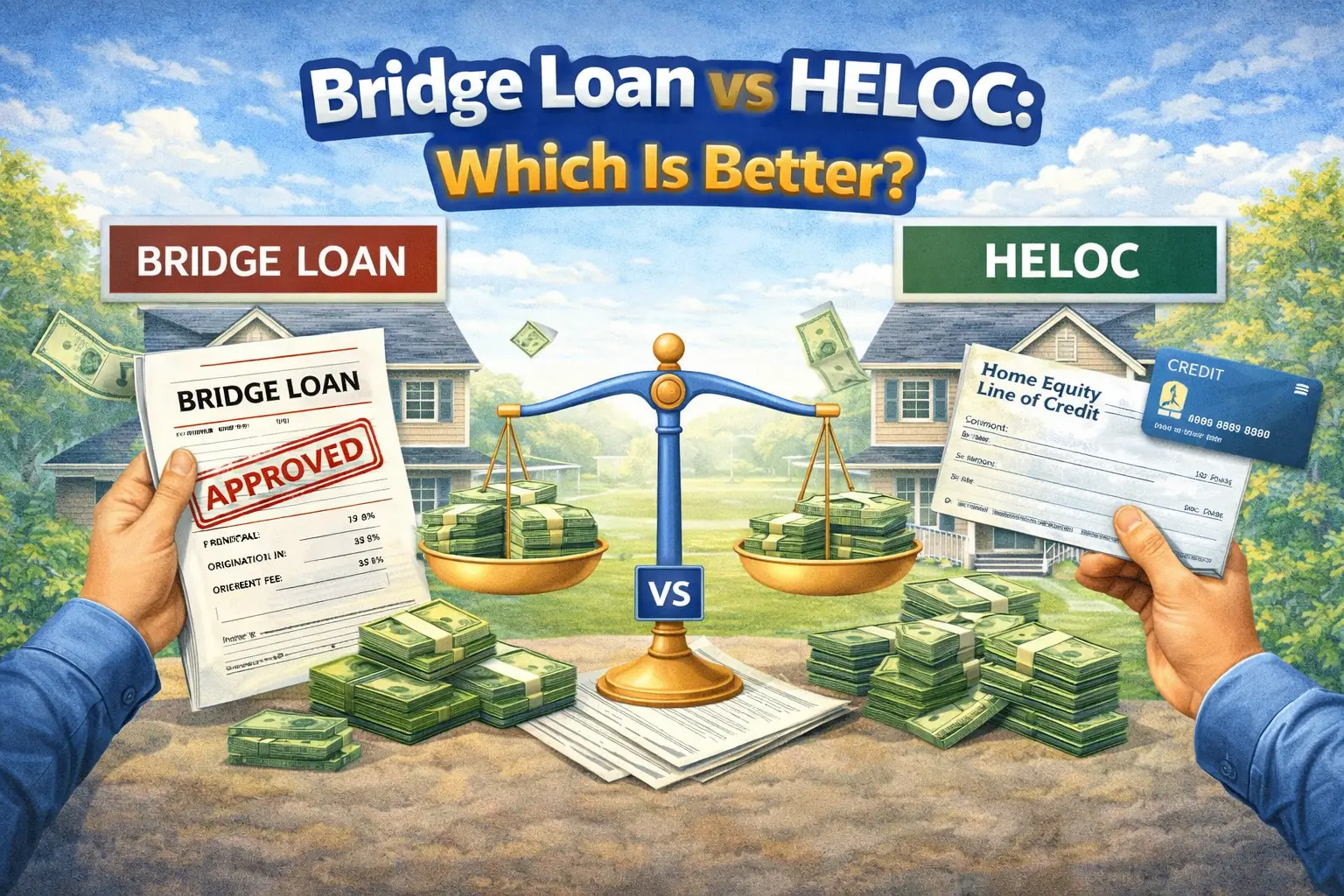
When you need funds to buy a new home or access equity, two common options are a bridge loan and a HELOC (Home Equity Line of Credit).
Both use your home equity, but they work very differently.
Quick Answer:
- A bridge loan is best for short-term home buying needs
- A HELOC is better for flexible, ongoing access to funds
What Is a Bridge Loan?
A bridge loan is a short-term loan that helps you buy a new home before selling your current one.
Key features:
- Short-term (6–12 months)
- Lump sum payment
- Higher interest rates
- Designed for quick home purchases
What Is a HELOC?
A HELOC (Home Equity Line of Credit) is a revolving credit line based on your home equity.
Key features:
- Flexible borrowing (like a credit card)
- Longer term (5–20 years)
- Variable interest rates
- Borrow only what you need
Bridge Loan vs HELOC
| Feature | Bridge Loan | HELOC |
|---|---|---|
| Purpose | Buy new home quickly | Flexible borrowing |
| Loan Type | Lump sum | Credit line |
| Term | Short-term | Long-term |
| Interest Rate | Higher | Usually lower |
| Flexibility | Low | High |
| Repayment | After home sale | Ongoing payments |
When to Use a Bridge Loan
A bridge loan is better if:
- You want to buy a home before selling
- You need a quick down payment
- You’re in a competitive housing market
- You want to avoid contingent offers
Need to buy a home before selling your current one?
✔ Explore Bridge Loan Options in California
✔ Speak With a Mortgage Expert Today
When to Use a HELOC
A HELOC is better if:
- You need flexible access to cash
- You’re not in a rush to buy a home
- You want to borrow gradually
- You’re planning renovations or expenses
Pros and Cons of Bridge Loan
Pros
- Fast access to funds
- Helps secure a home quickly
- No need to wait for your home to sell
Cons
- Higher interest rates
- Short repayment period
- Risk of carrying two mortgages
Pros and Cons of HELOC
Pros
- Flexible borrowing
- Lower interest rates (in many cases)
- Long repayment terms
Cons
- Variable interest rates
- Requires strong equity
- May take longer to set up
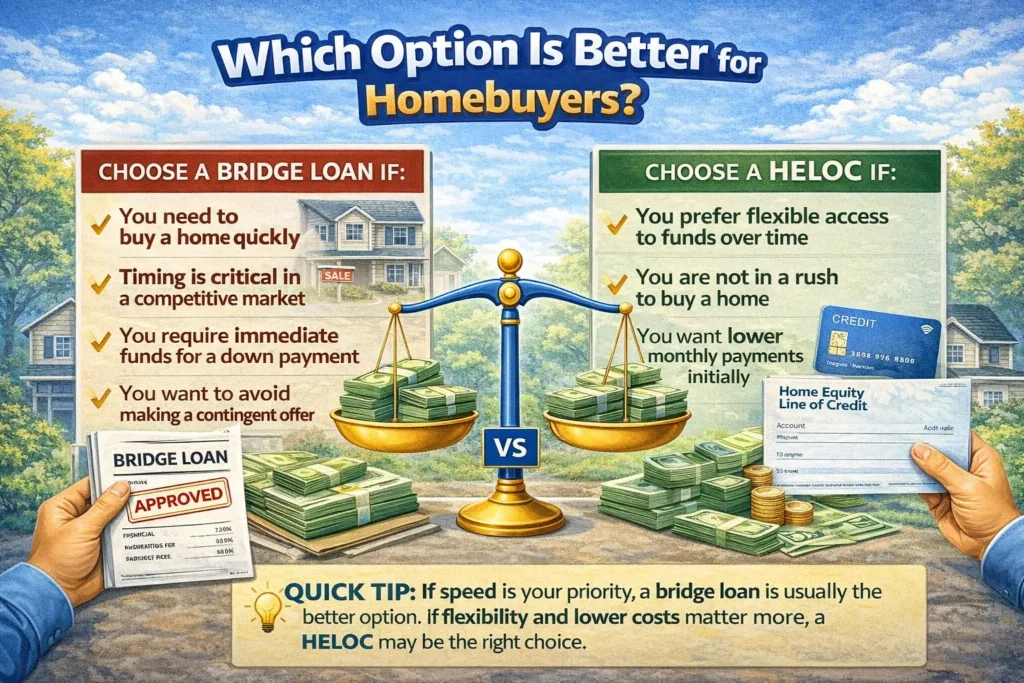
Which Option Is Better for Homebuyers?
It depends on your situation.
Choose a bridge loan if:
- Timing is critical
- You need immediate funds
- You’re buying in a fast-moving market
Choose a HELOC if:
- You want flexibility
- You don’t need funds immediately
- You prefer lower monthly payments
Bridge Loan vs HELOC: Cost Comparison
- Bridge loans → Higher rates, short-term costs
- HELOCs → Lower rates but variable over time
👉 Always compare total costs, not just interest rates.
Not Sure Which Option Is Right for You?
Choosing between a bridge loan and HELOC depends on your goals and timing.
✔ Get Personalized Loan Advice
✔ Start Your Home Financing Plan Today
Read More What Happens If the Home Appraisal Comes in Low?
FAQs
Is a bridge loan better than a HELOC?
A bridge loan is better for short-term home purchases, while a HELOC is better for flexible, long-term borrowing.
Can I use a HELOC as a bridge loan?
Yes, but it may not provide funds as quickly as a bridge loan.
Which has lower interest rates: bridge loan or HELOC?
HELOCs usually have lower rates, but they are often variable.
Can I have both a bridge loan and a HELOC?
Yes, but lenders will evaluate your ability to manage multiple loans.