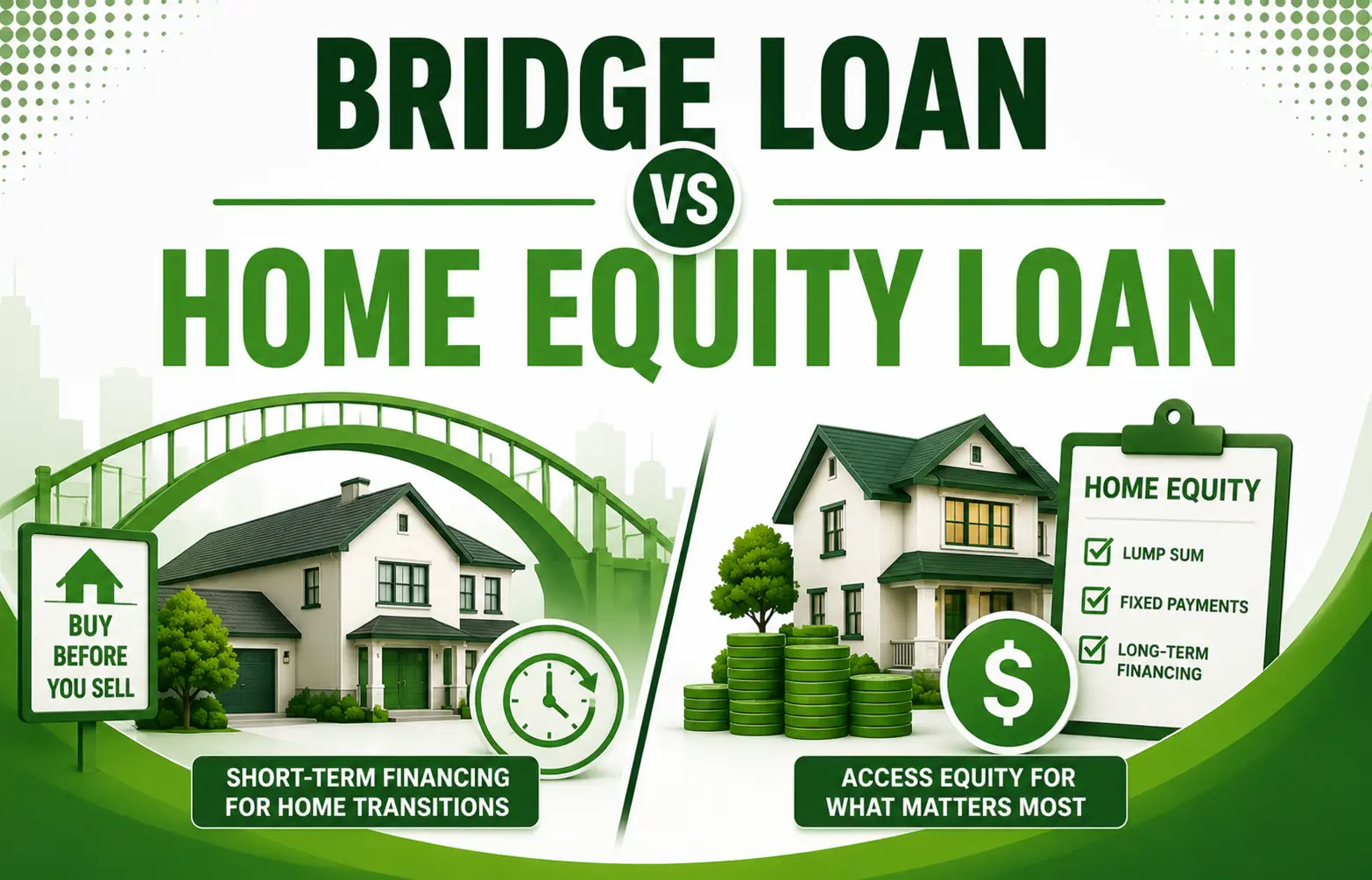
A bridge loan is short-term financing used to buy a new home before selling your current one, while a home equity loan provides a lump sum based on your home equity that is repaid over a longer period.
What Is a Bridge Loan?
A bridge loan is a temporary loan designed to help homeowners:
- Buy a new home before selling the current one
- Access home equity quickly
- Compete in fast-moving housing markets
Bridge loans are usually repaid once the existing home sells.
What Is a Home Equity Loan?
A home equity loan allows homeowners to borrow against their available equity.
You receive:
- A lump sum payment
- Fixed monthly payments
- Longer repayment terms
These loans are commonly used for:
- Home renovations
- Debt consolidation
- Large expenses
Bridge Loan vs Home Equity Loan
| Feature | Bridge Loan | Home Equity Loan |
|---|---|---|
| Purpose | Buy before selling | Access equity for expenses |
| Loan Term | Short-term | Long-term |
| Repayment | Usually after home sale | Monthly installments |
| Funding Speed | Faster | Moderate |
| Interest Rates | Higher | Usually lower |
| Best For | Homebuyers transitioning homes | Homeowners needing cash |
Main Differences Explained
1. Loan Purpose
Bridge Loan
Primarily used for:
- Purchasing a new home before selling your current one
Home Equity Loan
Used for:
- Renovations
- Debt consolidation
- Personal expenses
The intended use is the biggest difference.
2. Repayment Structure
Bridge Loan
Often repaid after your current property sells.
Home Equity Loan
Repaid through fixed monthly payments over several years.
3. Loan Timeline
Bridge Loans
Usually last:
- 6 months to 1 year
Home Equity Loans
Can last:
- 5 to 30 years
4. Interest Rates
Bridge loans typically have:
- Higher interest rates
- Short-term financing costs
Home equity loans often offer:
- Lower fixed rates
- More predictable monthly payments
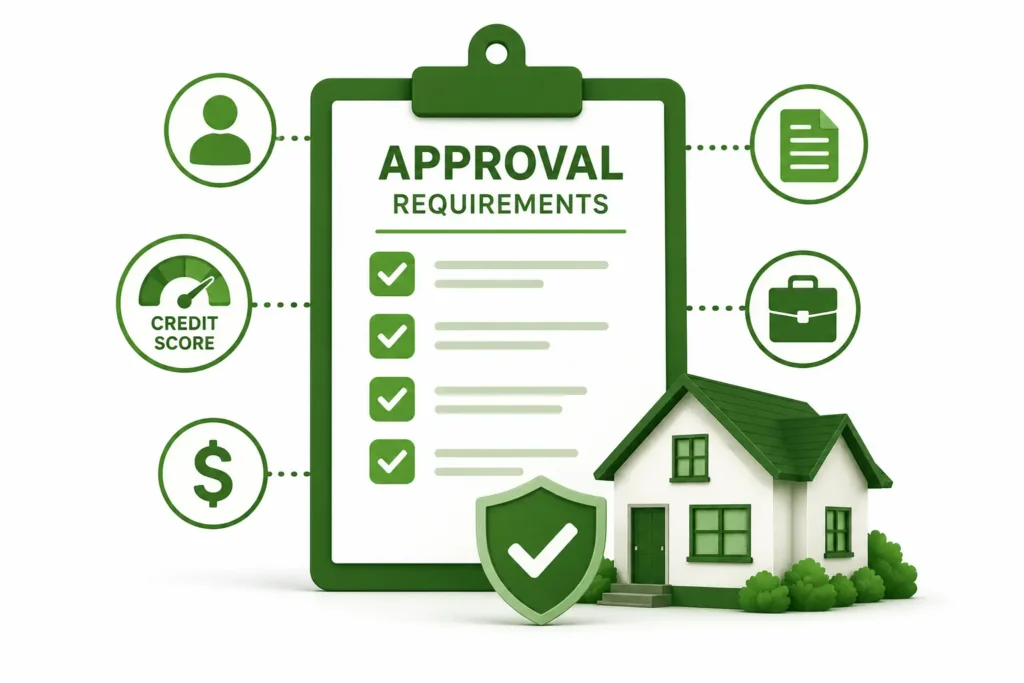
5. Approval Requirements
Both loans usually require:
- Home equity
- Good credit
- Stable finances
However, bridge loans may place more focus on:
- Current property sale potential
- Short-term repayment ability
Which Loan Is Better in 2026?
It depends on your financial goals.
Choose a Bridge Loan If:
- You’re buying a new home before selling
- You need temporary financing quickly
- You want stronger buying power
Choose a Home Equity Loan If:
- You need cash for expenses
- You prefer long-term repayment
- You want stable monthly payments
Not sure which equity option fits your situation?
✔ Compare Your Financing Options
✔ Explore Flexible Mortgage Solutions
Example Scenario
Borrower A
Needs funds to buy a new house before selling the current home.
Better fit for a bridge loan
Borrower B
Needs financing for home renovations and debt consolidation.
Better fit for a home equity loan
Need Access to Your Home Equity?
Bridge loans and home equity loans both offer financing flexibility depending on your goals and timeline.
✔ Review Your Loan Options
✔ Speak With a Mortgage Specialist
Read More Bank Statement Loan vs DSCR Loan: Which Is Better in 2026?
FAQs
What is the difference between a bridge loan and a home equity loan?
A bridge loan is short-term financing used during a home transition, while a home equity loan provides long-term financing based on your home equity.
Which loan has lower interest rates?
Home equity loans usually offer lower rates than bridge loans.
Can I use a bridge loan for renovations?
Bridge loans are mainly designed for buying a new property before selling your current one.
Do both loans require home equity?
Yes. Both loan types use your home equity as collateral.
Which loan is better for buying a new house?
Bridge loans are generally better for temporary home-buying transitions.