Buying your first home is exciting, but it also requires careful financial planning. Many first-time buyers focus only on the home price and forget about other important costs.
Learning the right budgeting tips for first-time homebuyers helps you avoid financial stress and prepare for homeownership with confidence.
This guide explains how to plan your budget before buying a home.
Why Budgeting Is Important Before Buying a Home
Creating a budget helps you understand how much home you can realistically afford.
A clear homebuying budget helps you:
- Avoid taking on too much debt
- Prepare for upfront costs
- Plan monthly mortgage payments
- Maintain financial stability after moving in
Good budgeting ensures your home purchase fits your long-term financial goals.
Budgeting Tips for First-Time Homebuyers
Understand Your Monthly Income
The first step in budgeting is knowing your total monthly income after taxes.
Include all reliable income sources such as:
- Salary or wages
- Bonuses or commissions
- Business income
- Side income if stable
Once you know your income, you can determine how much you can safely spend on housing.
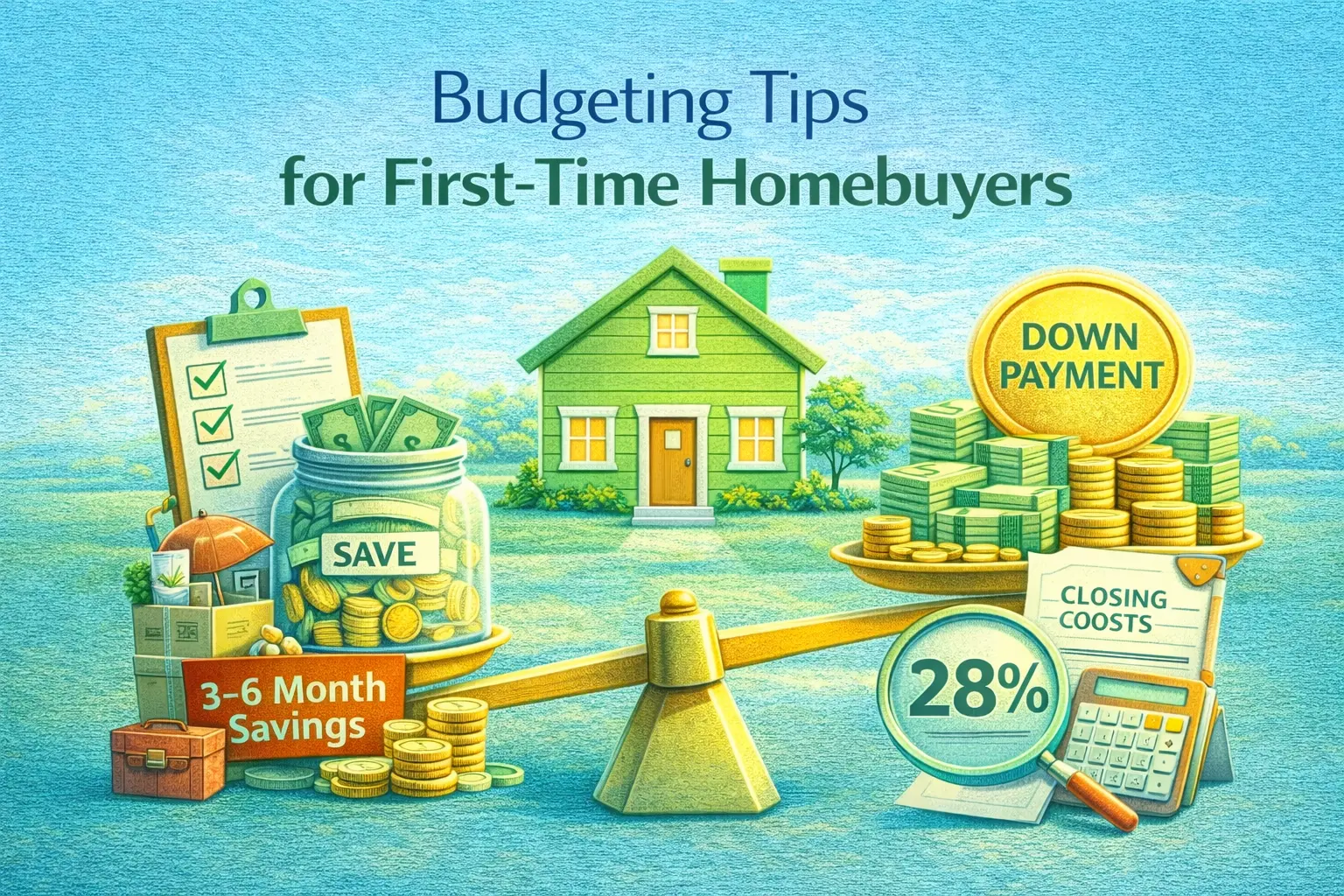
Follow the 28% Housing Rule
Many financial experts recommend the 28% rule for housing expenses.
This means your monthly housing costs should not exceed 28% of your gross monthly income.
Housing costs include:
- Mortgage payment
- Property taxes
- Home insurance
- HOA fees (if applicable)
This rule helps keep your mortgage affordable.
Plan for Your Down Payment
The down payment is one of the biggest upfront costs when buying a home.
Typical down payments include:
- 3–5% for many first-time homebuyer programs
- 3.5% for FHA loans
- 0% for certain VA or USDA loans
Saving more for a down payment can reduce your monthly mortgage payment.

Prepare for Closing Costs
Many first-time buyers forget about closing costs.
Closing costs usually range between 2% and 5% of the home price.
These costs may include:
- Loan origination fees
- Appraisal fees
- Title insurance
- Legal and administrative fees
Planning ahead prevents surprises at closing.
Build an Emergency Fund
After buying a home, unexpected expenses can happen.
For example:
- Home repairs
- Appliance replacement
- Maintenance costs
Experts recommend saving 3–6 months of living expenses as an emergency fund.
This protects your finances after purchasing a home.
Reduce Debt Before Applying for a Mortgage
Your debt-to-income ratio (DTI) plays a big role in mortgage approval.
To improve your chances of approval:
- Pay down credit card balances
- Avoid new loans before applying
- Reduce monthly debt payments
Lower debt makes it easier to qualify for better mortgage terms.
Planning to buy your first home?
Our specialists help first-time buyers understand their budget and find the right home loan.
Track Your Monthly Spending
Tracking your spending helps identify where your money goes each month.
Simple budgeting tools include:
- Banking apps
- Budget spreadsheets
- Personal finance apps
Cutting unnecessary expenses can help you save faster for your home purchase.
Work With a Mortgage Expert
First-time buyers often benefit from professional guidance.
A mortgage expert can help you:
- Understand loan options
- Estimate monthly payments
- Calculate how much home you can afford
- Get pre-approved for a mortgage
Professional advice can make the homebuying process easier.
Ready to Buy Your First Home?
At JL Lending we help first-time homebuyers find affordable loan options and start their homeownership journey.
Read More How Mortgage Interest Rates Affect Your Monthly Payment
FAQs
How much should first-time homebuyers budget for a house?
Most experts recommend keeping housing costs below 28% of your monthly income to maintain a healthy budget.
What is the biggest cost when buying a home?
The largest upfront costs usually include the down payment and closing costs.
How much savings should I have before buying a home?
You should have savings for:
- Down payment
- Closing costs
- Emergency fund
- Moving expenses