I’m Justin Leach, a mortgage broker in Santa Barbara. Getting your offer accepted is a great feeling, but it’s the start of escrow, not the finish line. The next few weeks are when your loan is finalized, the home is appraised, and every detail has to line up before you get the keys.
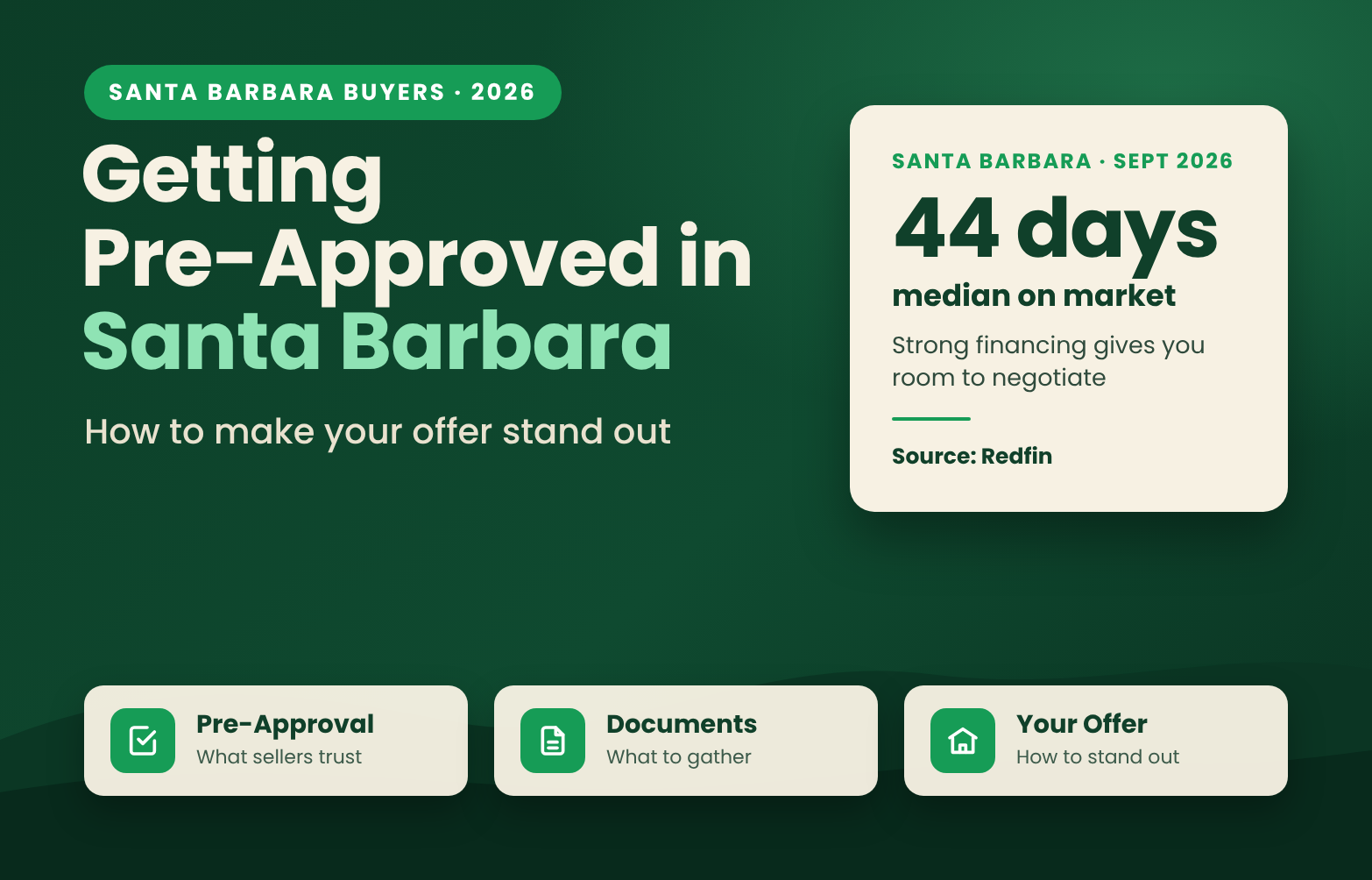
If you’ve followed this series, you already know how to get a pre-approval sellers trust. Here’s what happens next, and how to keep your purchase on track. If you’re about to write an offer, call or text me at 805-456-2256.
Your escrow timeline
Every contract is different, and your purchase agreement sets the exact deadlines. Here’s the general order things happen in:
| Step | What happens |
|---|---|
| Offer accepted | Escrow opens and your deposit goes to the escrow company |
| First week | Inspections begin, your loan application is finalized, and the appraisal is ordered |
| Next few weeks | Appraisal, underwriting, insurance, and contingency deadlines |
| Final days | Closing Disclosure, final walk-through, signing, and funding |
| Closing day | The sale records with the county and you get the keys |
Your earnest money deposit
Shortly after your offer is accepted, you’ll send a good faith deposit to escrow. It shows the seller you’re serious. The escrow company holds it, and it’s usually credited toward your down payment and closing costs when you close.
Your real estate agent will advise you on the amount and the deadline. Your contract also spells out when that deposit could be at risk, so read those terms carefully and ask your agent about anything that isn’t clear.
The appraisal step
Your lender orders an appraisal to confirm the home’s value supports the loan. In Santa Barbara, where many purchases are jumbo loans, this step deserves extra attention. Jumbo lenders may order a second appraisal or use stricter appraisal standards (PNC).
If the appraisal comes in below your purchase price, you usually have a few options:
- Renegotiate the price with the seller.
- Cover the difference with additional cash.
- Ask for a review if the appraisal missed relevant comparable sales.
You also have the right to a copy of your appraisal. Lenders must provide it promptly once it’s completed, or three business days before closing, whichever comes first, unless you agree to waive that timing (CFPB, Regulation B).
Final loan approval
While the appraisal is underway, underwriting reviews your full file. Expect a few follow-up requests, like an updated bank statement or a letter explaining a deposit. Answering quickly keeps everything on schedule.
This is also when your finances need to stay steady. Don’t open new credit, make large purchases, or move money between accounts without checking with your loan officer first. For self-employed buyers, that includes keeping business deposits consistent.
Lock in insurance early
Your lender will need proof of homeowners insurance before closing, and in Santa Barbara County that can take longer than buyers expect. Local agents point to rising premiums, carrier withdrawals, and more homes landing on the California FAIR Plan (Santa Barbara Independent). Start shopping for coverage as soon as your offer is accepted.
Your Closing Disclosure
Your lender must give you a Closing Disclosure at least three business days before you close (CFPB). It lists your final loan terms and closing costs. Compare it line by line with the Loan Estimate you received earlier, and ask about anything that changed.
Protect your wire
Wire fraud is one of the biggest risks at closing. Scammers send emails that look like they came from your escrow officer, lender, or agent, with fake wiring instructions. In 2025, the FBI’s Internet Crime Complaint Center received 12,368 real estate fraud complaints with more than $275 million in reported losses (Santa Barbara Independent, citing IC3).
- Always call to confirm wiring instructions using a phone number you already know is real, not one from the email.
- Treat any last-minute change to payment instructions as a red flag.
- If something seems wrong, call your bank right away and ask them to recall the wire.
Closing day and keys
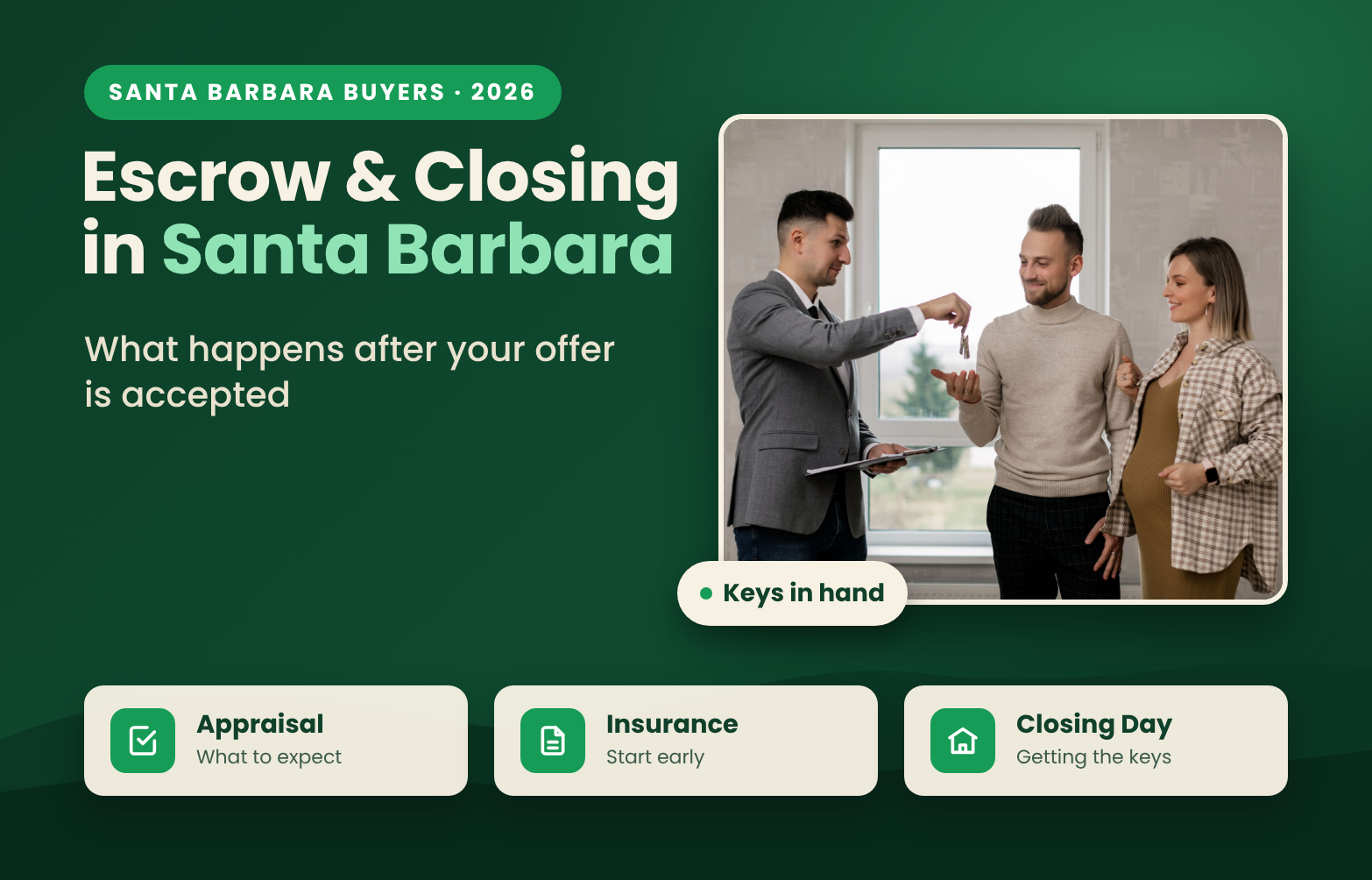
Before closing, you’ll do a final walk-through to make sure the home is in the condition you agreed to. Then you’ll sign your loan documents, your funds and the loan are sent to escrow, and the sale is recorded with Santa Barbara County. Once it records, the home is yours.
How we help you close
- We stay in touch with your agent and escrow, so deadlines don’t sneak up on anyone.
- We track every underwriting condition and tell you exactly what’s needed and why.
- We walk you through your Closing Disclosure before you sign, so there are no surprises.
- We know jumbo and self-employed files, where appraisals and document reviews take extra care.
Frequently asked questions
How long does escrow take in Santa Barbara?
It depends on your contract. Many purchases close in about a month, but jumbo loans, self-employed income, or a low appraisal can add time. Your purchase agreement sets the exact closing date.
What if the appraisal comes in low?
You can renegotiate the price, cover the difference, or ask for a review if relevant sales were missed. Your agent and loan officer can help you decide which makes sense.
Can I still cancel after acceptance?
Your contract’s contingencies set the conditions and deadlines for canceling. Talk with your real estate agent about your specific terms, since timing matters.
When should I lock my rate?
That depends on your closing date and the market. We’ll talk through the timing together so your lock covers your closing.
Do you only work in Santa Barbara?
No. I work throughout Santa Barbara County and all of California, and I’m also licensed in Arizona and Texas.