
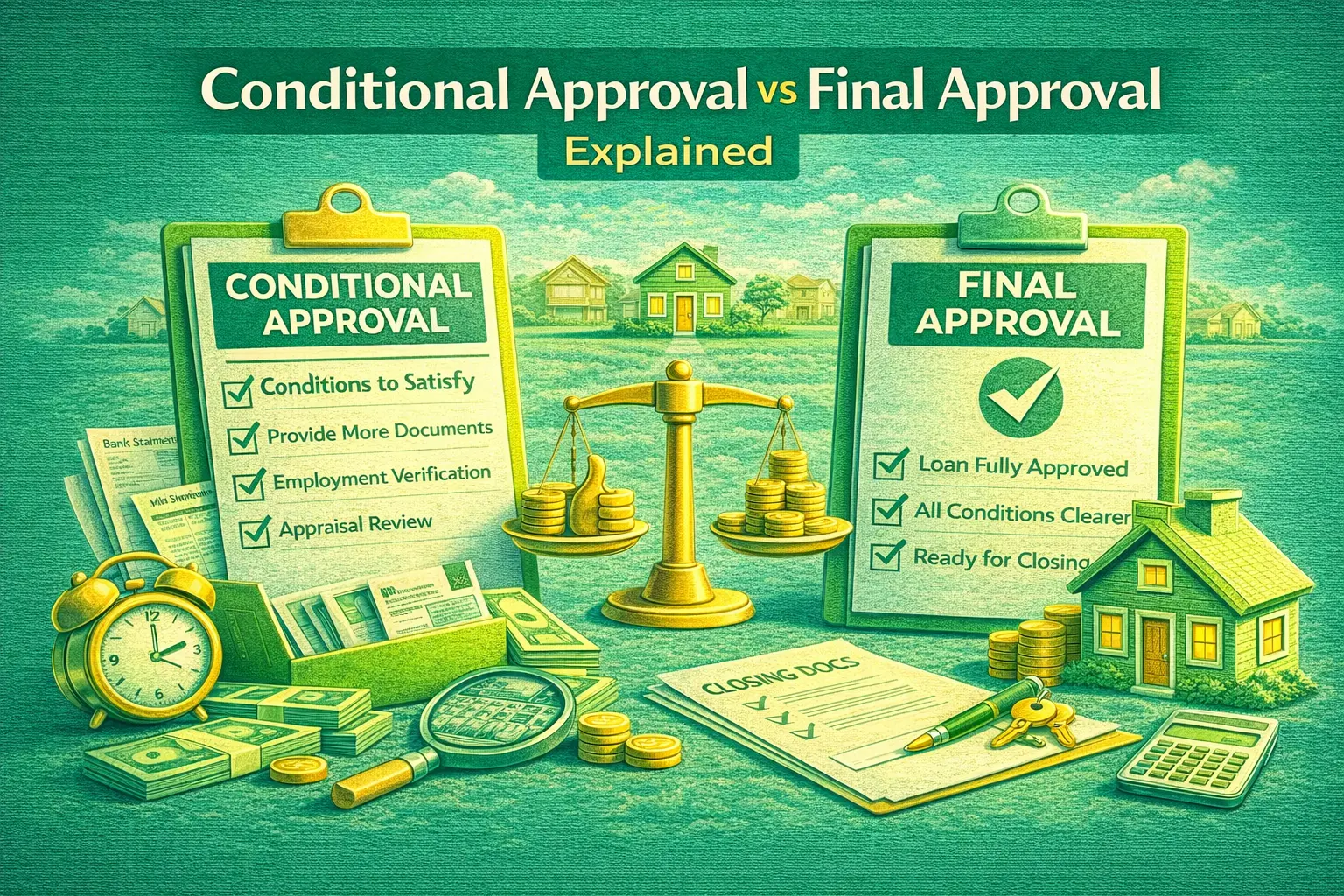
When applying for a mortgage, you may hear two important terms: conditional approval and final approval.
Both are stages in the mortgage approval process, but they mean different things.
Conditional approval means the lender is willing to approve your loan if certain conditions are met.
Final approval means the lender has reviewed everything and your mortgage is fully approved for closing.
What Is Conditional Approval?
Conditional approval is a step in the underwriting process where the lender agrees to approve your mortgage after specific requirements are completed.
At this stage:
- Your credit, income, and financial documents have been reviewed
- The lender believes you qualify for the loan
- Additional documents or verification may still be required
Conditional approval is sometimes called “approval with conditions.”
Need help moving from mortgage pre-approval to final approval?
The mortgage specialists at JL Lending Team guide homebuyers through every step of the loan process.

✔ Speak With a Mortgage Expert
✔ Get Pre-Approved for a Home Loan
Common Conditions Lenders May Request
During conditional approval, lenders often ask for a few more documents before granting final approval.
Common conditions include:
- Updated bank statements
- Proof of employment verification
- Additional pay stubs
- Letter explaining large bank deposits
- Homeowners insurance confirmation
- Property appraisal review
Once these conditions are satisfied, the loan can move forward.
What Is Final Approval?
Final approval means the lender has completed the underwriting process and confirmed that all loan requirements have been met.
At this stage:
- All documents have been verified
- Conditions from underwriting are cleared
- The property appraisal is approved
- The loan is ready for the closing process
Final approval usually means you are cleared to close on the home.
Conditional Approval vs Final Approval
| Conditional Approval | Final Approval |
|---|---|
| Loan is approved with conditions | Loan is fully approved |
| Additional documents may be required | All conditions are satisfied |
| Underwriting review is still ongoing | Underwriting is complete |
| Closing cannot happen yet | Loan is ready for closing |
How Long Does It Take to Move From Conditional Approval to Final Approval?
The timeline can vary depending on how quickly the borrower provides the requested documents.
In most cases:
- 3 to 7 days if documents are submitted quickly
- 1 to 2 weeks if additional verification is required
Delays can happen if the lender needs more documentation or clarification.
What Happens After Final Mortgage Approval?
Once final approval is issued, the next step is the mortgage closing process.
During this stage:
- The lender prepares the closing documents
- The closing disclosure is sent to the borrower
- The buyer signs loan documents
- The property ownership is transferred
After closing, the mortgage loan becomes active.
Can a Loan Be Denied After Conditional Approval?
Yes, although it is uncommon.
A loan may still be denied if:
- New debt is added before closing
- Income or employment changes
- The appraisal value comes in too low
- Required documents are not provided
For this reason, borrowers are advised to avoid major financial changes during the mortgage process.
Tips to Move From Conditional to Final Approval Faster
Homebuyers can help speed up the process by:
- Submitting requested documents quickly
- Avoiding new credit accounts or loans
- Keeping employment stable
- Maintaining consistent bank balances
These steps help the underwriting process move smoothly toward final approval.
Ready to Buy a Home?
Understanding the mortgage approval process can help you avoid delays and close on your home faster.
✔ Explore Mortgage Options
✔ Start Your Home Loan Application Today
Read More What Is an Earnest Money Deposit When Buying a Home?
FAQ
Is conditional approval the same as final approval?
No. Conditional approval means the lender needs additional documents before granting final approval.
Does conditional approval mean my loan will go through?
In most cases, yes. However, the borrower must still satisfy all underwriting conditions.
What does “clear to close” mean?
Clear to close means the lender has issued final approval and the loan is ready for the closing process.