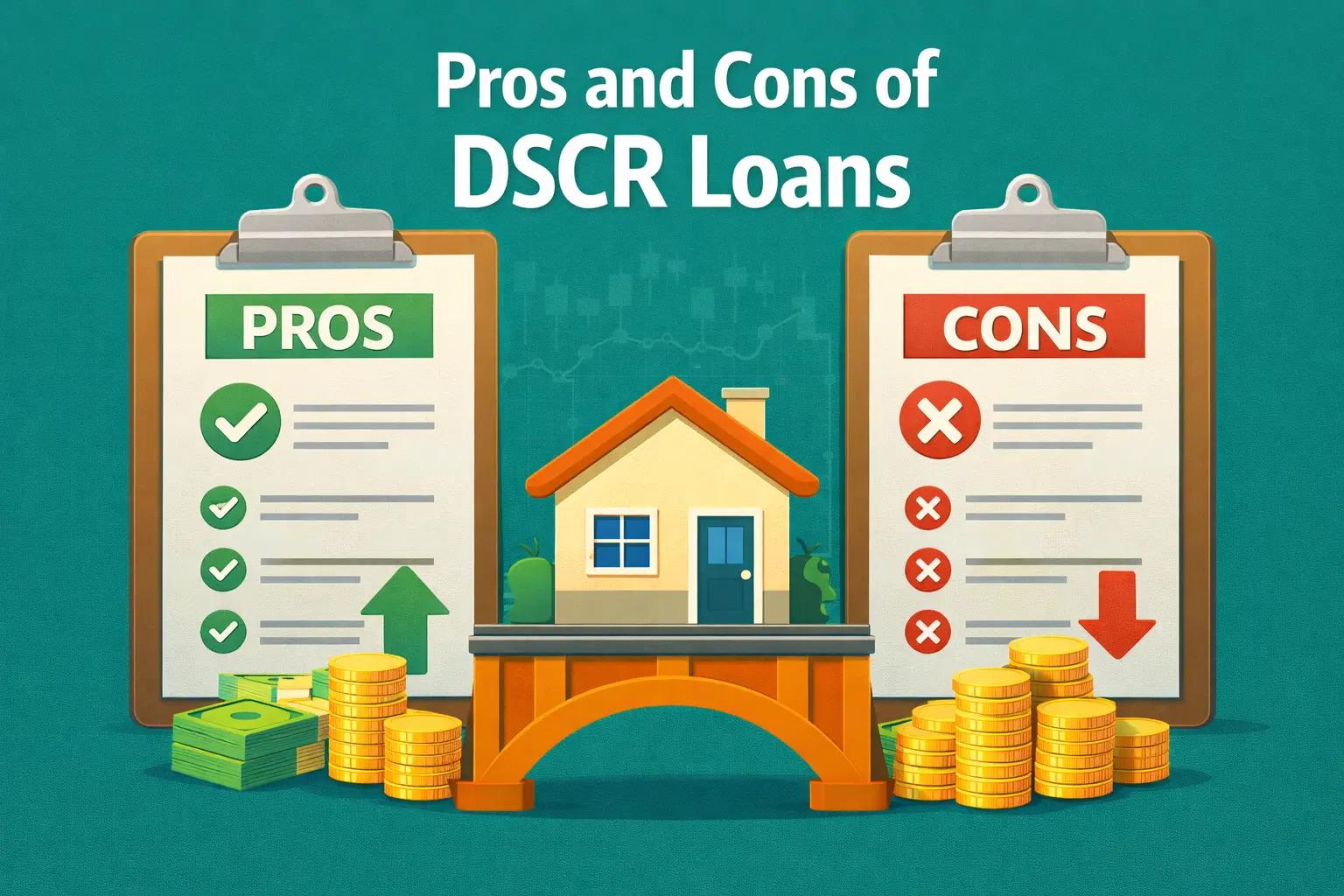
DSCR loans offer flexibility and easier qualification for investors, but they often come with higher interest rates and stricter property requirements.
DSCR loans are becoming popular among real estate investors because they focus on property income instead of personal income.
But like any financing option, DSCR loans come with both advantages and risks.
What Is a DSCR Loan?
A DSCR (Debt-Service Coverage Ratio) loan is a mortgage designed for investment properties.
Instead of using your personal income, lenders evaluate:
- Rental income from the property
- Property cash flow
- Ability to cover loan payments
Pros of DSCR Loans
1. No Personal Income Verification
One of the biggest benefits:
- No W-2s or tax returns required
- Ideal for self-employed investors
Approval is based on property income, not your job
2. Easier Qualification for Investors
DSCR loans are more flexible compared to traditional loans.
- Less focus on employment
- Faster approvals
- Simplified documentation
3. Unlimited Property Potential
Many DSCR programs allow:
- Multiple investment properties
- Portfolio growth
- Scaling real estate investments
4. Fast Closing Process
DSCR loans often close faster because:
- Fewer documents are required
- Streamlined underwriting process
5. Great for Rental and Airbnb Properties
You can use DSCR loans for:
- Long-term rentals
- Short-term rentals (Airbnb)
- Income-producing properties
Looking to invest in rental properties?
✔ Check Your DSCR Loan Eligibility
✔ Get Approved Based on Rental Income
Cons of DSCR Loans
1. Higher Interest Rates
DSCR loans typically have:
- Higher rates than conventional loans
- Increased borrowing cost over time
2. Larger Down Payment Required
Most lenders require:
- 20%–25% down payment
This can be a barrier for some investors.
3. Property Income Must Qualify
Approval depends on rental income.
- Low cash flow = higher risk of denial
- Property must meet DSCR ratio requirements
4. Limited to Investment Properties
You cannot use DSCR loans for:
- Primary residence
- Personal homes
5. Prepayment Penalties May Apply
Some DSCR loans include:
- Penalties for early payoff
- Restrictions on refinancing timing
When Is a DSCR Loan a Good Idea?
A DSCR loan is a strong option if:
- You’re a real estate investor
- You have rental income properties
- You want to scale your portfolio
- You prefer not to show personal income
When Should You Avoid a DSCR Loan?
It may not be the best option if:
- You’re buying a primary home
- You want the lowest possible interest rate
- You don’t have strong rental income
DSCR Loan Pros vs Cons
| Pros | Cons |
|---|---|
| No income verification | Higher interest rates |
| Easier approval | Larger down payment |
| Fast closing | Property must cash flow |
| Scalable investing | Limited to investment use |
Ready to Grow Your Real Estate Portfolio?
DSCR loans can help you scale faster without traditional income limits.
✔ Apply for a DSCR Loan Today
✔ Speak With an Investment Loan Expert
Read More Are Bridge Loans Hard to Get?
FAQs
What are the advantages of DSCR loans?
They allow investors to qualify using rental income instead of personal income.
What are the disadvantages of DSCR loans?
Higher interest rates, larger down payments, and property income requirements.
Are DSCR loans worth it?
They are worth it for investors who want flexibility and faster portfolio growth.
Do DSCR loans require good credit?
Yes, most lenders prefer a good credit score (usually 620–680+).
Can beginners use DSCR loans?
Yes, but strong property cash flow is important.