If you’re considering a USDA home loan, you probably want to know how long the whole process takes, from start to finish.
In this guide you’ll learn:
- Typical USDA loan timeline
- How long approval usually takes
- What affects the timeline
- Real and official timeframe references
What Is a USDA Loan Timeline?
The USDA loan timeline refers to the time it takes from:
- Applying for the loan
- Going through underwriting and review
- Getting final USDA approval
- Closing and getting your home loan funded
This timeline is usually longer than a conventional mortgage because USDA uses a two-step approval process, first by your lender and then by the USDA Rural Development office.
Not sure how long your USDA loan approval could take? Our experts can review your situation and guide you through the process.
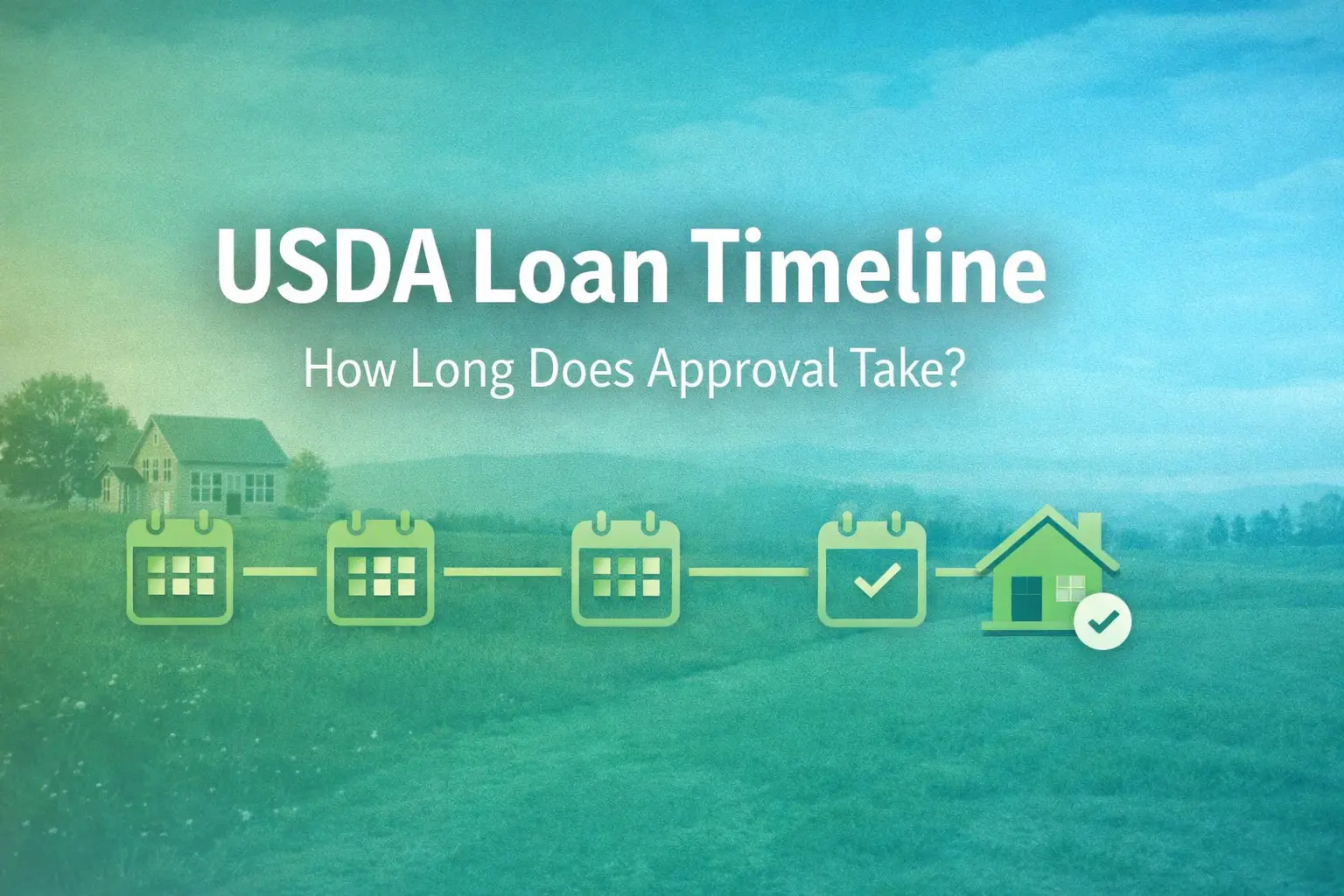
Typical USDA Loan Timeline
Here’s the USDA loan timeline you can expect in most cases:
1. Pre-Approval — 1 to 3 days
You provide basic finances, and the lender gives a rough idea of how much you can borrow. This step doesn’t affect your USDA approval time directly but helps start the loan process on the right foot.
2. Application & Processing — 1 to 2 weeks
Once you find a USDA-eligible home and submit a full loan application, the lender reviews your:
- Income
- Credit
- Assets
- Debts
Documents are sent for underwriting.
3. Lender Underwriting — 2 to 3 weeks
Underwriting means your lender reviews every part of your loan file.
This step includes:
- Verifying income and assets
- Checking credit history
- Property appraisal review
Underwriting can go quicker if your file is clean and complete.

4. USDA Final Review — 2 to 7 business days
After your lender approves the loan, your file goes to the USDA Rural Development office for final review and guarantee commitment.
This is the extra step that makes USDA loans longer than many other mortgage types.
5. Closing & Funding — 3 to 7 days
Once USDA final approval is issued:
- Final paperwork is prepared
- Closing documents are signed
- Funds are released, and you take ownership
This also includes your closing appointment with title and escrow.
Total USDA Loan Timeline
Overall, from application to closing, most USDA loans take:
30 to 45 days
This is the typical timeframe with complete documents and no major issues.
| Step | Typical Time |
|---|---|
| Pre-Approval | 1–3 days |
| Application & Processing | 1–2 weeks |
| Lender Underwriting | 2–3 weeks |
| USDA Final Review | 2–7 business days |
| Closing | 3–7 days |
| Total | 30–45 days |
Some clean files with early USDA submission have closed in under 30 days.
What Can Extend the USDA Loan Timeline?
Even though 30–45 days is typical, your USDA loan timeline could be longer if:
- Documentation is incomplete
- Appraisal takes longer
- USDA office backlog happens
- Title or inspection issues arise
- Income is complicated (self-employment, bonuses, etc.)
Delays usually add a few days to a few weeks.
Tips to Speed Up Your USDA Loan Timeline
To avoid delays:
✔ Submit complete documents early
✔ Choose an experienced USDA lender
✔ Order appraisal quickly
✔ Respond fast to lender or USDA requests
✔ Avoid job or credit changes during approval
Planning ahead helps keep your timeline on track.
Key Takeaways
- USDA loans typically take 30–45 days from application to closing.
- There are multiple stages with checks and reviews.
- Clean, complete files close faster.
- USDA adds a final review step that can take a few days.
Understanding these steps helps you plan better and avoid surprises.
Read More Common Reasons USDA Loans Get Denied
FAQs
How long does USDA pre-approval take?
Pre-approval usually takes 1–3 days once your documents are submitted.
Can USDA loans close in under 30 days?
Yes. With complete documentation and no issues, some USDA loans close faster than 30 days.
Does USDA add extra time compared to other loans?
Yes. Because it requires a final USDA review step after lender underwriting.
Why does USDA final review take longer sometimes?
It depends on workload and staffing at the USDA state office.
Does appraisal add to the USDA timeline?
Yes, because the property must meet specific standards.