Buying a home requires saving for a down payment, which is often the biggest upfront cost for homebuyers. Many buyers delay their home purchase because they think saving will take many years.
The good news is there are practical ways to save for a down payment faster with the right budgeting strategy and financial planning.
This guide explains simple steps that can help you reach your homebuying goal sooner.
How Much Down Payment Do You Need?
Before you start saving, it helps to understand how much you may need.
Typical down payment requirements include:
- 3–5% for many first-time homebuyer programs
- 3.5% for FHA loans
- 0% for VA or USDA loans (eligible buyers)
The exact amount depends on the loan program and the price of the home.
Knowing your target savings goal makes it easier to build a plan.
Want to know how much down payment you need for your situation?
Speak with a expert to explore loan options and first-time buyer programs.
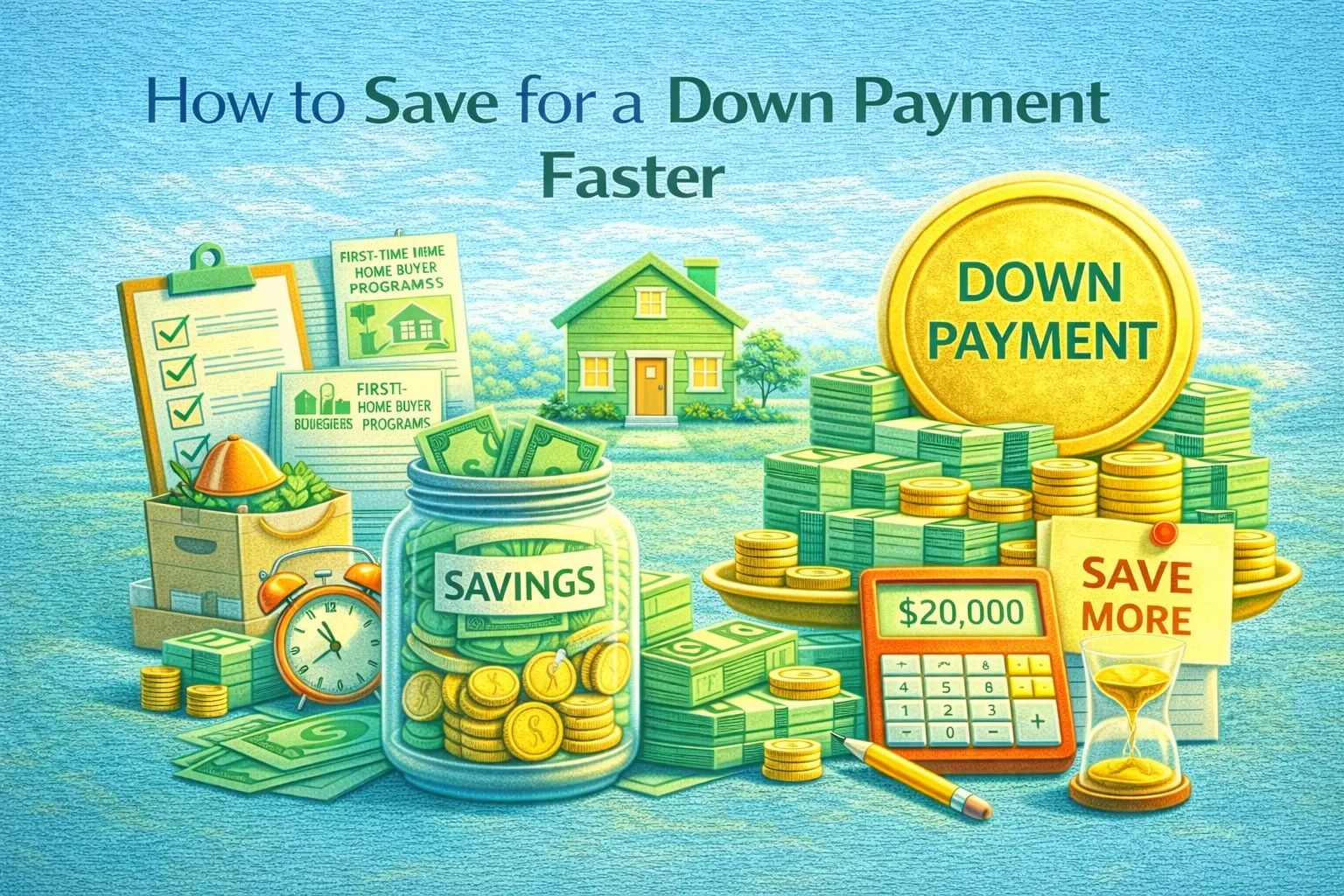
Set a Clear Down Payment Goal
Start by estimating the price range of homes you want to buy.
For example:
- $300,000 home with 5% down payment = $15,000
- $400,000 home with 5% down payment = $20,000
Once you know the amount you need, you can break the goal into monthly savings targets.
This makes the goal feel more achievable.
Create a Dedicated Savings Account
Opening a separate savings account for your down payment helps you stay disciplined.
Benefits include:
- Easier tracking of progress
- Less temptation to spend the money
- Automatic transfers from your main account
Automating your savings can help you build your down payment faster.
Reduce Unnecessary Monthly Expenses
Cutting small expenses can free up more money for your home savings.
Examples include:
- Dining out less often
- Canceling unused subscriptions
- Reducing entertainment spending
- Shopping with a monthly budget
Even saving $200–$400 per month can significantly speed up your savings timeline.
Increase Your Income
Increasing your income can accelerate your down payment savings.
Some common ways include:
- Freelance or side work
- Overtime hours
- Selling unused items
- Short-term part-time work
Directing extra income straight into your savings account helps you reach your goal faster.

Use First-Time Homebuyer Assistance Programs
Many local and state programs offer financial assistance for homebuyers.
These programs may provide:
- Down payment grants
- Low-interest assistance loans
- Closing cost support
Researching available programs can reduce the amount you need to save on your own.
Save Windfalls and Bonuses
Unexpected money can make a big difference in your savings progress.
Consider saving:
- Tax refunds
- Work bonuses
- Cash gifts
- Investment profits
Adding lump-sum deposits to your savings can shorten your timeline significantly.
Avoid Large New Debts
Taking on new debt while saving for a home can slow your progress.
Examples include:
- Car loans
- Large credit card balances
- Personal loans
Reducing debt improves your financial profile and helps you qualify for better mortgage terms.
Work With a Mortgage Expert Early
Many buyers wait too long to speak with a mortgage professional.
However, early guidance can help you:
- Estimate your down payment goal
- Understand loan options
- Prepare for mortgage approval
- Plan a realistic homebuying timeline
Professional advice can make saving more efficient.
Ready to Buy a Home Sooner?
we help homebuyers understand down payment options and find the right loan programs.
Read More Budgeting Tips for First-Time Homebuyers
FAQs
What is the fastest way to save for a down payment?
The fastest way is combining automatic savings, cutting expenses, and increasing income through side work or bonuses.
How long does it take to save for a down payment?
It depends on your income and savings rate. Many buyers save for 1–3 years, but assistance programs can shorten this timeline.
Can I buy a home with a small down payment?
Yes. Many mortgage programs allow 3–5% down, and some government-backed loans offer 0% down for eligible buyers.