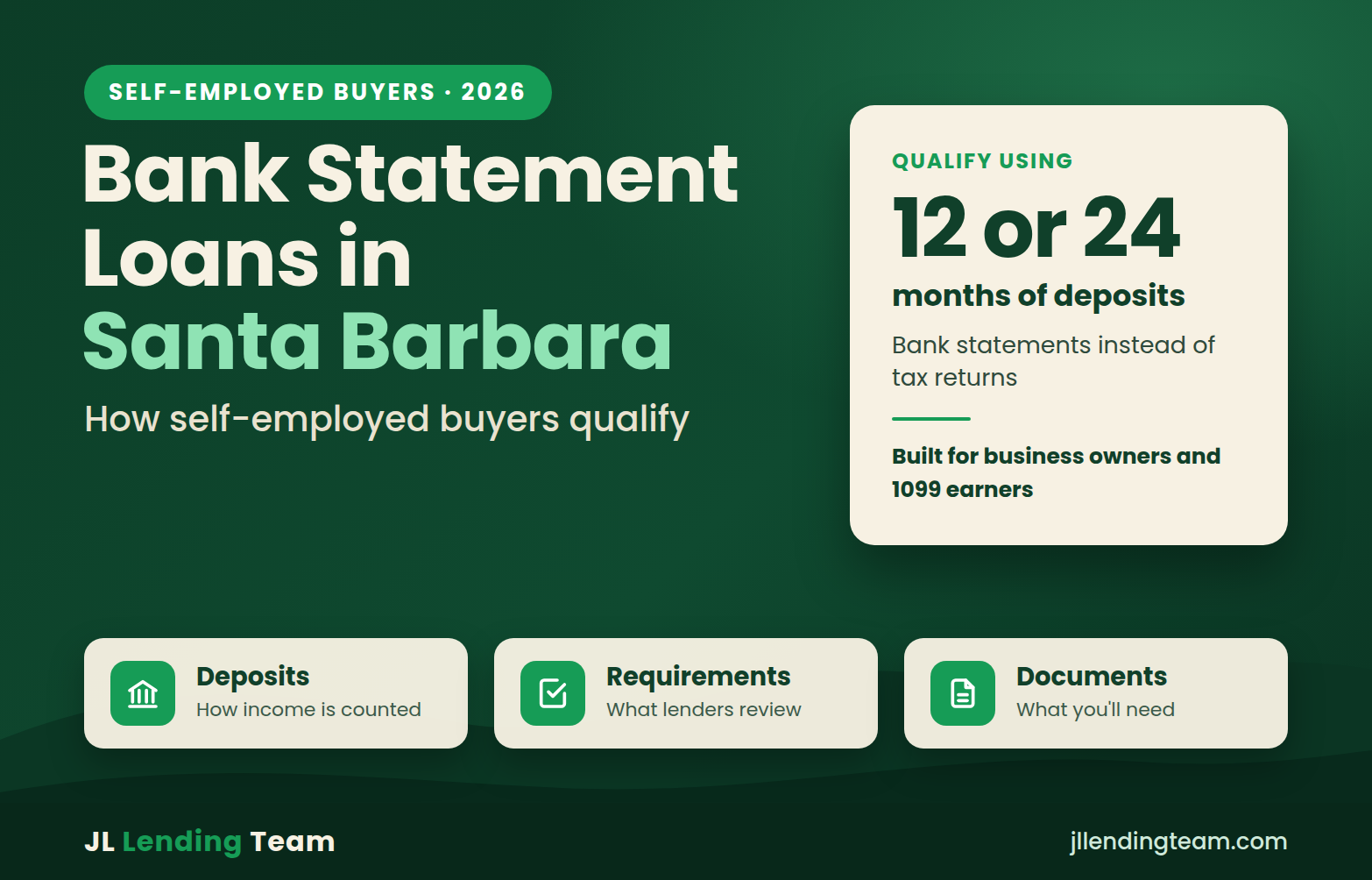

Yes, you can buy an investment property with a bank statement loan. These loans allow self-employed borrowers to qualify using bank deposits instead of traditional tax returns.
What Is a Bank Statement Loan?
A bank statement loan is a non-QM mortgage designed for borrowers who may not qualify using traditional income documentation.
Instead of tax returns, lenders review:
- Personal bank statements
- Business bank statements
- Monthly deposits
- Cash flow consistency
These loans are commonly used by:
- Self-employed borrowers
- Business owners
- Freelancers
- Real estate investors
Can You Use a Bank Statement Loan for Investment Property?
Yes. Many lenders allow bank statement loans for:
- Rental properties
- Vacation rentals
- Investment homes
- Multi-unit properties
This gives investors more flexibility compared to conventional financing.
Why Investors Use Bank Statement Loans
Many investors write off business expenses on tax returns, which can reduce taxable income.
Traditional mortgage lenders may view this as lower income.
Bank statement loans help by focusing on:
- Actual cash flow
- Deposits into bank accounts
- Business revenue patterns
What Types of Investment Properties Qualify?
Eligible properties may include:
- Single-family rentals
- Condos
- Multi-family properties
- Short-term rentals
- Airbnb properties
Property guidelines vary by lender.
Main Requirements for Investment Property Bank Statement Loans
1. Bank Statements
Most lenders require:
- 12–24 months of statements
These help verify income consistency.
2. Credit Score
Higher scores improve approval chances and loan terms.
Many lenders prefer:
- 620+ credit score
3. Down Payment
Investment properties usually require larger down payments than primary homes.
Typical range:
- 15%–25% down
4. Cash Reserves
Lenders often require reserves to cover future mortgage payments.
5. Property Cash Flow
Some lenders may also evaluate:
- Rental income potential
- Lease agreements
- Market rent analysis
Benefits of Using a Bank Statement Loan for Investment Property
- Flexible income verification
- Great for self-employed investors
- Easier qualification than traditional loans
- Can help grow a real estate portfolio
Exploring financing for your next investment property?
✔ Compare Investor Loan Options
✔ Review Flexible Mortgage Solutions
Potential Drawbacks
- Higher interest rates
- Larger down payments
- More lender-specific guidelines
Bank Statement Loan vs DSCR Loan for Investment Property
Bank Statement Loan
Focuses on:
- Borrower income and deposits
DSCR Loan
Focuses on:
- Property rental income
Investors may qualify for either depending on their goals.
Which Option Is Better in 2026?
Bank Statement Loan May Be Better If:
- You have strong personal/business deposits
- You’re self-employed
- Your tax returns show lower income
DSCR Loan May Be Better If:
- Your rental property has strong cash flow
- You want property-based qualification
Example Scenario
Borrower A
- Self-employed investor
- Strong monthly deposits
- Buying a vacation rental property
Good fit for a bank statement loan
Looking for Flexible Investment Property Financing?
Bank statement loans can help self-employed investors qualify without traditional income documentation.
✔ Explore Your Loan Options
✔ Speak With a Mortgage Specialist
Read More Bridge Loan vs Home Equity Loan: What’s the Difference in 2026?
FAQs
Can you buy an investment property with a bank statement loan?
Yes. Many lenders allow bank statement loans for rental and investment properties.
Are bank statement loans good for real estate investors?
Yes. They are especially useful for self-employed investors with strong cash flow.
Do bank statement loans require tax returns?
In many cases, no. Lenders typically use bank deposits instead.
What down payment is needed for investment property bank statement loans?
Many lenders require 15%–25% down depending on the property and borrower profile.
Is a DSCR loan better than a bank statement loan?
It depends on whether your strength is personal income or property rental cash flow.