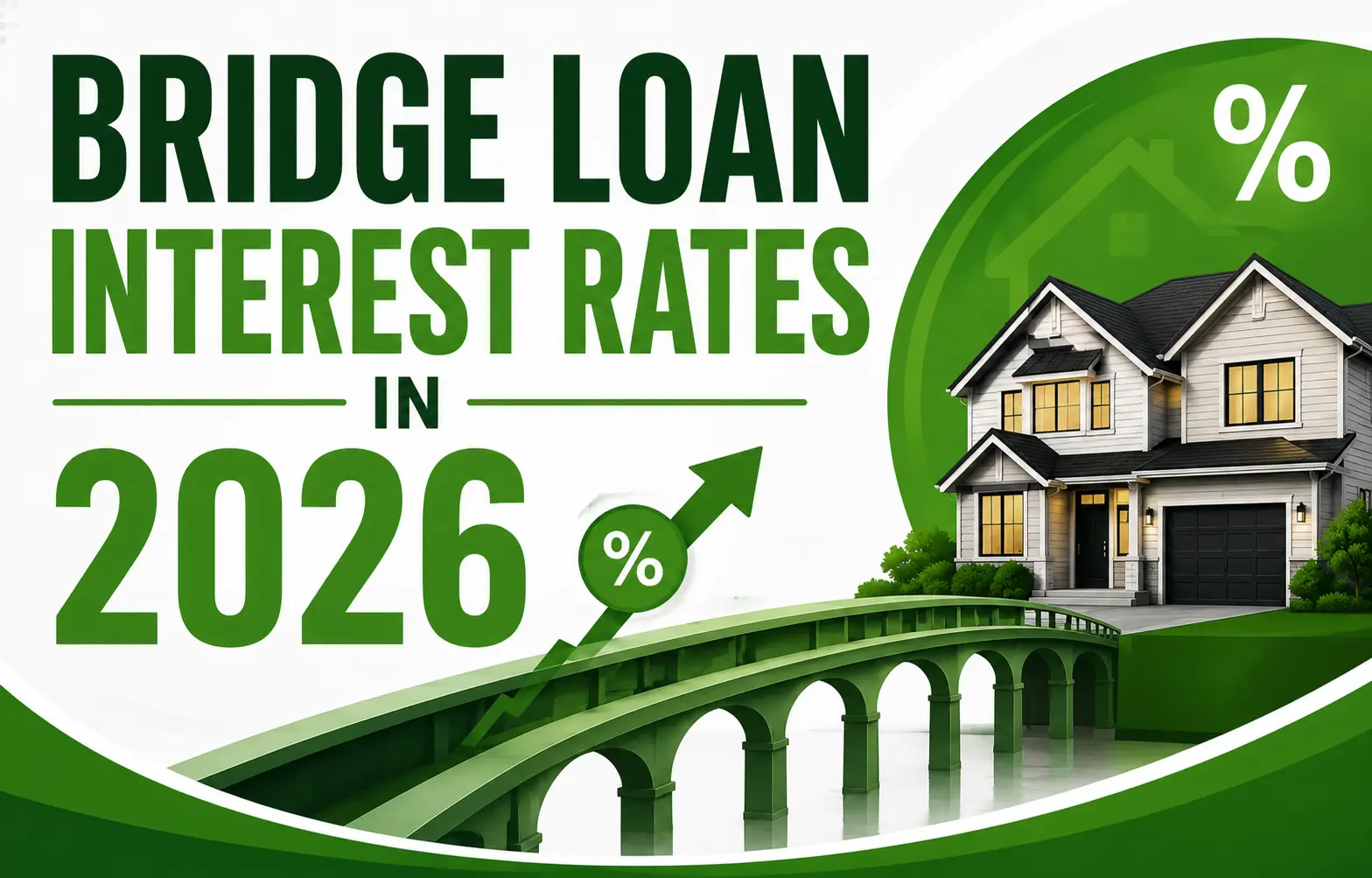
Bridge loan interest rates are usually higher than traditional mortgage rates because bridge loans are short-term loans with faster funding and higher lender risk.
What Is a Bridge Loan?
A bridge loan is a temporary financing solution that helps homeowners:
- Buy a new home before selling the current one
- Access home equity quickly
- Avoid contingent offers in competitive markets
These loans are typically repaid once the existing property is sold.
What Are Average Bridge Loan Interest Rates in 2026?
Bridge loan rates vary based on:
- Market conditions
- Credit score
- Home equity
- Loan amount
- Repayment timeline
In 2026, bridge loan rates are generally higher than conventional mortgage rates due to their short-term nature and increased flexibility.
Why Are Bridge Loan Interest Rates Higher?
Bridge loans are considered riskier because:
- They are short-term loans
- Repayment depends on selling a property
- Lenders provide fast access to funds
Because of this, lenders charge higher interest rates compared to standard mortgages.
What Affects Bridge Loan Interest Rates?
1. Credit Score
Borrowers with stronger credit profiles usually receive better rates.
Typical Impact:
- Higher score → lower rate
- Lower score → higher borrowing costs
2. Home Equity
More equity reduces lender risk.
Homeowners with significant equity often qualify for more competitive loan terms.
3. Loan Amount
Larger bridge loans may come with different pricing structures depending on lender guidelines.
4. Property Market Conditions
If your current home is located in a strong real estate market, lenders may view the loan as lower risk.
5. Repayment Timeline
Shorter loan durations may receive better terms than longer bridge financing periods.
Want to understand what rates you may qualify for?
✔ Review Your Bridge Loan Options
✔ Explore Today’s Financing Solutions
Fixed vs Variable Bridge Loan Rates
Some bridge loans offer:
Fixed Rates
- Stable payments
- Predictable costs
Variable Rates
- Rates can change over time
- Monthly payments may fluctuate
Example Scenario
Borrower A
- Strong credit
- High home equity
- Fast home sale expected
Better interest rate potential
Borrower B
- Lower credit score
- Limited equity
- Slower market conditions
Higher bridge loan rate likely
Are Bridge Loans Worth the Higher Interest Rates?
For many homeowners, yes.
Bridge loans can help buyers:
- Move quickly in competitive markets
- Buy before selling
- Avoid temporary housing situations
The convenience and flexibility may outweigh the higher financing costs.
Buying Before Selling?
Bridge loans can provide short-term financing flexibility while transitioning between homes.
✔ Compare Your Loan Options
✔ Speak With a Mortgage Specialist
Read More Bank Statement Loan vs Conventional Loan
FAQs
Are bridge loan interest rates higher than mortgage rates?
Yes. Bridge loans usually have higher rates because they are short-term financing solutions.
What affects bridge loan interest rates?
Credit score, home equity, loan amount, and market conditions all impact pricing.
Can I get a lower bridge loan interest rate?
Borrowers with strong credit and significant home equity often qualify for better rates.
How long do bridge loans last?
Most bridge loans are designed for short-term use, often between 6 months and 1 year.
Are bridge loans worth it?
For buyers needing fast financing before selling their current home, bridge loans can be very useful.