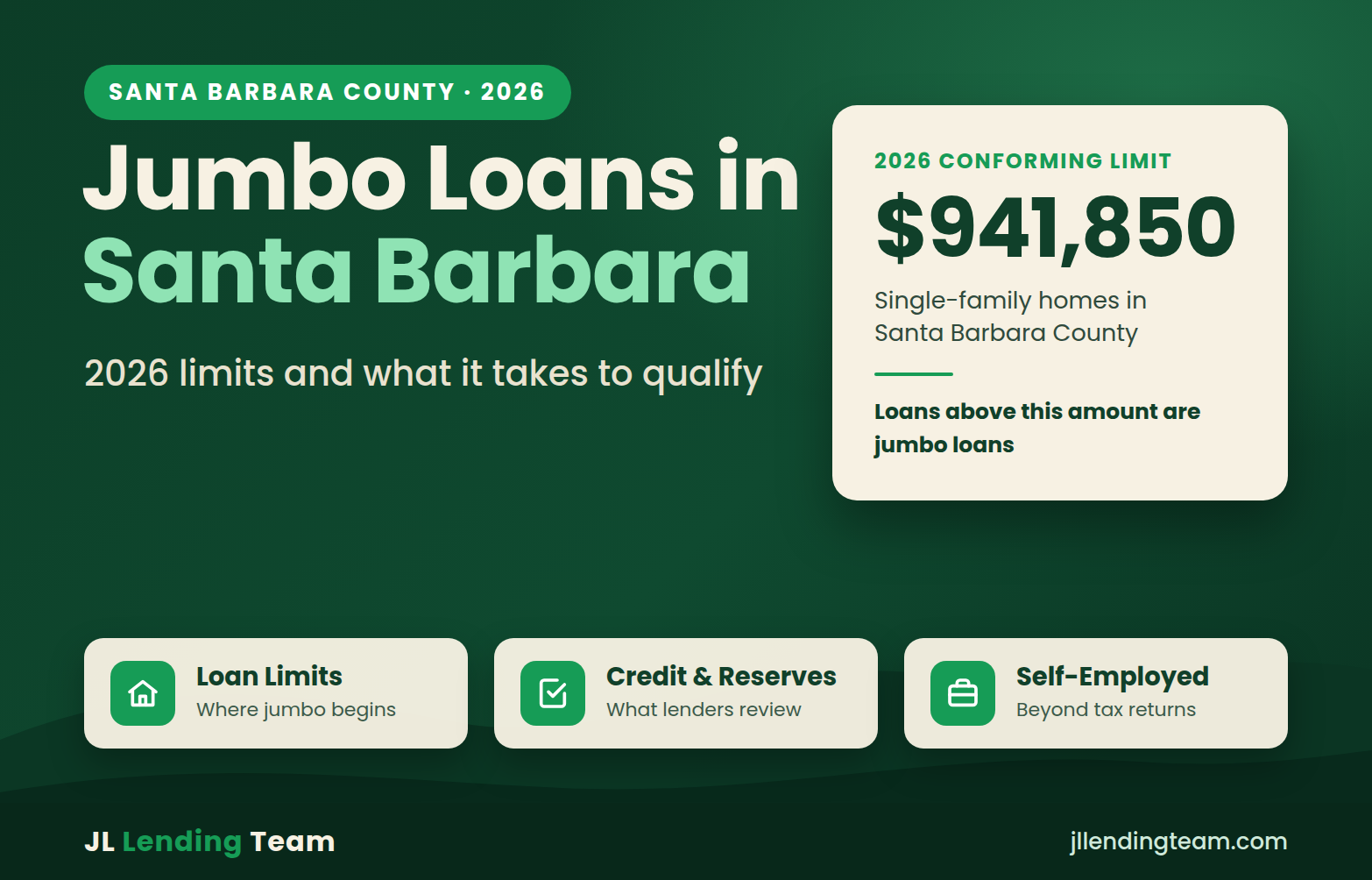
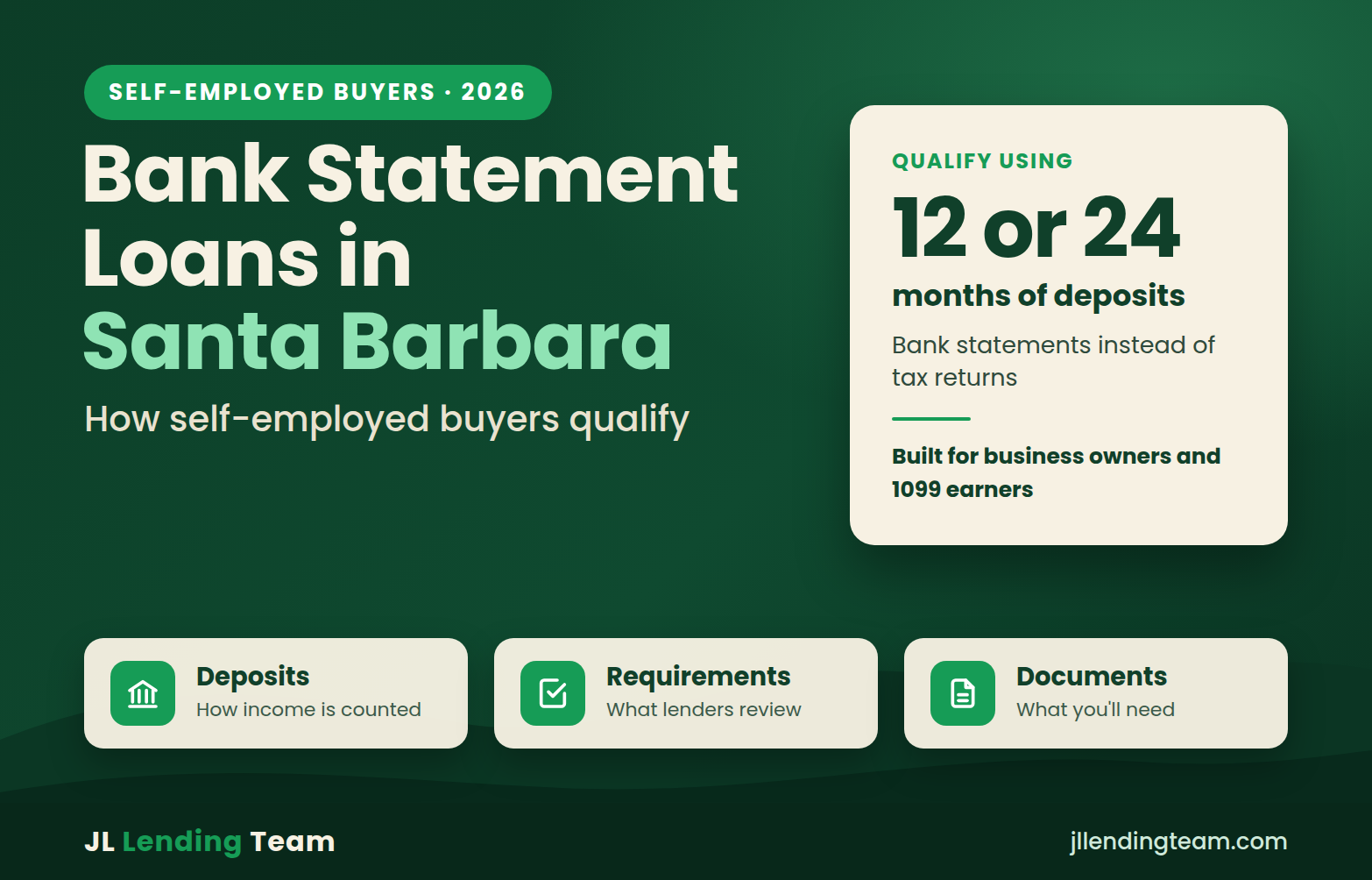
A bank statement loan lets a self-employed borrower qualify for a mortgage using 12 or 24 months of bank deposits instead of tax returns. In Santa Barbara, where business owners are common and most purchases land above the $941,850 conforming loan limit, it is one of the most useful options a buyer can have. Not every lender offers it.
If you own a business, earn well, and were still told you don’t qualify, your tax returns are often the reason, and there may be another way to qualify.
Bank statement loans 101
A bank statement loan is a mortgage that measures your income by what actually lands in your bank account. Instead of reading the bottom line of your tax returns, the lender reviews 12 or 24 consecutive months of personal or business statements and calculates your income from your deposits.
These loans fall into a category called non-QM, short for non-qualified mortgage. That name sounds riskier than it is. It simply means the loan follows a lender’s own guidelines instead of the standard rulebook used by Fannie Mae and Freddie Mac. Lenders still have to make a reasonable, good faith determination that you can repay the loan under the federal ability-to-repay rule.
They are also growing fast. Bank of America Securities forecasts non-QM lending will reach about $175 billion in 2026, up from $108 billion in 2025, and bank statement loans make up 30% to 40% of it (HousingWire, September 2026).
Why Santa Barbara needs it
Santa Barbara County has far more self-employed people than most places. The Census Bureau counts 35,359 businesses in the county with no paid employees, nearly three times the 12,484 businesses that do have employees (U.S. Census Bureau). That includes consultants, contractors, real estate agents, designers, therapists, and a long list of one-person practices.
Now add the price of a home here. The median Santa Barbara home sold for $1,780,821 in the three months ending in August 2026 (Redfin). Any loan above $941,850 is a jumbo loan in Santa Barbara County, so many local buyers need a large loan and a way to prove income that a tax return doesn’t show. That limit is expected to rise for 2027. FHFA announces the new limits in late November, and several large lenders have already started allowing higher limits early. Some bank statement programs go well into jumbo territory, up to $4 million with certain lenders (A&D Mortgage).
How income is calculated
Lenders total your deposits for the 12 or 24 month period, remove anything that isn’t income (like transfers between your own accounts), and find a monthly average. What happens next depends on the type of account.
| Account type | How deposits are usually counted |
|---|---|
| Personal account | Often up to 100% of qualifying deposits |
| Business account | An expense factor is applied, commonly 50%, to estimate what’s left after business costs |
| Business account with a CPA or expense letter | The expense factor can be lowered to match your real expenses |
Here’s a simple example. Say your business account averages $40,000 a month in deposits. With a 50% expense factor, the lender would count about $20,000 a month as qualifying income. If your CPA documents that your real expenses are lower, that number can go up.
Guidelines vary by lender (JVM Lending, A&D Mortgage), which is why the same file can look very different from one lender to the next.
What lenders look for
Every lender sets its own guidelines, but most bank statement programs look at the same things.
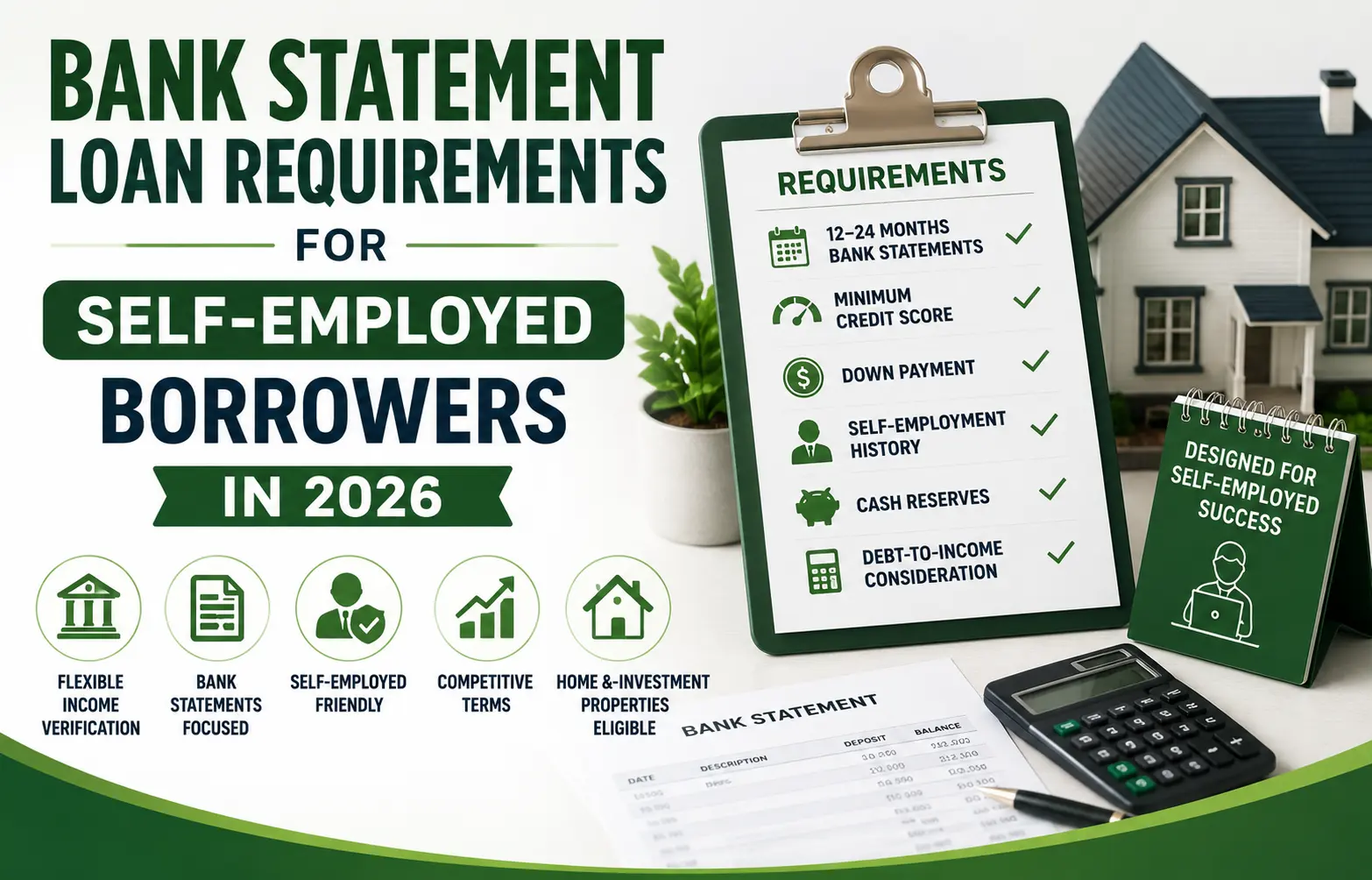
| Requirement | What lenders typically look for |
|---|---|
| Time self-employed | Usually 2 years; some programs accept about 1 year with experience in the same field |
| Statements | 12 or 24 consecutive months, personal, business, or both |
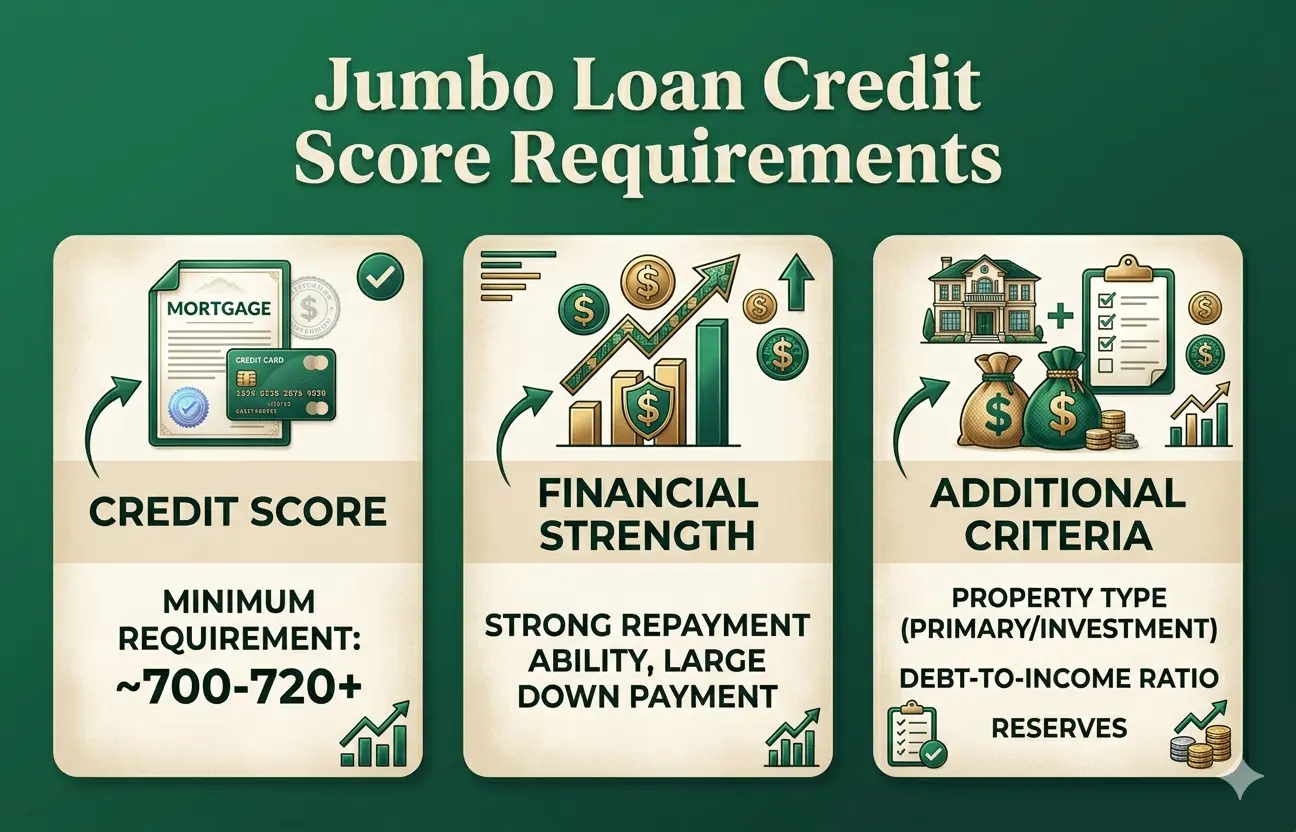
| Credit score | Varies by lender; some programs start around 620, many look for 660 or higher |
| Cash reserves | Often 3 to 6 months of payments left in the bank after closing |
| Business ownership | Often at least 25% of the business |
| Property types | Primary homes, second homes, and investment properties, including condos and 2 to 4 unit buildings |
These are general industry guidelines, not a guarantee of approval. For more detail, see our guides to bank statement loan requirements and credit scores for bank statement loans.
What documents will I need?
- 12 or 24 months of complete bank statements (every page)
- Proof that you’re self-employed, like a business license, CPA letter, or website and client records
- A CPA letter or profit and loss statement, if you want a lower expense factor
- Statements for any savings, retirement, or investment accounts you’ll use for reserves
- Photo ID and permission to pull credit
What are the trade-offs?
A bank statement loan solves the tax return problem, but it isn’t the right fit for everyone.
- Pricing is usually higher than a conventional loan. Because these loans don’t follow Fannie Mae and Freddie Mac guidelines, terms vary more from lender to lender, so shopping matters.
- Underwriting is done by hand. Expect more questions and more document review than on a W-2 loan.
- Cash deposits are hard to use. Deposits you can’t trace to business income may be left out.
- Mixed accounts take extra work. If personal and business money run through the same account, the lender has to sort it out.
If your tax returns already show enough income, a conventional or standard jumbo loan may be the better choice. That is worth checking first.
How to prepare before you buy
- Tell your lender you’re self-employed in the first conversation. The right program has to be chosen up front, not discovered in underwriting.
- Pull 24 months of statements now. Even if you use 12, having both lets a lender run the numbers both ways.
- Keep business and personal money separate wherever you can.
- Avoid large, unexplained transfers in the months before you apply.
- Ask your CPA about an expense letter. It can raise your qualifying income.
- Get pre-approved before you write an offer. In Santa Barbara, financing problems found in escrow are the ones that cost deals.
Other self-employed options
Bank statement loans are one of several tools. Depending on your situation, a lender may also look at a profit and loss statement program, a 1099 income program, asset-based qualifying for borrowers with large savings or investments, or a DSCR loan for investment properties, which qualifies on the property’s rental income. Our guide to bank statement loans vs. DSCR loans compares those two side by side.
Frequently asked questions
Can I get a mortgage if I’m self-employed?
Yes. Self-employed borrowers can qualify with tax returns like anyone else, and if your returns don’t show your full income, a bank statement loan or another alternative program may work.
How many months of bank statements do I need?
Most programs use 12 or 24 consecutive months. Some lenders offer different terms depending on which you choose, so it’s worth comparing both.
Can I use personal bank statements?
Often, yes. Many lenders accept personal, business, or both. Personal deposits are often counted at a higher percentage, but they need to clearly come from your business.
Are bank statement loans only for small loan amounts?
No. Some programs go up to $4 million, which covers many Santa Barbara purchases above the conforming limit.
Is a bank statement loan a bad loan?
No. It is a legitimate mortgage that still follows the federal ability-to-repay rule. It simply measures income differently. The trade-off is that pricing and guidelines vary more between lenders.
Self-employed and told no?
I spent 12 years as a mortgage banker at Wells Fargo, and today I work independently, with access to more than 100 lenders through Xpert Home Lending. That includes lenders who specialize in bank statement and other self-employed programs that not every lender offers.
If you’ve been declined, or your pre-approval feels shaky, send it my way for a second opinion. Call or text 805-456-2256, or email justin@jllendingteam.com.
See what you qualify for · Call 805-456-2256 · Explore bank statement loan options · Read: Jumbo Loans in Santa Barbara
Loan programs, requirements, and terms vary by lender and are subject to change. Sources: U.S. Census Bureau; Redfin, three months ending August 2026; Federal Housing Finance Agency 2026 loan limits; HousingWire, September 2026; National Mortgage Professional, September 2026; Consumer Financial Protection Bureau; lender program guidelines.