I’m Justin Leach, a mortgage broker in Santa Barbara. When you find the right home here, the first thing the listing agent will ask is how you’re paying for it. A strong pre-approval is your answer. It tells the seller your financing has already been reviewed, and it gives you the confidence to negotiate.
If you’re planning to buy in the next few months, now is the time to get it done. Call or text me at 805-456-2256 and we’ll start with a review of your file.
Where the market stands
The Santa Barbara market has cooled from the frenzy of a few years ago, but well-priced homes still draw attention. Here’s how September 2026 looked, according to Redfin:
| Santa Barbara, September 2026 | |
|---|---|
| Median sale price | About $1.88 million |
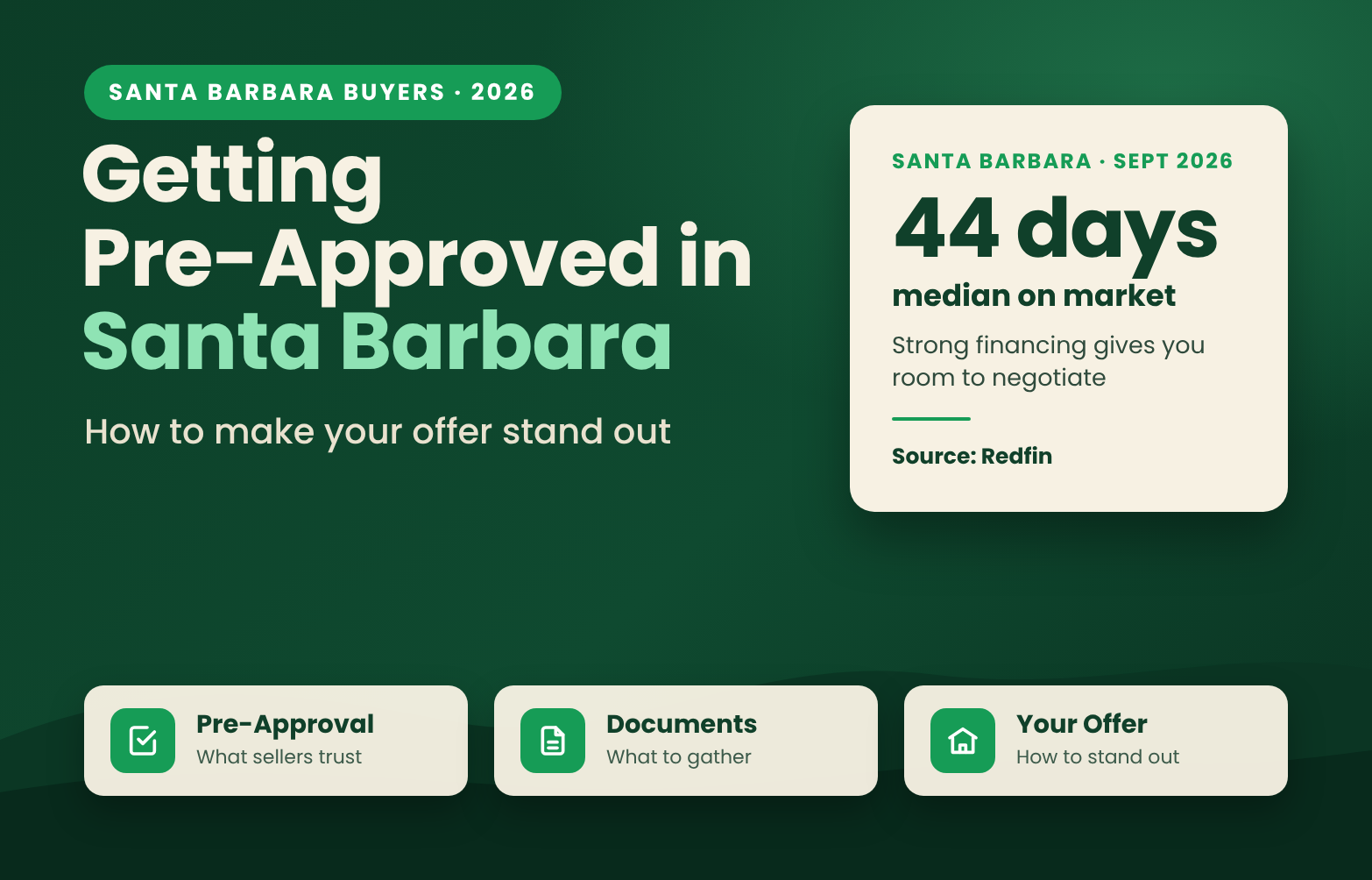
| Median days on market | 44 days |
| Sale price vs. list price | 97.4% on average |
| Homes sold above list | 18.4% |
| Redfin Compete Score | 52, “somewhat competitive” |
In other words, buyers have more room to negotiate than they did a few years ago, and some homes still get multiple offers. Either way, sellers look closely at how likely your loan is to close. A buyer with solid, verified financing is in a much stronger position to ask for a better price or terms.
Prequal vs. pre-approval
These two words get used loosely, so what matters is what was actually reviewed.
- A prequalification is usually a quick estimate based on what you tell a lender about your income, debts, and savings.
- A pre-approval usually goes further. Your credit is checked, and your income and asset documents are reviewed before the letter is issued.
In Santa Barbara, where sellers often compare several buyers, the second kind carries far more weight. When a listing agent calls about your letter, you want the answer to be “yes, we’ve seen the documents.”
What makes it strong
A pre-approval sellers trust usually reflects:
- A credit report pulled and reviewed, not estimated.
- Verified income. Pay stubs, W-2s, and tax returns, or bank statements if you’re self-employed.
- Verified assets. Statements showing your down payment, closing costs, and reserves.
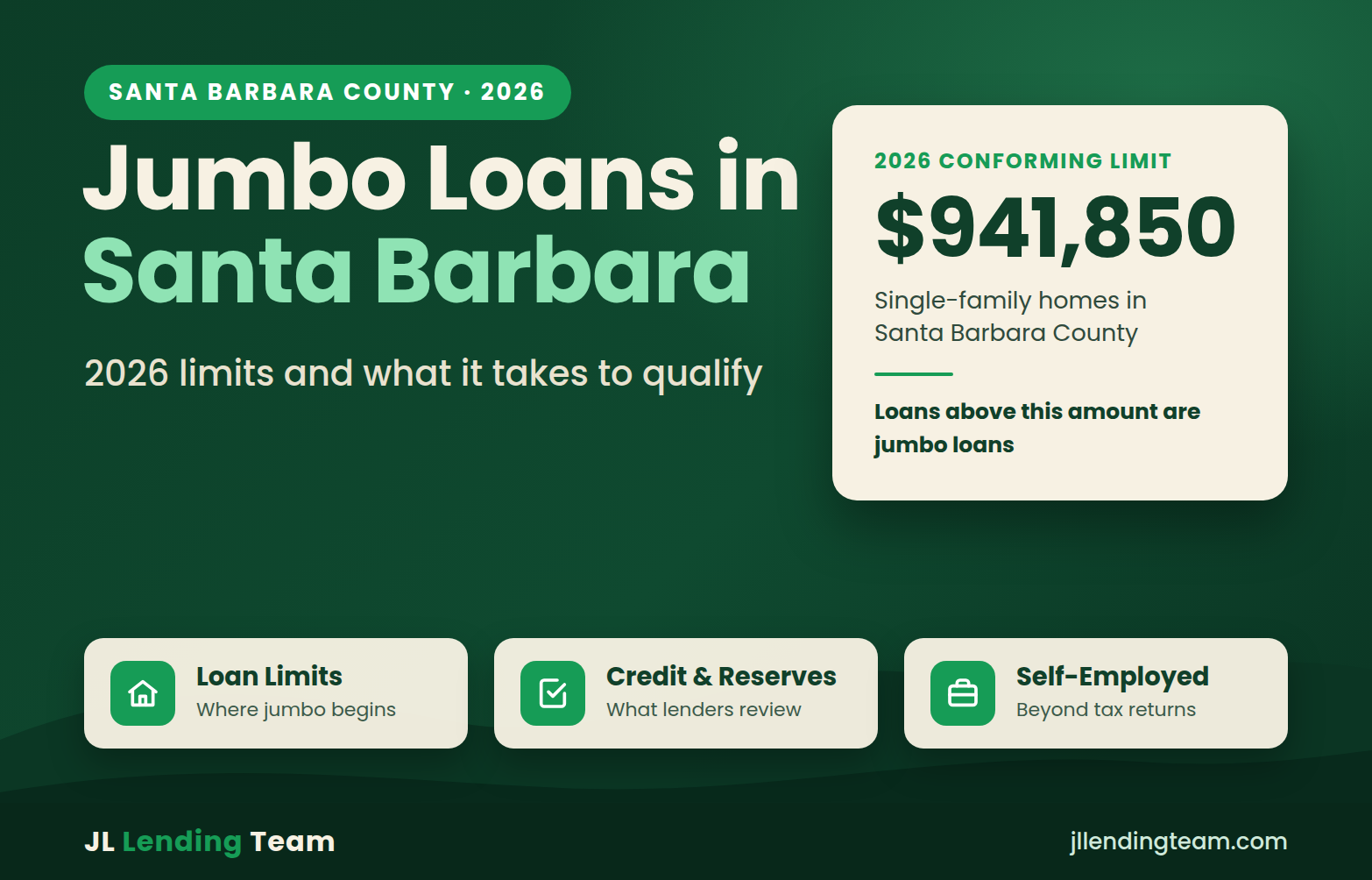
- The right loan type. If your loan will be above $941,850, it should be a jumbo pre-approval from the start, not a conventional one stretched to fit.
- Clear details on the letter. Your name, the loan type, the purchase price, an expiration date, and the loan officer’s license number.
Jumbo & self-employed files
These are the files where an early, thorough review matters most. Jumbo lenders set their own rules for credit, reserves, and debt-to-income, and those rules vary a lot from lender to lender. Self-employed income often needs extra documents, and the right program may not be the first one you’d expect.
Finding that out in escrow is stressful. Finding it out before you write an offer gives you time to choose the right lender and program. That’s one of the biggest reasons I compare options across more than 100 lenders through Xpert Home Lending. If you’re wondering how that differs from going to your bank, read Mortgage Broker vs. Bank in Santa Barbara.
Documents to gather
- Photo ID for everyone on the loan.
- Two years of tax returns, with all schedules.
- Recent pay stubs and W-2s, if you’re salaried.
- 12 or 24 months of bank statements, if you’re self-employed and using a bank statement loan.
- Two months of statements for checking, savings, retirement, and investment accounts.
- Details on any home you own now, including the mortgage statement, if you’re keeping or selling it.
Shop without the worry
Many buyers hesitate to compare lenders because they’re worried about their credit score. According to the CFPB, multiple credit checks from mortgage lenders within a 45-day window are recorded on your credit report as a single inquiry. You can get more than one pre-approval and compare Loan Estimates.
Keep it current
A pre-approval is a snapshot. Between the letter and closing:
- Don’t open new credit or finance big purchases like a car or furniture.
- Don’t change jobs without talking to your loan officer first.
- Avoid large, unexplained deposits or transfers between accounts.
- Expect to update documents. For loans that follow Fannie Mae’s guidelines, credit documents can be no more than four months old on the day you close (Fannie Mae Selling Guide).
How we help you compete
- I review your documents up front, so your pre-approval is based on real numbers.
- I match you with the right program across the lenders I have access to, whether that’s conventional, jumbo, or bank statement.
- I tailor your letter to each offer, so you’re not showing sellers your maximum budget.
- I’m available to talk with the listing agent about your file, so they know your financing is solid.
Frequently asked questions
How long does a pre-approval last?
It depends on the lender, but many are good for a few months. Because credit documents generally can’t be more than four months old at closing on loans that follow Fannie Mae’s guidelines, expect to refresh some documents if your search runs long.
Does a pre-approval guarantee my loan?
No. Final approval still depends on the property, the appraisal, and your finances staying the same through closing. A thorough pre-approval makes surprises much less likely.
Can I get pre-approved by more than one lender?
Yes. The CFPB says you can shop around for multiple pre-approvals, and mortgage credit checks within 45 days count as one inquiry.
Should my letter show my full budget?
Usually not. Many buyers ask for a letter that matches each offer price, so the seller doesn’t see how high they can go.
Do you only work in Santa Barbara?
No. I work throughout Santa Barbara County and all of California, and I’m also licensed in Arizona and Texas.