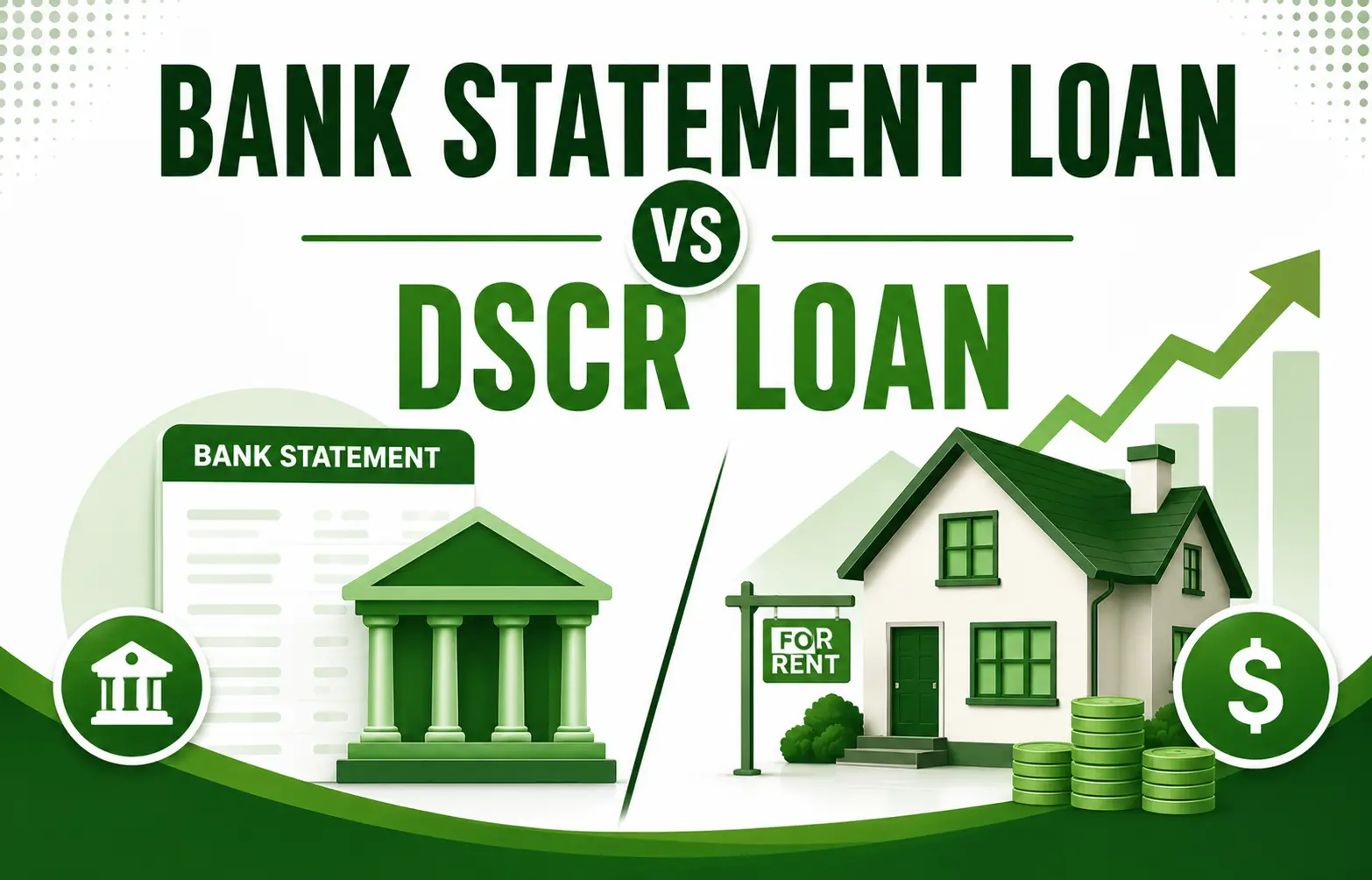
A bank statement loan qualifies borrowers based on personal or business bank deposits, while a DSCR loan qualifies primarily using rental property income. Bank statement loans are better for self-employed homebuyers, while DSCR loans are ideal for real estate investors.
What Is a Bank Statement Loan?
A bank statement loan is a non-QM mortgage designed for:
- Self-employed borrowers
- Freelancers
- Business owners
- Independent contractors
Instead of tax returns, lenders review:
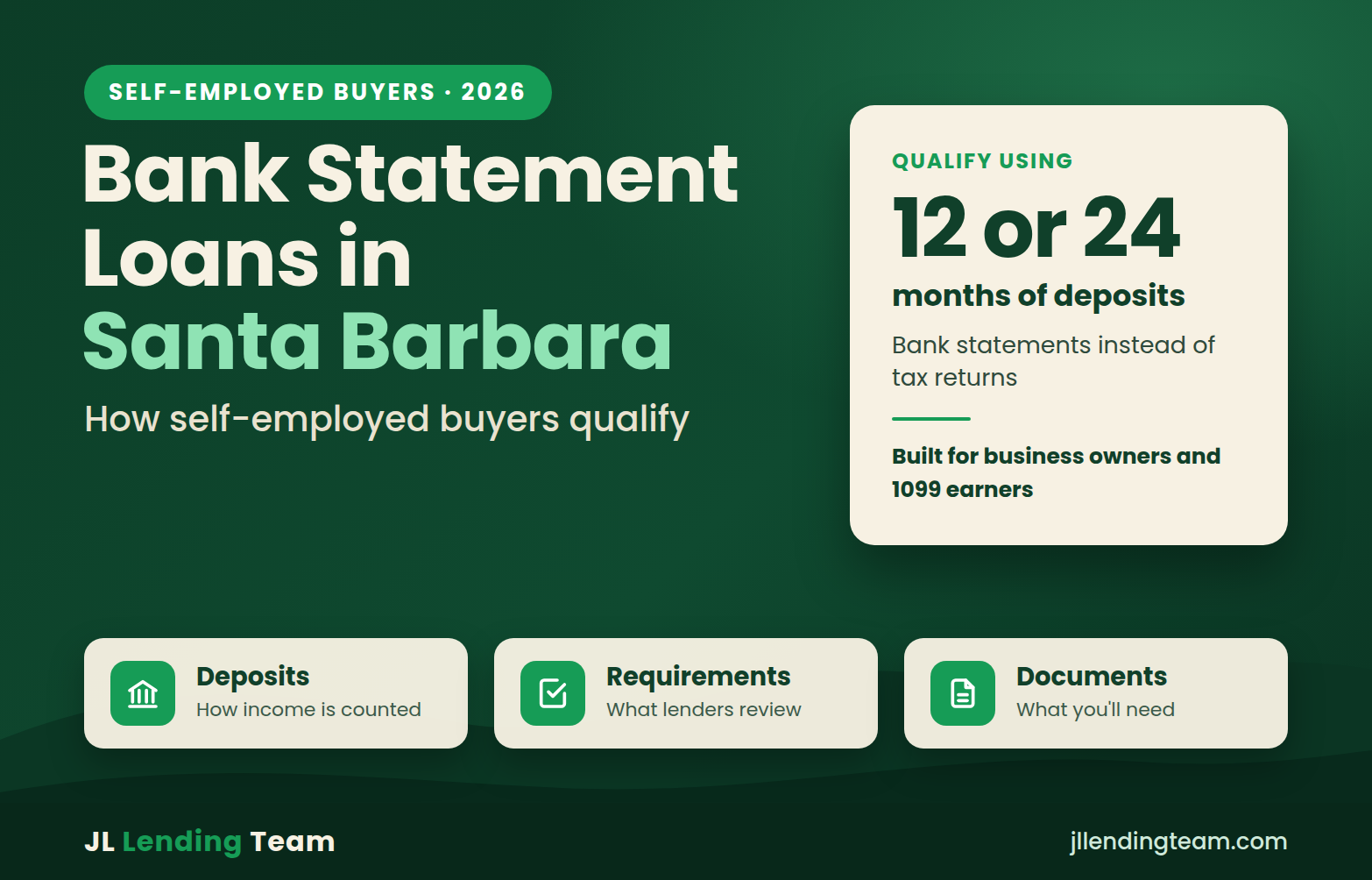
- 12–24 months of bank statements
- Monthly deposits
- Cash flow consistency
What Is a DSCR Loan?
A DSCR (Debt Service Coverage Ratio) loan is primarily used for investment properties.
Instead of personal income, lenders evaluate:
- Rental income
- Property cash flow
- Debt coverage ratio
Personal tax returns are often not required.
Bank Statement Loan vs DSCR Loan
| Feature | Bank Statement Loan | DSCR Loan |
|---|---|---|
| Income Qualification | Bank deposits | Rental property income |
| Best For | Self-employed borrowers | Real estate investors |
| Tax Returns Required | Usually no | Usually no |
| Primary Residence Allowed | Yes | Mostly investment properties |
| Income Verification | Personal/business statements | Property cash flow |
| Main Focus | Borrower income | Property performance |
Main Differences Explained
1. Income Verification
Bank Statement Loan
Uses:
- Personal bank statements
- Business bank statements
- Deposit history
DSCR Loan
Uses:
- Rental income
- Lease agreements
- Property cash flow
This is the biggest difference between the two loan types.
2. Property Type
Bank Statement Loans
Can be used for:
- Primary homes
- Second homes
- Investment properties
DSCR Loans
Primarily designed for:
- Rental properties
- Investment real estate
3. Who Qualifies Best?
Bank Statement Loans Are Better For:
- Self-employed homebuyers
- Business owners
- Borrowers with strong deposits but large tax write-offs
DSCR Loans Are Better For:
- Real estate investors
- Airbnb owners
- Rental property investors
4. Loan Approval Focus
Bank Statement Loan
Focuses on:
- Borrower cash flow
- Income stability
DSCR Loan
Focuses on:
- Property income performance
5. Interest Rates
Both loans typically have:
- Higher rates than conventional mortgages
- Flexible qualification requirements
Rates depend on:
- Credit score
- Down payment
- Property type
- Loan risk
Which Loan Is Better in 2026?
It depends on your financial goals.
Choose a Bank Statement Loan If:
- You’re self-employed
- You want to buy a primary residence
- Your tax returns show lower income
Choose a DSCR Loan If:
- You own investment properties
- You want financing based on rental income
- You prefer property-based qualification
Not sure which loan program fits your goals?
✔ Compare Flexible Mortgage Options
✔ Explore Investor & Self-Employed Loan Solutions
Example Scenario
Borrower A
- Self-employed business owner
- Buying a primary residence
Better fit for a bank statement loan
Borrower B
- Real estate investor
- Purchasing a rental property
Better fit for a DSCR loan
Looking for Alternative Mortgage Solutions?
Bank statement loans and DSCR loans both offer flexible qualification options for non-traditional borrowers.
✔ Review Your Financing Options
✔ Speak With a Mortgage Specialist
Read More Bridge Loan Interest Rates in 2026
FAQs
What is the difference between a bank statement loan and a DSCR loan?
A bank statement loan uses borrower deposits to verify income, while a DSCR loan uses rental property income.
Which loan is better for self-employed borrowers?
Bank statement loans are usually better for self-employed homebuyers.
Are DSCR loans only for investors?
Yes, DSCR loans are mainly designed for investment properties.
Do both loans avoid tax return requirements?
In many cases, yes. Both are considered flexible non-QM loan options.
Which loan is easier to qualify for?
It depends on whether your strength is personal income or rental property cash flow.